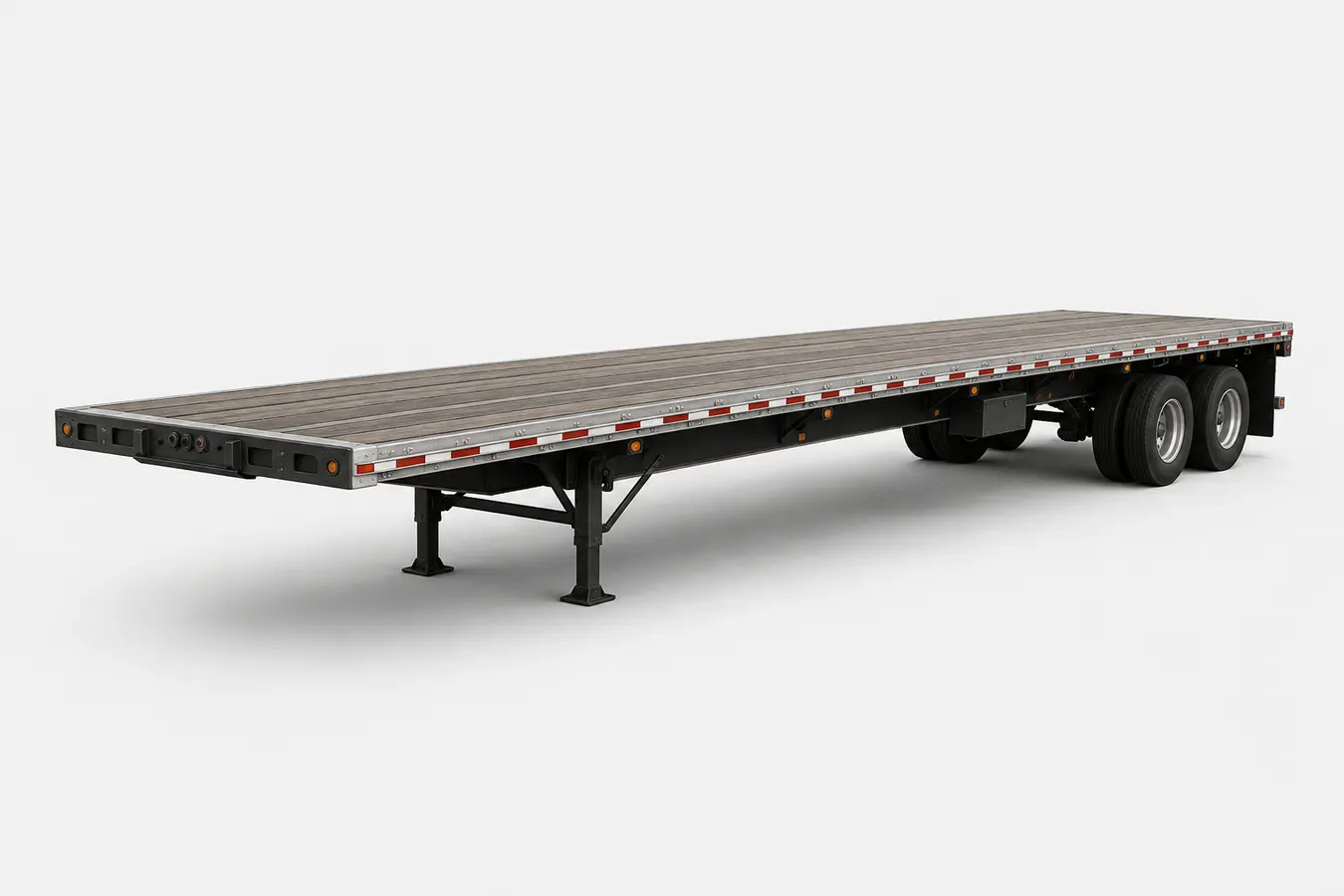
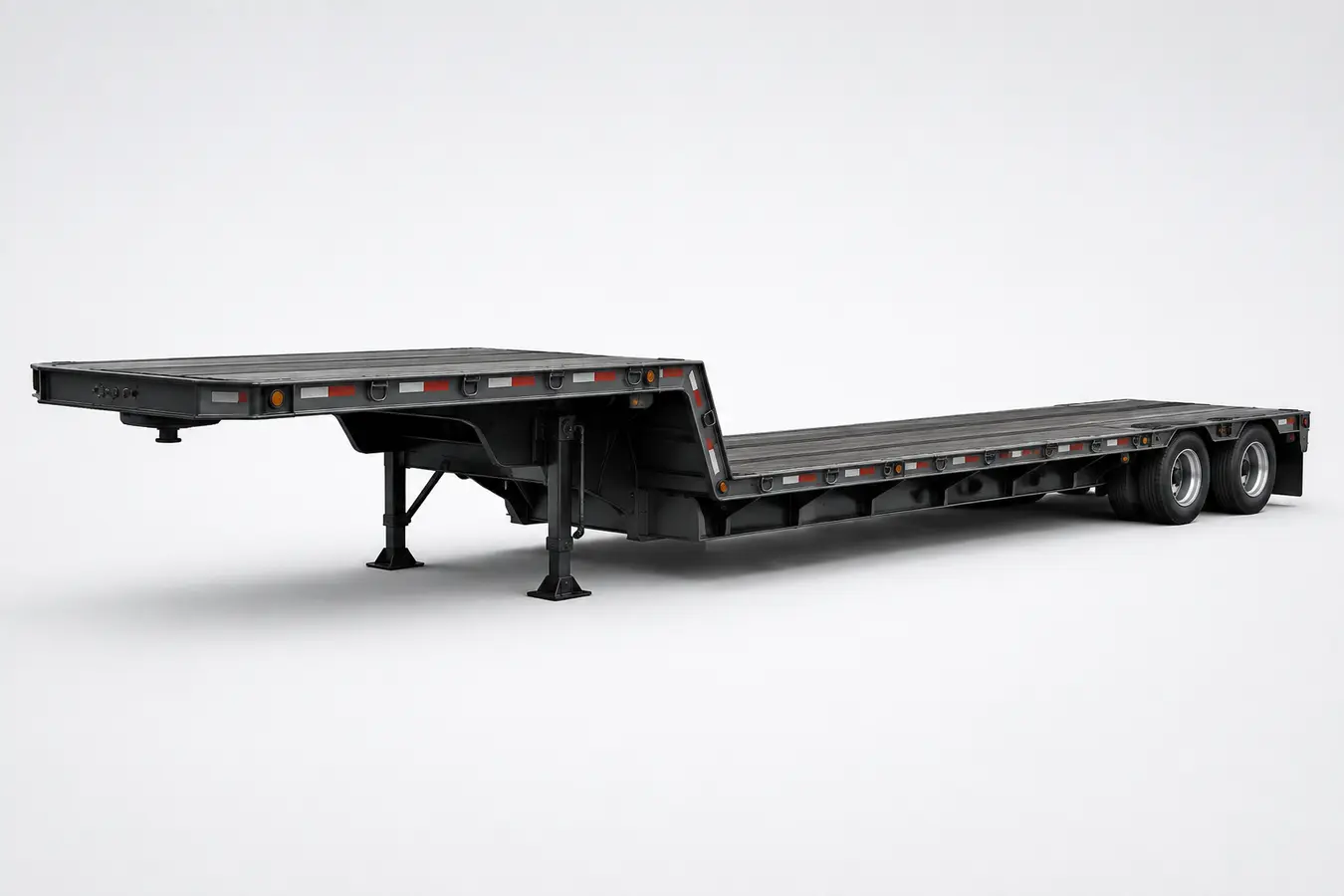
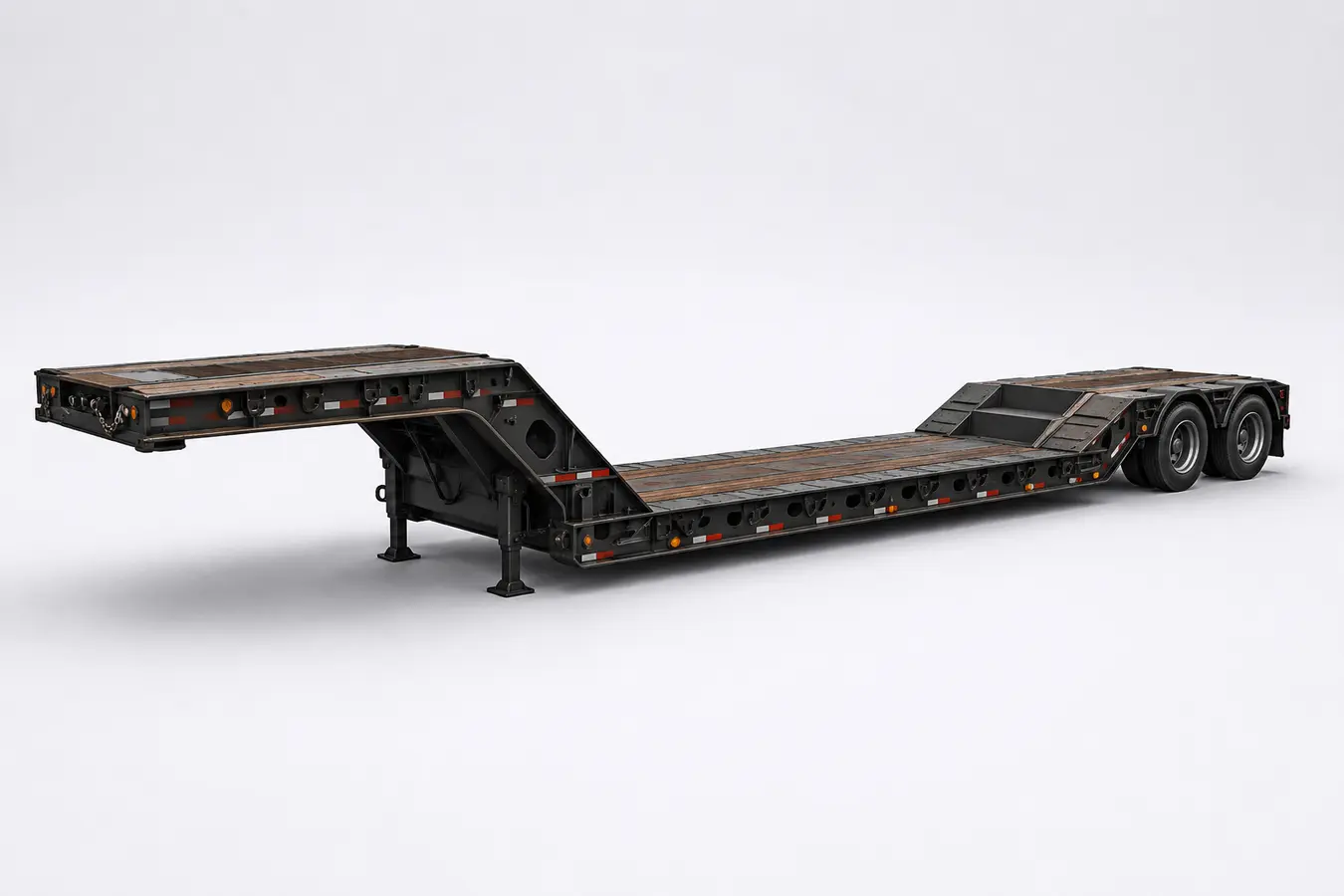
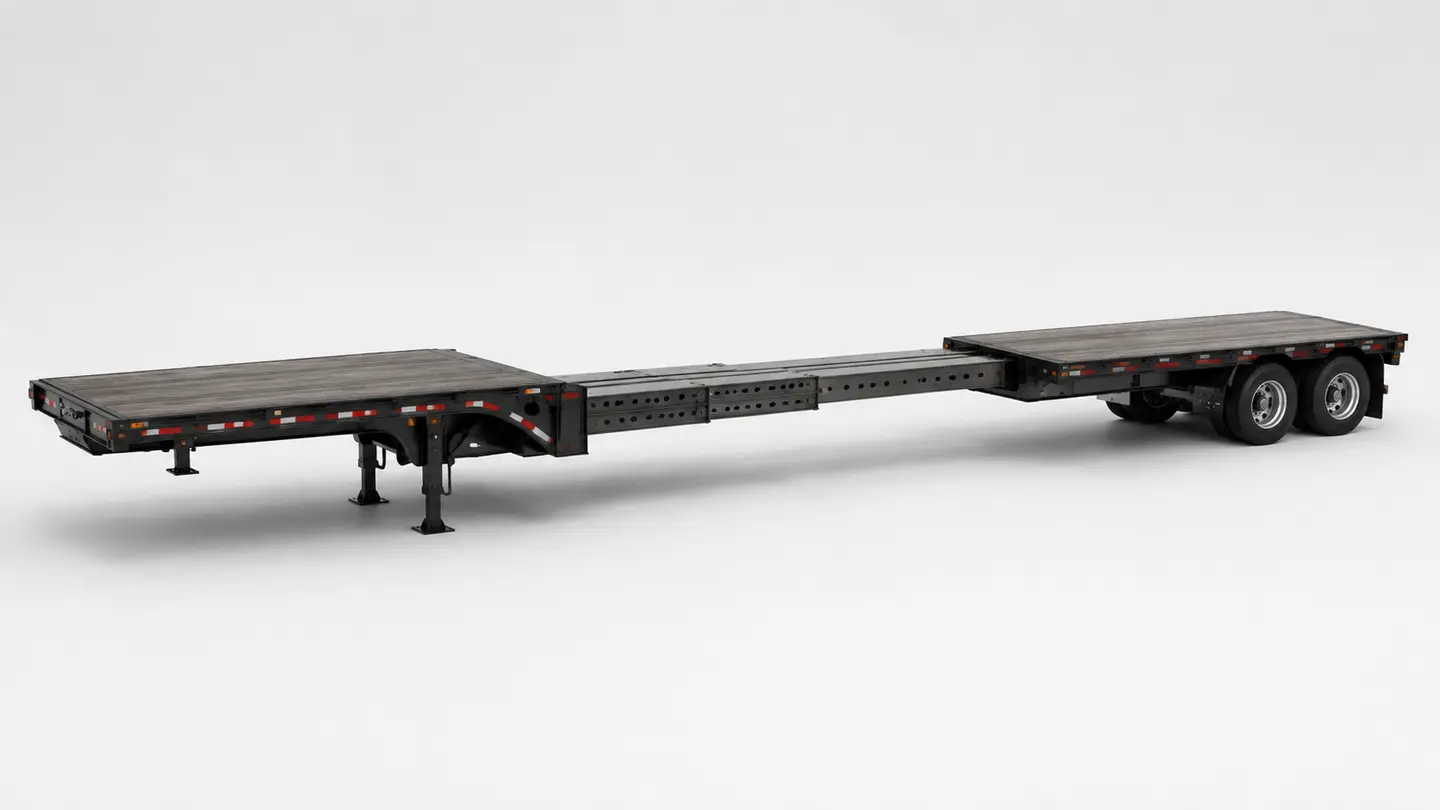
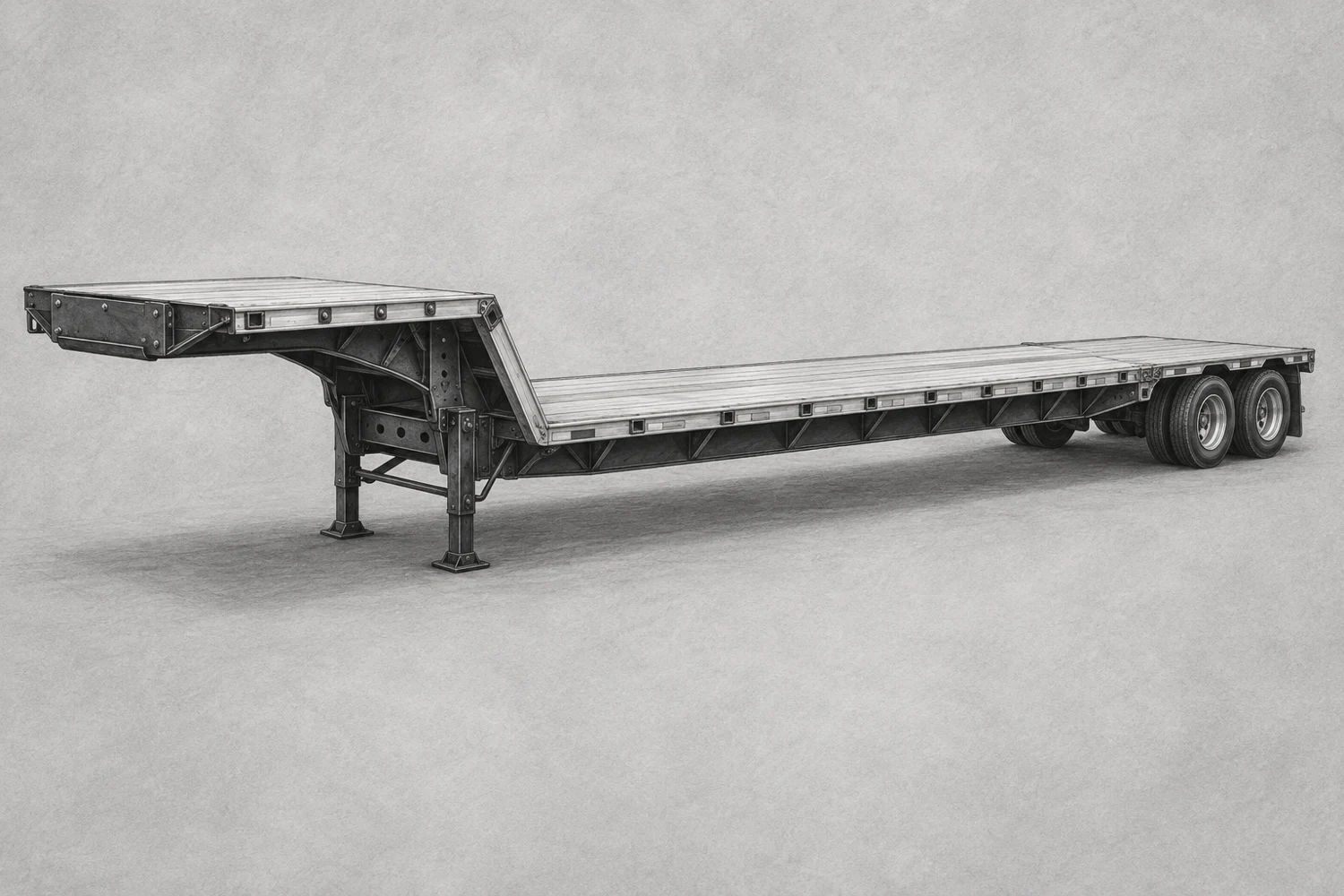
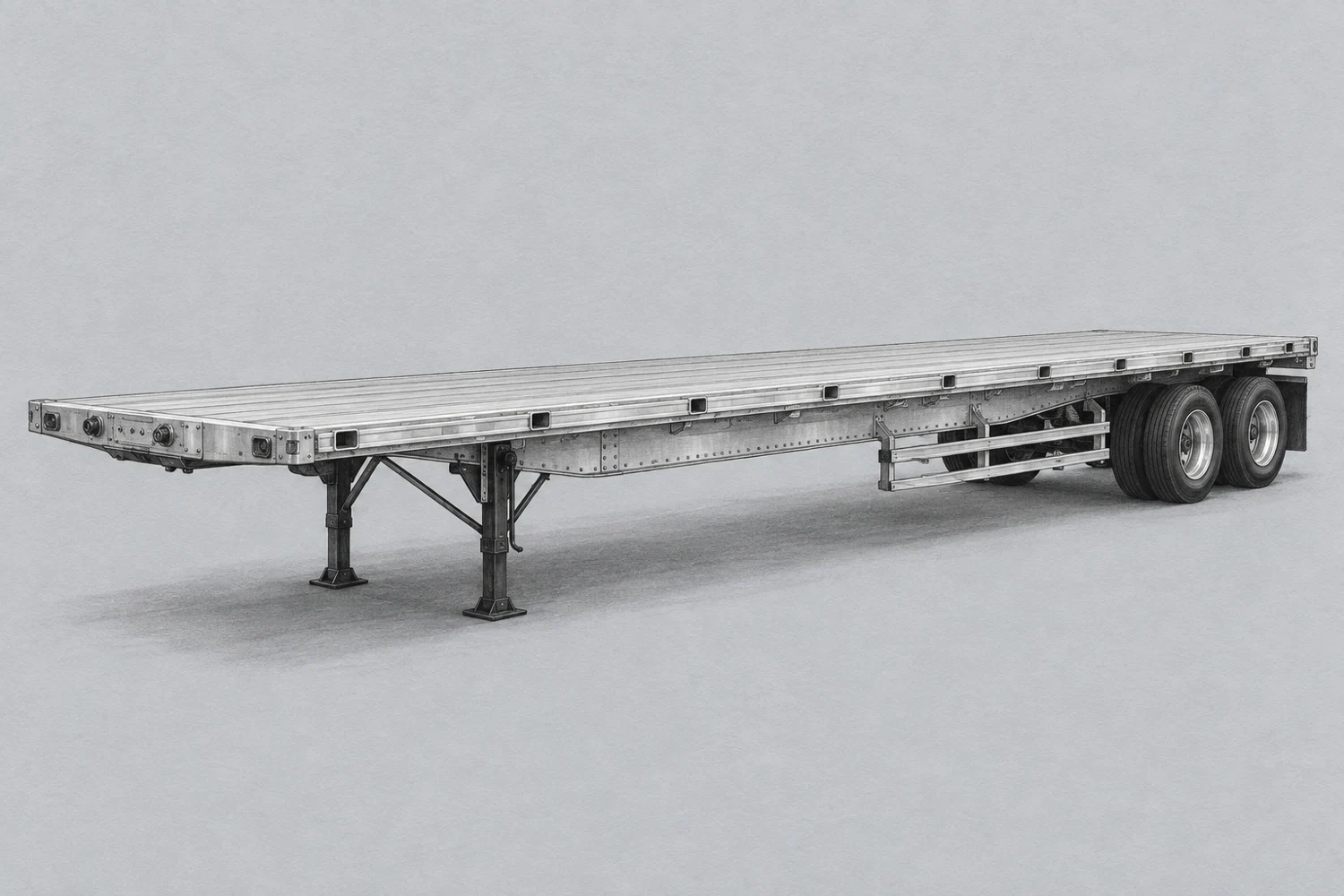
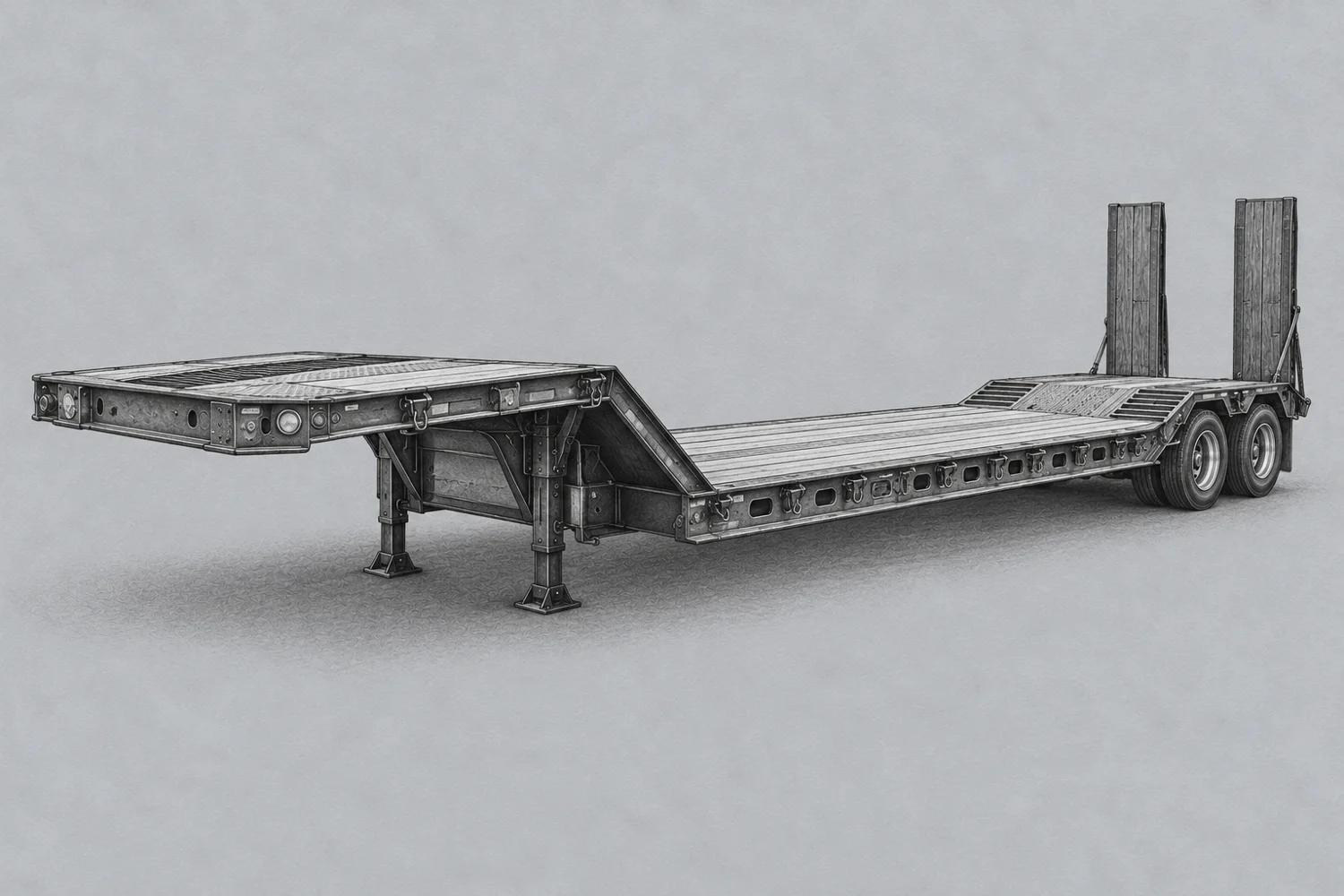
Open platforms provide side and overhead access for fabricated loads, machinery and packaged goods. Choose the deck shape around the load’s support points and transport height. Straight, single-drop and double-drop geometry solve different problems; extension is a separate mechanism that changes the carrying state.
Configuration decisions and the documentation to request
Decision
What changes
Ask for
Straight deck
A continuous platform can simplify long-load support and loading access. Verify floor and frame capacity for the actual support pattern.
Clear support length, anchor layout and concentrated-load conditions
Step deck
A raised upper deck and lower main deck provide different carrying zones. A long skid cannot be assumed to span the transition.
Main and upper deck lengths, transition position and loaded heights
Double drop or extension
A low central well can reduce loaded height; a telescopic section can increase length. Neither benefit proves continuous usable support.
Well clearances, open-state load chart and support spacing
Inspect the actual trailer
Inspect beam flanges, web repairs and crossmembers with the deck unloaded.
Check timber/aluminium decking, attachment points and corrosion at mixed-material joints.
Verify extension locks and operation at the intended positions.
Confirm rated securement anchors and the current axle/suspension arrangement.
Plan the operating environment
Document the actual support width and loaded height. Outriggers, side rails and an advertised overall width are not interchangeable measurements. Route and permit review must use the completed combination, including the load and any overhang.
For route-specific checks, start with the applicable provincial authority. Alberta permit resources ↗ and Ontario permit resources ↗ explain their respective processes; neither is a Canada-wide clearance rule.