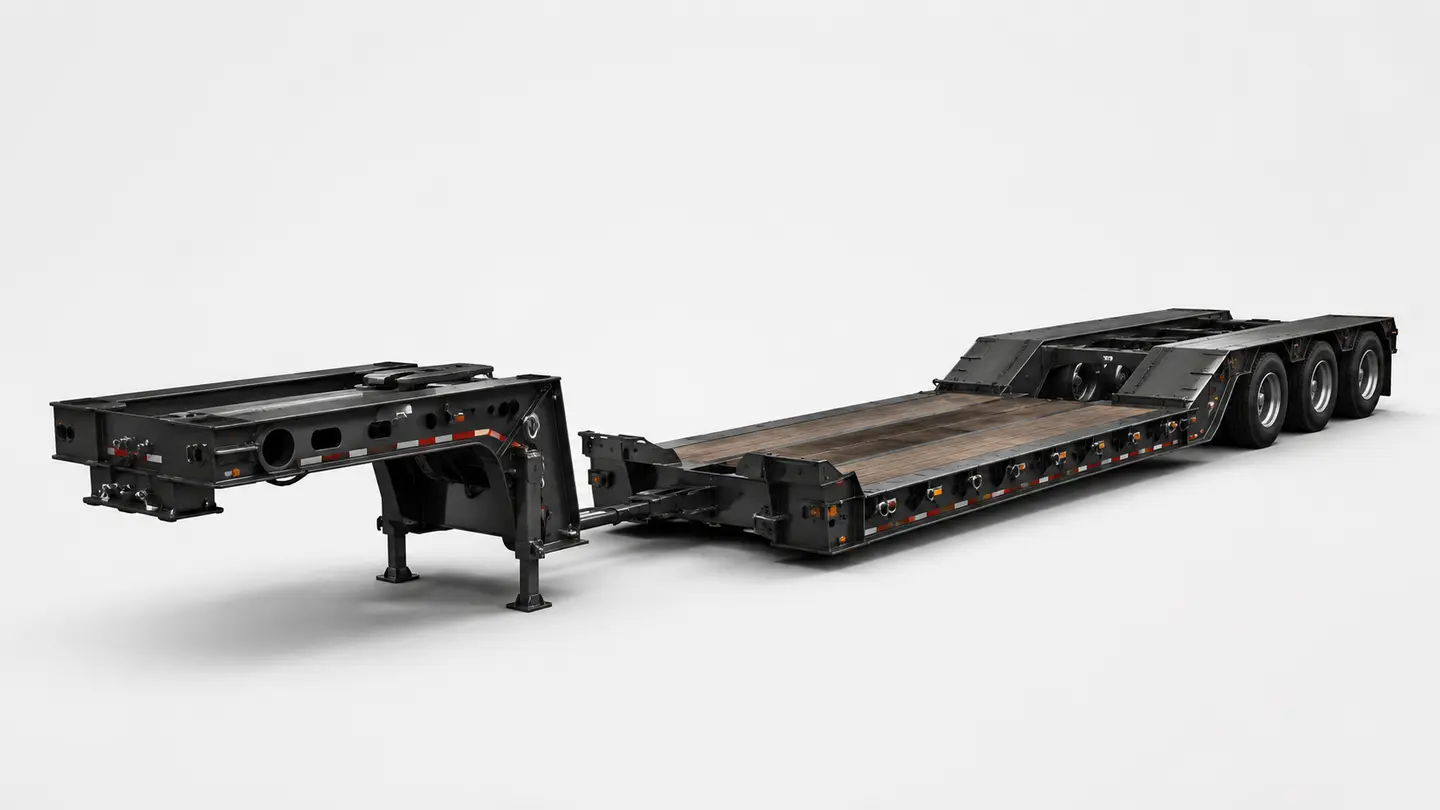
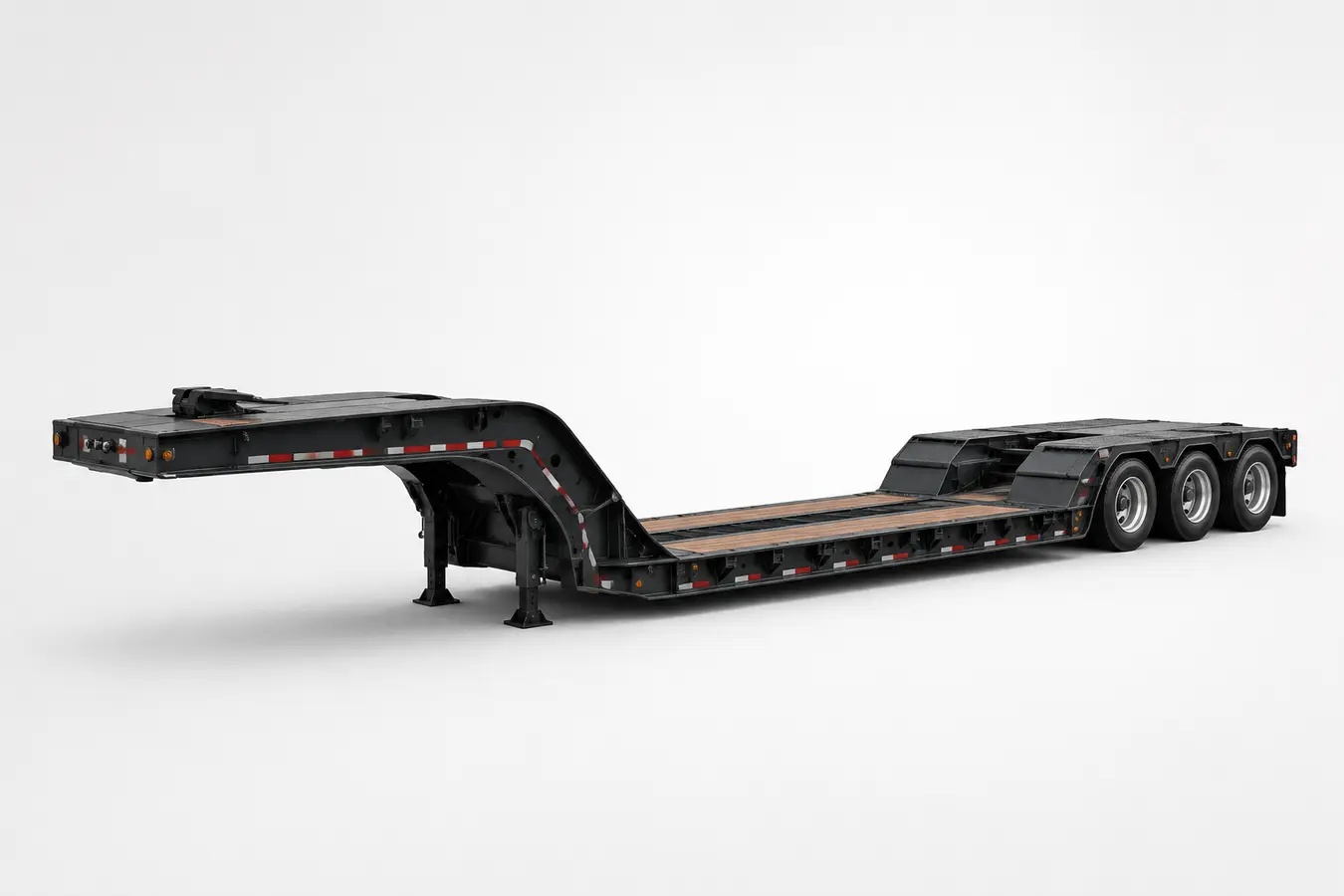
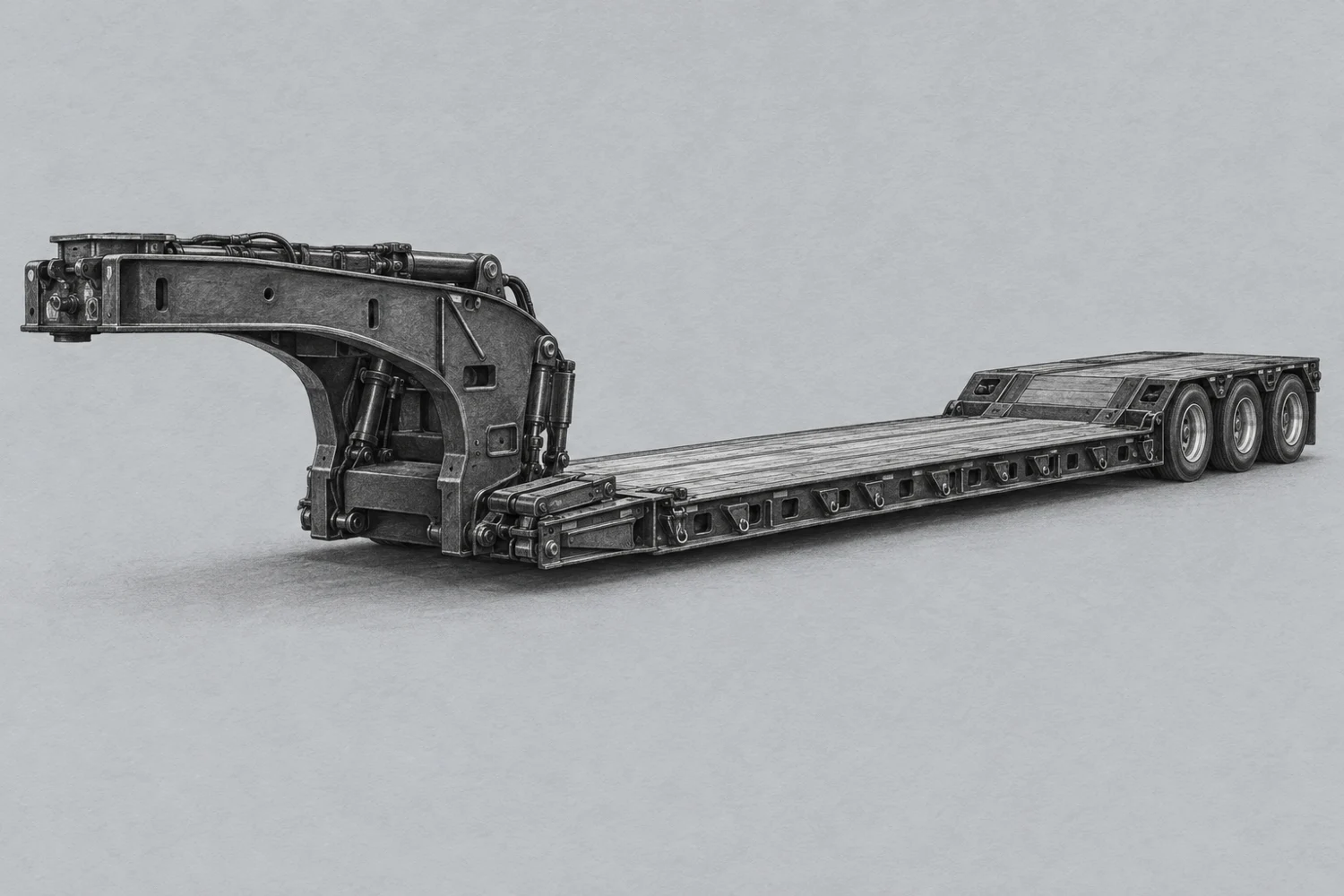
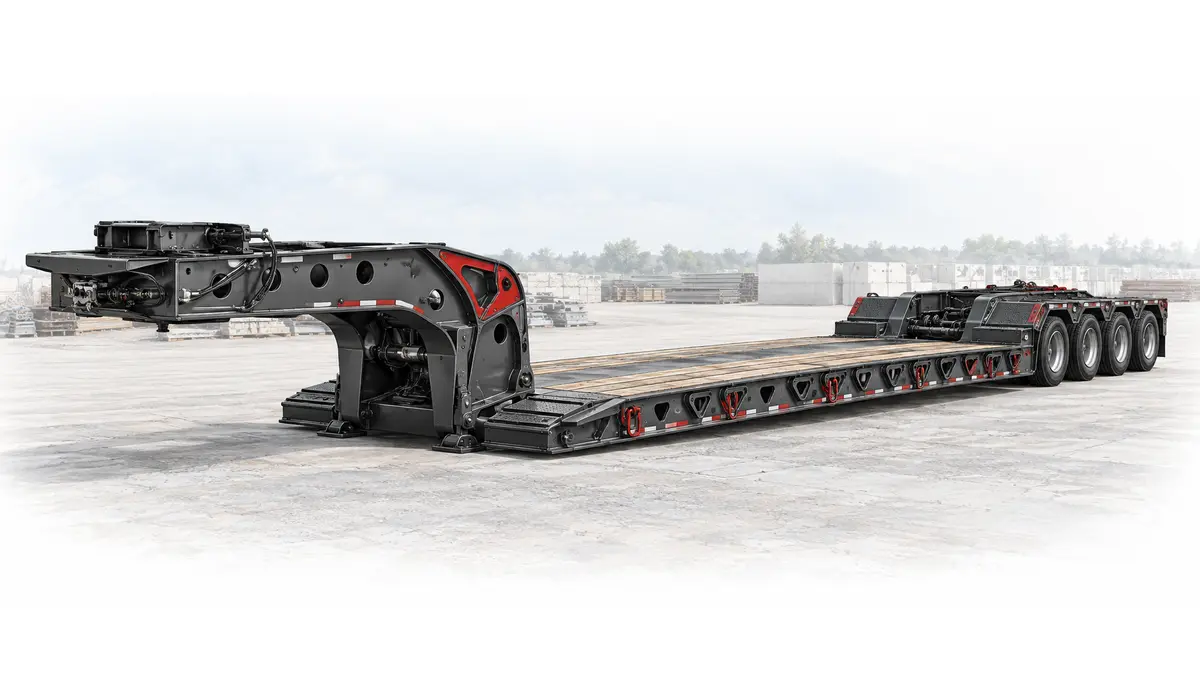
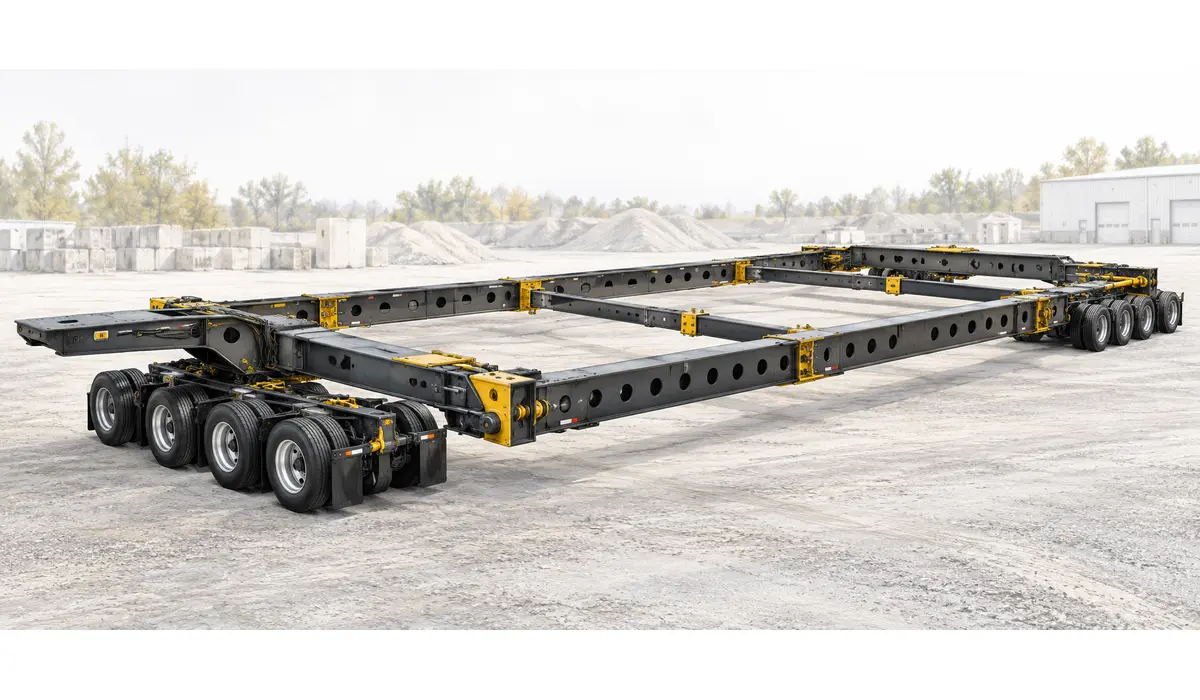
Lowbed and specialized heavy-haul selection begins with the load-support drawing, loading procedure and route. A detachable neck creates a front-loading path; a low deck describes where the load travels. Deck form, neck mechanism and auxiliary axle components must remain separate parts of the specification.
Configuration decisions and the documentation to request
Decision
What changes
Ask for
Fixed or detachable neck
Front access can help self-propelled machinery reach a low well. Fixed-neck equipment may use rear loading or lift-on placement instead.
Operating manual, ground support, tractor provision and approach clearance
Full deck, beam or perimeter
The load may bear on continuous flooring, beams or separated frame members. A similar nominal ton class does not make these load paths equivalent.
Approved contact points, concentrated chart and transverse support
Jeep, booster or modular running gear
Auxiliary equipment changes connections, axle spacing and manoeuvring. The exact assembly controls the load distribution.
Connection ratings, setup drawing, steerability and configuration-specific tare
Inspect the actual trailer
Inspect neck hooks, pins, bearing surfaces and adjustments for wear or unauthorized repair.
Examine the well, transitions and rear frame at high-stress joints.
Confirm auxiliary component identities and operating manuals.
Obtain the exact load chart and modification history before comparing capacities.
Plan the operating environment
Do not equate structural capacity with legal payload. Tractor ratings, reactions, axle spacing, seasonal restrictions and route permissions are separate checks. A lower deck still needs sufficient ground clearance through the loading site and route.
For route-specific checks, start with the applicable provincial authority. Alberta permit resources ↗ and Ontario permit resources ↗ explain their respective processes; neither is a Canada-wide clearance rule.