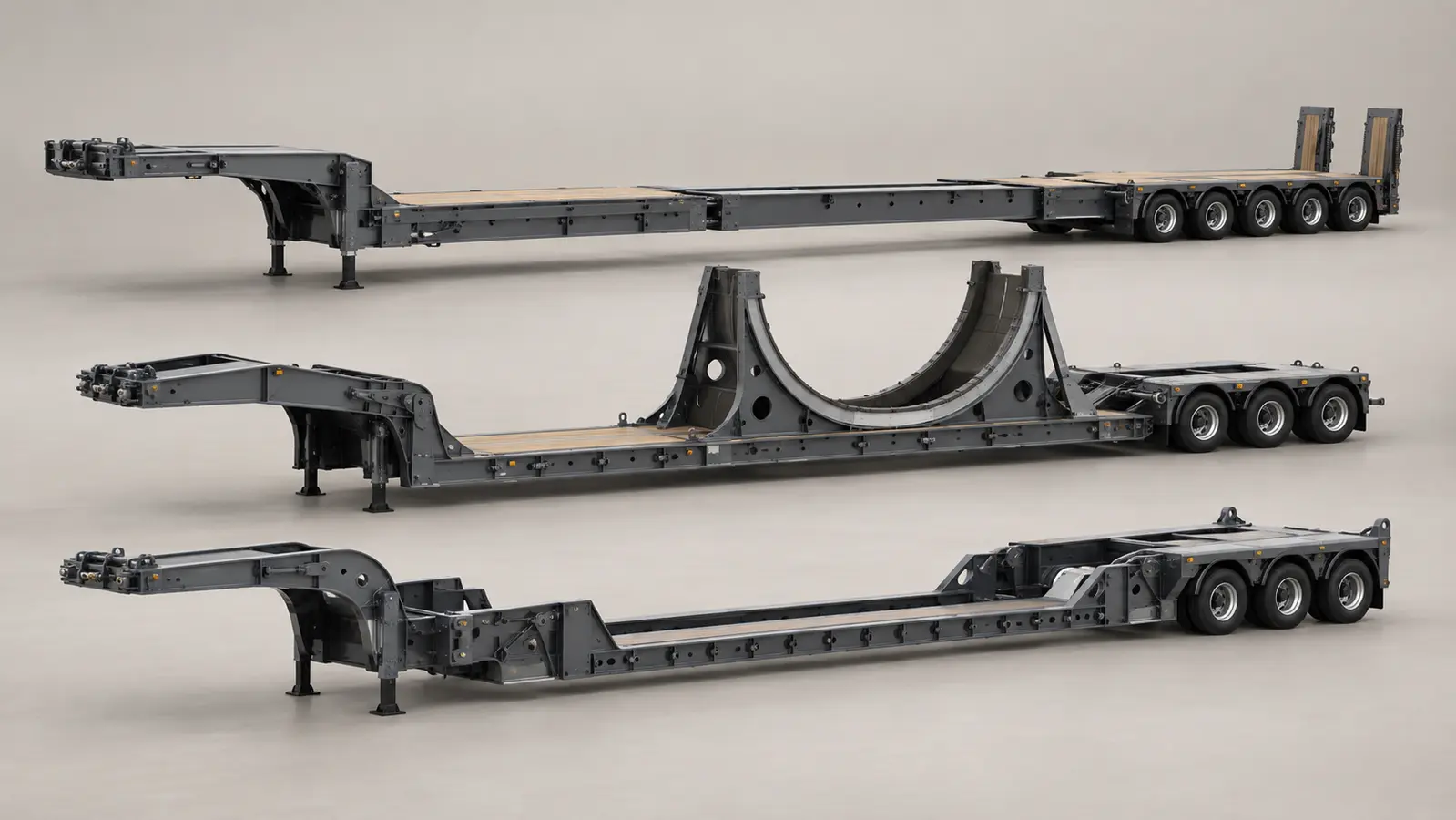
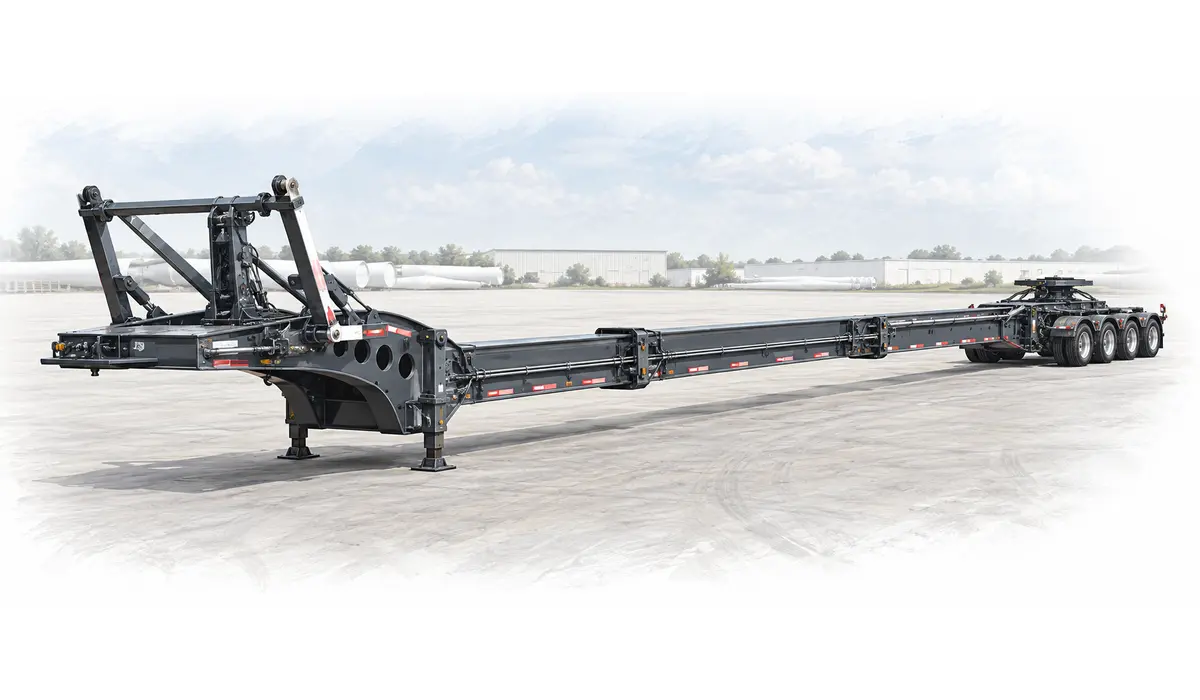
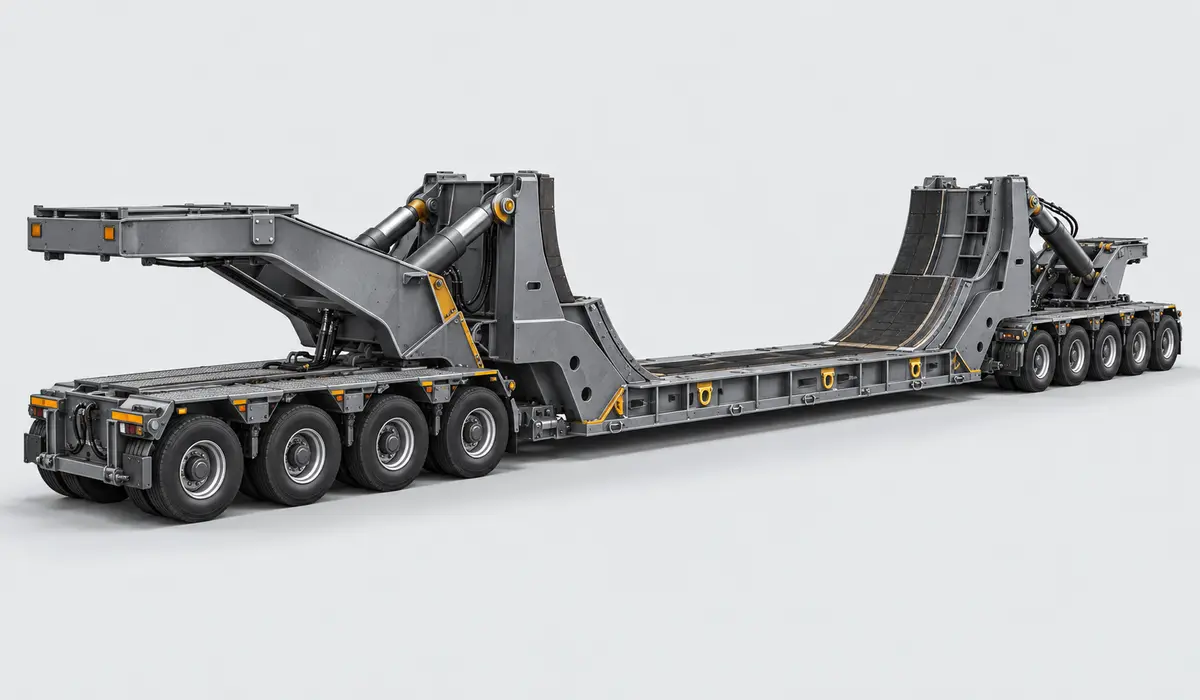
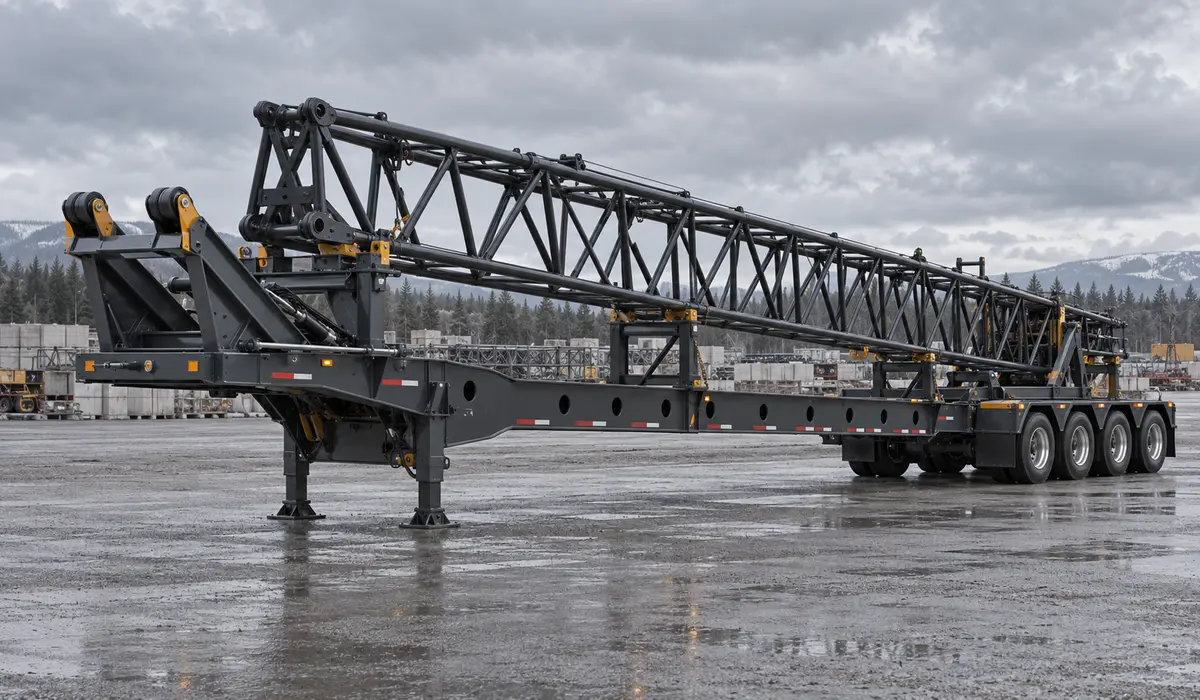
Project transport systems are built around a particular load interface. A wind-blade stretch, blade Schnabel, boom launcher, inloader or cable-reel carrier cannot be selected from nominal length and ton class alone. Establish how the load attaches, bears and moves before comparing systems.
Configuration decisions and the documentation to request
Decision
What changes
Ask for
Support or adapter interface
Some systems support a load on a deck; others connect to purpose-designed adapters or use the load as a structural span.
Approved contact drawing, adapters, component identity and reaction limits
Extension and steering
Transport geometry can change with telescopic length, steering and lift positions.
Operating states, turning envelope, control system and load chart
Handling and highway role
Self-loading, launching and self-propelled equipment are different capabilities.
Operating manual, tow/propulsion mode and highway-use documentation
Inspect the actual trailer
Reconcile component serial numbers to the approved project assembly.
Inspect adapter interfaces, pins, bearing surfaces and welds.
Test steering, hydraulic and control systems under the prescribed procedure.
Obtain engineering drawings and modification records before accepting a replacement component.
Plan the operating environment
Project selection needs a route and handling plan for the exact load, adapters and assembled transport system. An available system-family page is not proof that a particular combination is suitable or permitted for a move.
For route-specific checks, start with the applicable provincial authority. Alberta permit resources ↗ and Ontario permit resources ↗ explain their respective processes; neither is a Canada-wide clearance rule.
The load interface, adapter, self-handling mechanism or project-specific support system establishes this family; the cargo application alone does not create an architecture.
KEEP SEPARATE
Related equipment with a different purpose
Wind-blade stretch trailer versus blade Schnabel system
Crane boom-launch trailer versus ordinary boom dolly or crane transporter
Utility-pole project trailer versus forestry pole / reach trailer
Towed hydraulic modular platform versus self-propelled modular transporter (SPMT)
INSTALLED SYSTEMS
Components do not replace the trailer identity
Blade, tower or vessel adapter
Hydraulic steering and self-positioning equipment
Inloader / pallet / stillage pickup mechanism
Boom-launch, reel-handling or pole-handling equipment
CONFIGURATION QUESTIONS
Details to confirm for the actual build
Floorless Pallet Carrier requires a model-level highway-use gate
IES / specialized precast-panel trailer remains HOLD
HD Floorless remains HOLD as a highway-marketplace identity
SPMT remains related-only because it is self-propelled rather than a highway trailer
BEFORE YOU SELECT
Unknown values stay unknown.
Family membership does not establish a model's dimensions, rating, legal payload, compatibility or current availability.