HT-F12 · P3 PRODUCTION PRIORITY

Forestry

Log, pole and chip-hauling trailers built around bunks, reaches, forestry bodies and specialized unloading methods.
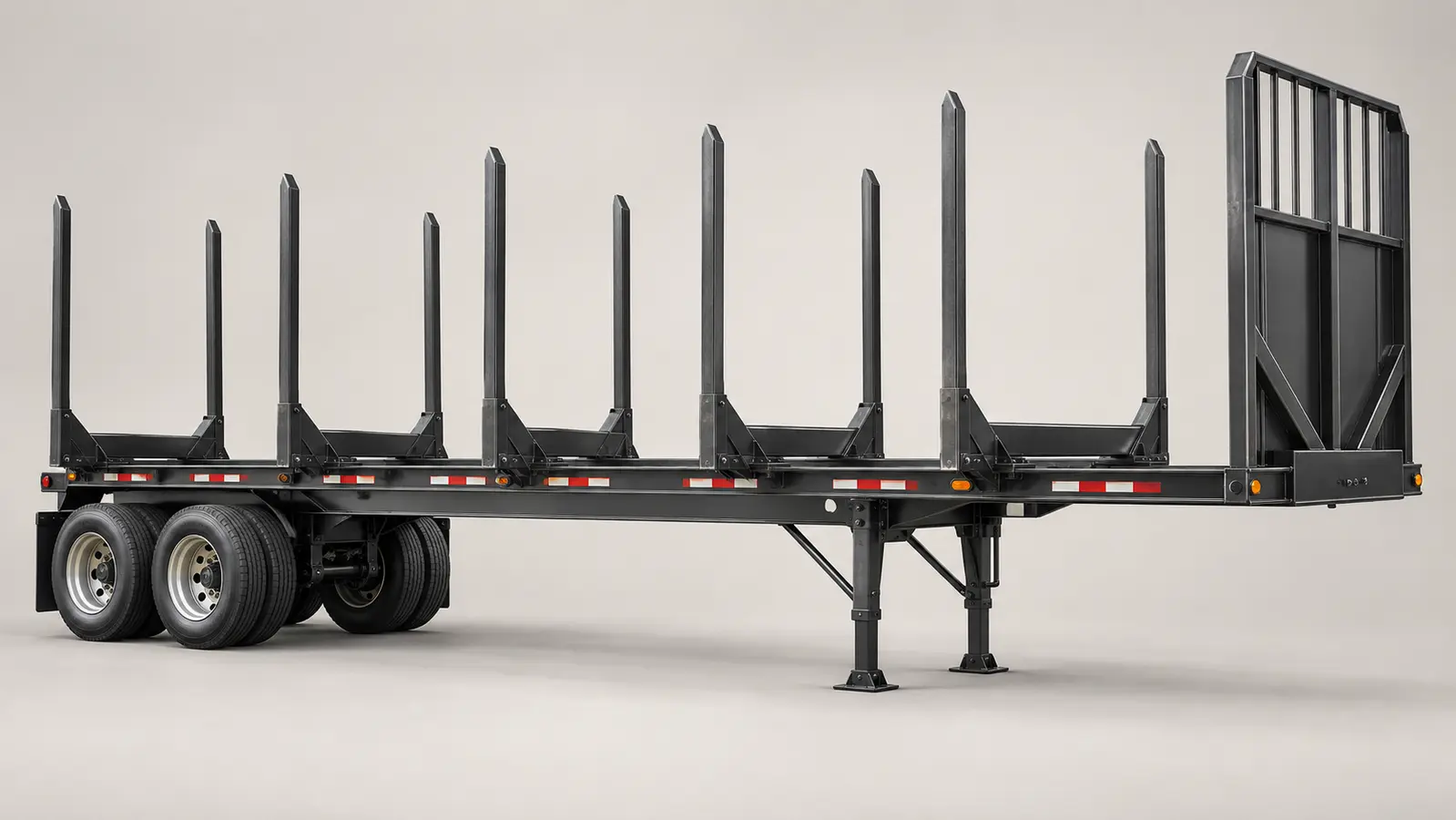
empty highway forestry trailer with multiple log bunks and tall stakes
PHYSICAL ARCHITECTURES

Accepted canonical forms

  • Bunk-and-Stake Log Trailer
  • Pole / Reach Trailer
  • Road Forestry Trailer
  • Chip Van
BUYER QUESTIONS

Facts that change the shortlist

  • Is the load shortwood, longwood, poles or chips?
  • Which bunk, reach, loader and combination arrangement applies?
  • How will a chip body unload at the destination?
FAMILY-AWARE FILTERS

Useful fields for this family

  • forestry load
  • bunk/reach form
  • loader
  • combination
  • chip unload
SEARCH & REGIONAL LANGUAGE

Recognized aliases

log trailer · logging trailer · pole trailer · chip van

DO NOT AUTO-MERGE

False-synonym guardrails

utility pole trailer · small off-road forestry trailer

CURRENT SOURCE COVERAGE

4 mapped model identities

4 source-backed specification references represent 2 accepted physical architectures. These records stay out of the catalogue until imagery and exact configuration gates clear.

MODEL COVERAGE

Documented trailer configurations

Model references are supported by manufacturer documentation. Check each configuration for its available dimensions and ratings.

ARCHITECTURE REFERENCE

1 reviewed mechanism view

Each reference shows the feature that controls classification. It is not a dimension, rating, compatibility or availability source.

HT-P09 · CODE-NATIVE CLASSIFICATION PLATE

Load support and body form define forestry identity

Bunks, a pole reach or an enclosed chip body establish distinct load interfaces and unloading requirements.

Bunk-and-stake log

Transverse bunks and tall stakes directly support log loads.

Pole / reach

Separated supports and a reach carry long poles or stems.

Chip van

Enclosed high-volume body carries chips; unloading stays configuration-specific.

Bunk spacing, loader arrangement, reach length, combination role and chip-unload method remain unasserted.
PHYSICAL BOUNDARY

What makes this family canonical

The physical log, pole/reach, road-forestry or chip-van body establishes the family architecture; cargo length and combination position remain facets.

KEEP SEPARATE

Nearby identities that do not merge

  • Bunk-and-stake log versus pole / reach
  • Chip van versus moving-floor material trailer
  • Forestry pole trailer versus utility-pole project trailer
  • Small ATV or farm-only forestry trailer
INSTALLED SYSTEMS

Components do not replace the trailer identity

  • Bunks and stakes
  • Loader / self-loader equipment
  • Moving-floor chip-unload system
COMBINATION OVERLAYS

Position does not duplicate the body model

  • B-Train
  • Super-B
  • Lead and pup