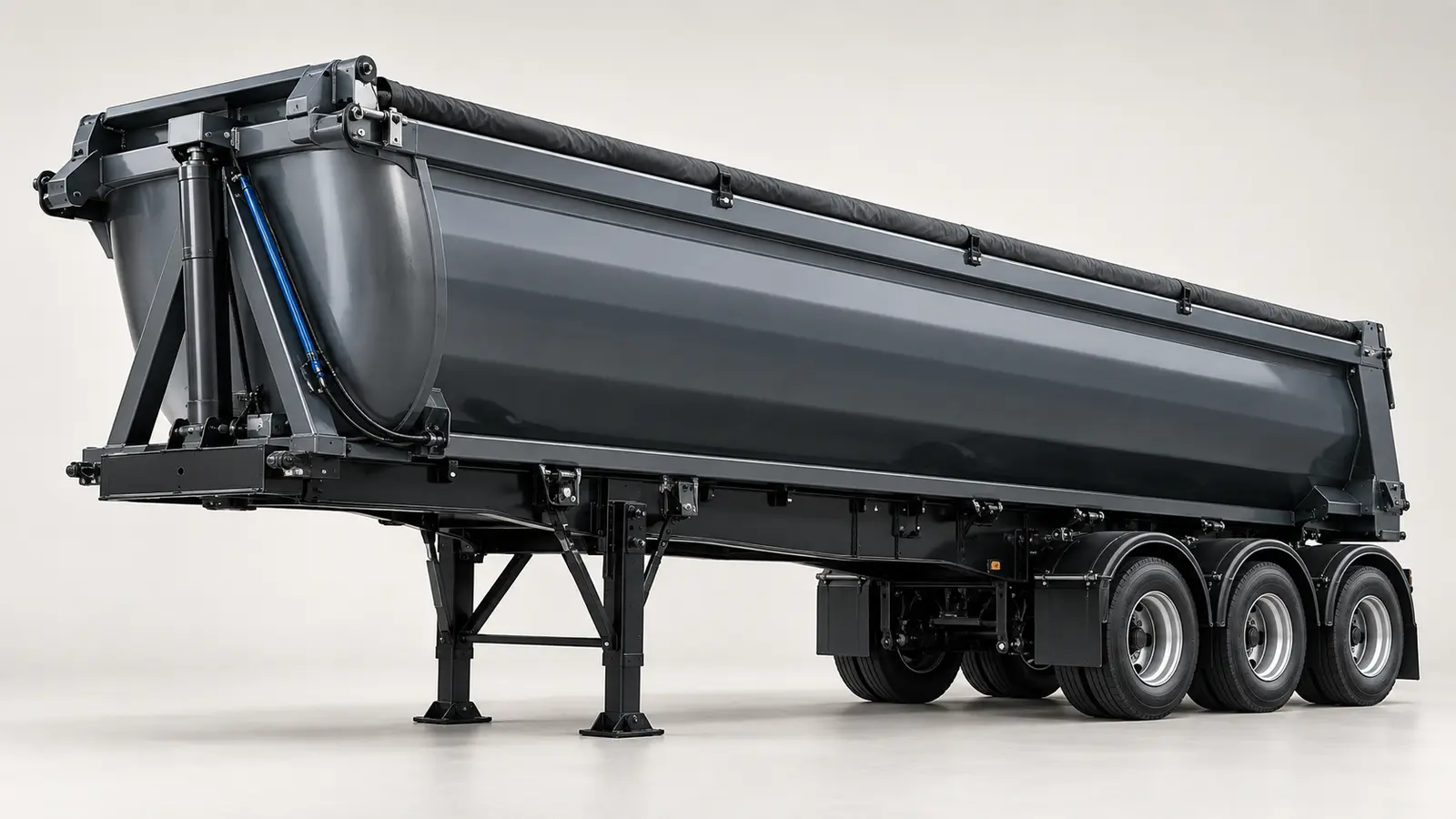
Choose material-hauling equipment around the commodity and the unloading site. The material’s flow, contamination sensitivity and tendency to bridge matter as much as body volume. Tipping, bottom discharge, conveyor belts and reciprocating floors are different unloading mechanisms.
Configuration decisions and the documentation to request
Decision
What changes
Ask for
End or side dump
A body tips to discharge. Ground conditions, working clearance and the permitted unloading direction influence selection.
Site slope/bearing, overhead clearance, tailgate and tipping procedure
Bottom dump
Gates release material beneath the trailer. Placement and ground clearance differ from an agricultural gravity hopper.
Discharge pattern, gate controls, clearance and commodity behaviour
Belt or moving floor
A belt conveys material while reciprocating slats move the load through a different floor action.
Drive system, floor/belt wear, discharge clearance and cleaning method
Inspect the actual trailer
Check hinges, hoists, subframes and body repairs for tipping equipment.
Inspect gate operation and sealing with the actual intended commodity in mind.
Inspect conveyor chains/belts or floor slats, seals and hydraulic drive components.
Record body volume basis and actual equipped tare separately from payload.
Plan the operating environment
Confirm an unloading plan with the receiver. A larger body does not establish a larger legal payload, and a self-unloading mechanism does not remove the need for firm ground and controlled access. Check winter freezing and carryback risks for the commodity.
For route-specific checks, start with the applicable provincial authority. Alberta permit resources ↗ and Ontario permit resources ↗ explain their respective processes; neither is a Canada-wide clearance rule.