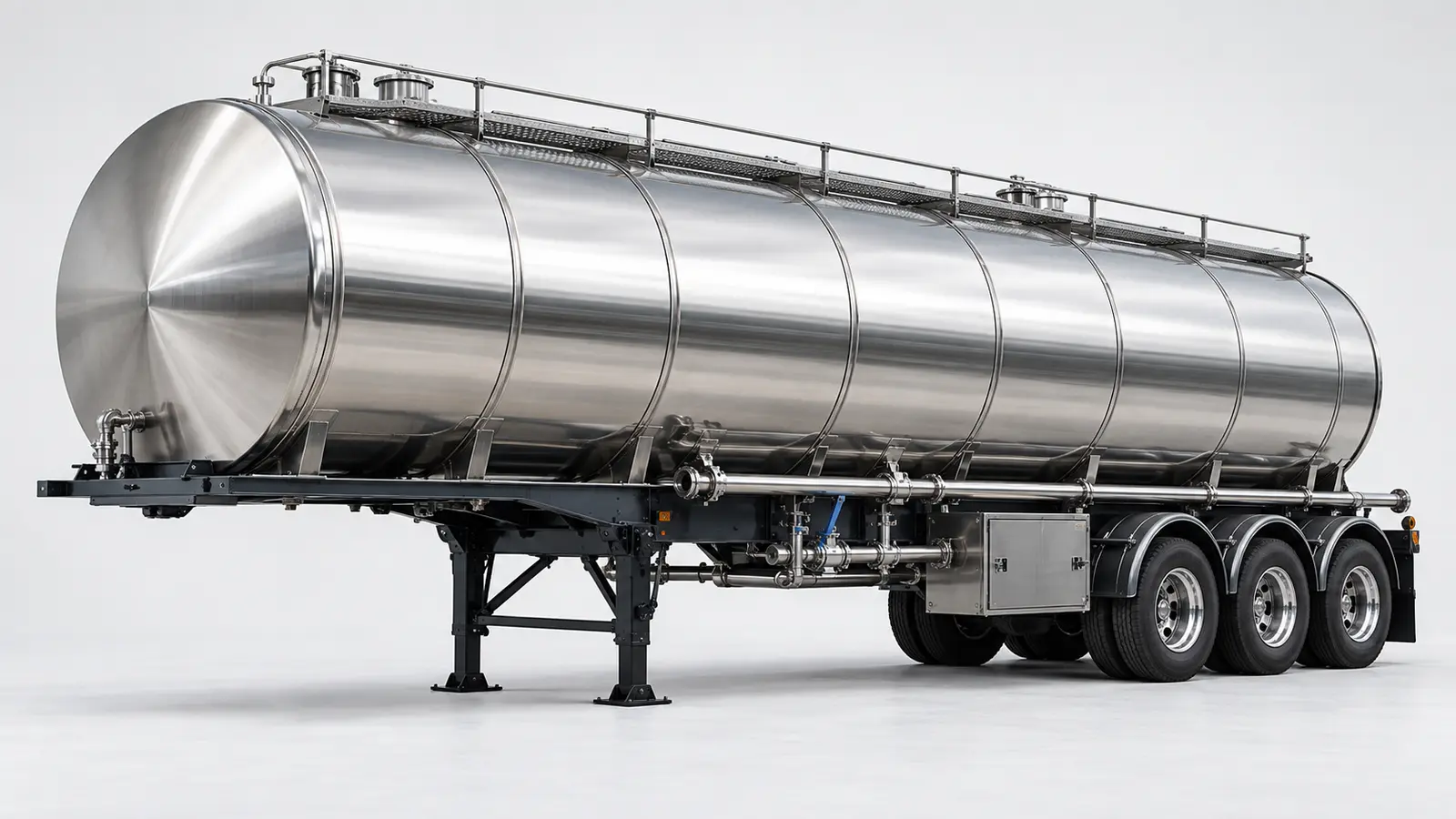
Specify the cargo’s physical state and the documented containment vessel before choosing a tank. Liquid, pressure-gas, cryogenic and pneumatic dry-bulk equipment are distinct. A chemical or food-grade application label does not independently establish the tank code, pressure rating, material or permitted service.
Configuration decisions and the documentation to request
Decision
What changes
Ask for
Liquid vessel
Compartments, material, lining, insulation and pumping equipment must match the intended product and cleaning process.
Identification plate, cargo history, vessel specification and discharge system
Pressure gas or cryogenic service
Pressure and thermal systems are essential parts of the vessel identity. Similar exterior shapes are not evidence of interchangeable service.
Exact code, pressure/temperature basis, inspection records and installed controls
Pneumatic dry bulk
Powders and granular products require a documented pressure/airflow and discharge arrangement.
Vessel specification, blower interface, aeration, piping and product compatibility
Inspect the actual trailer
Review vessel identification, inspection and repair records with a qualified specialist.
Check valves, piping, protection structures, hoses and emergency equipment as applicable.
Verify cleaning history and compatibility with the proposed cargo.
Inspect chassis attachments and the installed pump/blower/power system separately from the vessel.
Plan the operating environment
Tank acceptance depends on the specific cargo, vessel and applicable jurisdiction. This family guide does not authorize dangerous-goods service or establish certification. Carry the vessel documentation, current inspections and operating procedure into the purchase review.
For route-specific checks, start with the applicable provincial authority. Alberta permit resources ↗ and Ontario permit resources ↗ explain their respective processes; neither is a Canada-wide clearance rule.
What is the cargo physical state and exact regulatory code?
Which pressure, vacuum, material and thermal requirements apply?
What pump, blower, compartment and sanitary systems are documented?
SPECIFICATION CHECKLIST
Useful fields for this family
cargo state
regulatory code
pressure
material
thermal system
compartments
COMMON TERMINOLOGY
Other names you may encounter
tanker · chemical trailer · pneumatic trailer · cryogenic trailer
COMPARE CAREFULLY
Similar terms, different equipment
tank container as tank trailer · CNG as LNG · LPG as LNG
MANUFACTURER REFERENCES
1 documented model
1 specification reference covers 1 trailer architecture. Open the specification library for model-specific documentation.
MODEL COVERAGE
Documented trailer configurations
Model references are supported by manufacturer documentation. Check each configuration for its available dimensions and ratings.
ARCHITECTURE REFERENCE
1 reviewed mechanism view
Each reference shows the feature that controls classification. It is not a dimension, rating, compatibility or availability source.
TRAILER MECHANISMS
Vessel identity before cargo shorthand
Physical state, vessel form, pressure or thermal construction and regulatory identity distinguish tank and bulk architectures.
Liquid tank
Integral highway vessel; code and commodity remain unasserted.
Sanitary tank
Cleanable insulated vessel form; food-grade status requires evidence.
Pressure gas
Pressure vessel geometry and protected valve area.
Cryogenic
Thermally insulated pressure vessel with a distinct rear cabinet.
Pneumatic bulk
Dry-bulk vessel with hopper cones and pneumatic discharge.
Tank container
ISO-framed carried entity on a separate container chassis.
PHYSICAL BOUNDARY
How to identify this trailer family
The trailer body itself is the documented liquid, pressure-gas, cryogenic or pneumatic dry-bulk containment vessel. Cargo words alone do not establish the family or a regulatory identity.
KEEP SEPARATE
Related equipment with a different purpose
Tank or MEGC container carried on an intermodal chassis
Container chassis configured to carry an ISO tank
Dry-bulk hopper without a documented pressure or vacuum unloading system
CNG, LNG and LPG as distinct cargo and system identities
INSTALLED SYSTEMS
Components do not replace the trailer identity
Pump, blower or vacuum package
Heating, insulation and temperature-control equipment
Compartment, baffle, bulkhead and sanitary-cleaning systems
Hose, valve and metering equipment
BEFORE YOU SELECT
Unknown values stay unknown.
Family membership does not establish a model's dimensions, rating, legal payload, compatibility or current availability.