TRAILER BUYER GUIDE

Equipment & Loading

Trailers whose ramps, tilt decks, hydraulic tails or traveling axles create the primary equipment-loading path.

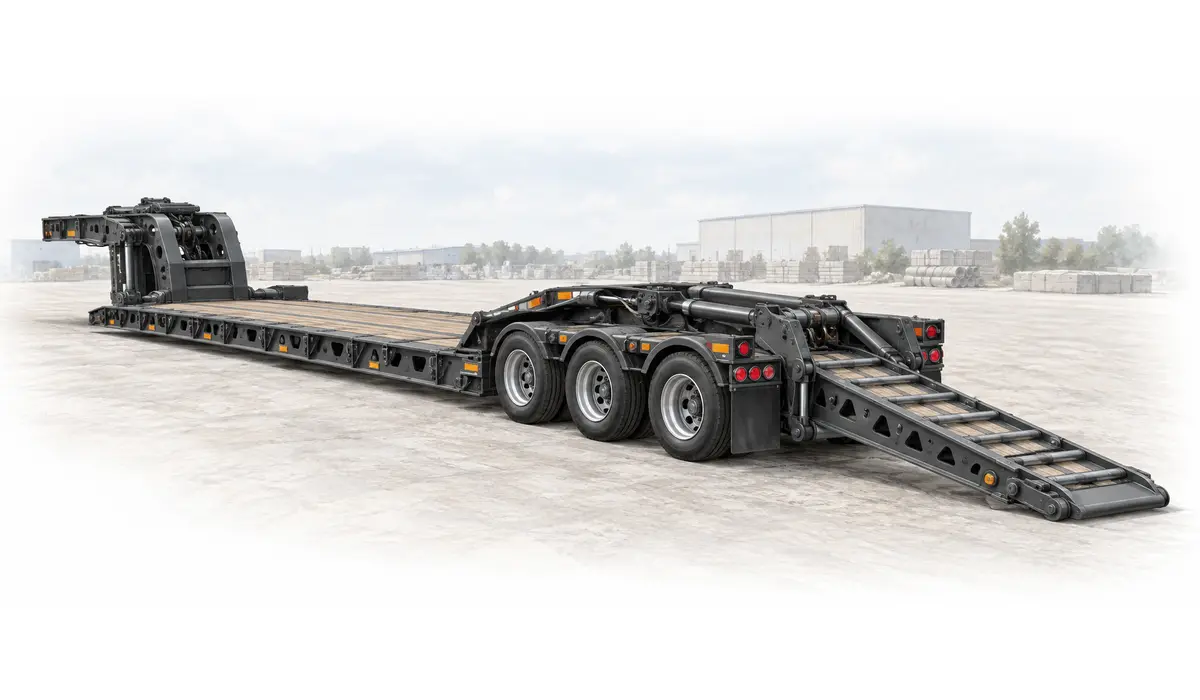
Trail King hydraulic-tail equipment trailer
BUYING & SPECIFYING

Choose around the work.

Equipment trailers must carry the machine and provide a workable path onto the deck. Hydraulic tails, sliding axles, tilting decks and folding mechanisms achieve access differently. Transport capacity, tail lifting limits and loading-angle performance need separate evidence.

Configuration decisions and the documentation to request
DecisionWhat changesAsk for
Hydraulic tailThe tail changes position to provide a loading path and may have a separately limited lifting task. Do not apply the main-frame rating to the tail.Tail chart, extension state, hinge geometry and hydraulic requirements
Traveling axleMoving the running gear allows a tilting deck to approach the ground. The loading cycle and winch arrangement affect non-running equipment.Deck approach, axle travel, winch rating and stabilizing procedure
Ramps, tilt or folding neckA simple ramp may be sufficient for some machines; low belly clearance or long wheelbase can make transitions decisive.Approach and breakover path, traction, contact width and ramp rating

Inspect the actual trailer

  • Operate the complete loading cycle on suitable ground.
  • Inspect cylinders, hoses, hinges, locks and axle-slide wear surfaces.
  • Confirm winch, cable and anchor documentation for recovery work.
  • Check the machine’s lowest points throughout the transition, including attachments.

Plan the operating environment

A loading site needs sufficient ground bearing and working clearance. Snow, ice, slope and poor traction can change a workable transport plan into an unsuitable loading operation. Use the equipment and trailer instructions for the actual cycle.

For route-specific checks, start with the applicable provincial authority. Alberta permit resources ↗ and Ontario permit resources ↗ explain their respective processes; neither is a Canada-wide clearance rule.
PHYSICAL ARCHITECTURES

Trailer configurations

  • Fixed-Deck Ramp / Beavertail
  • Tilt Deck
  • Hydraulic Dovetail
  • Hydraulic Tail
  • Traveling / Sliding Axle
  • Hydraulic Sliding Tail
  • Rollback
BUYER QUESTIONS

Facts that change the shortlist

  • What approach angle and ground clearance does the machine require?
  • Which ramp, tail, tilt or axle movement creates the loading path?
  • Are winch, hydraulic-source and dock-loading requirements documented?
SPECIFICATION CHECKLIST

Useful fields for this family

  • loading mechanism
  • coupling
  • load angle
  • winch
  • hydraulic source
  • axles
COMMON TERMINOLOGY

Other names you may encounter

beavertail · tilt deck · hydraulic tail · traveling axle · sliding axle · Landoll trailer

COMPARE CAREFULLY

Similar terms, different equipment

all equipment trailers as lowboys · rollback as detachable gooseneck

MANUFACTURER REFERENCES

29 documented models

33 specification references cover 4 trailer architectures. 26 documented configurations can be explored in the catalogue.

MODEL COVERAGE

Documented trailer configurations

Model references are supported by manufacturer documentation. Check each configuration for its available dimensions and ratings.

ARCHITECTURE REFERENCE

2 reviewed mechanism views

Each reference shows the feature that controls classification. It is not a dimension, rating, compatibility or availability source.

Representative Trail King hydraulic-tail equipment trailer showing the hinged full-width rear loading tail
GUIDE G

Hydraulic tail

A powered full-width rear tail creates the equipment loading path and returns to transport position.

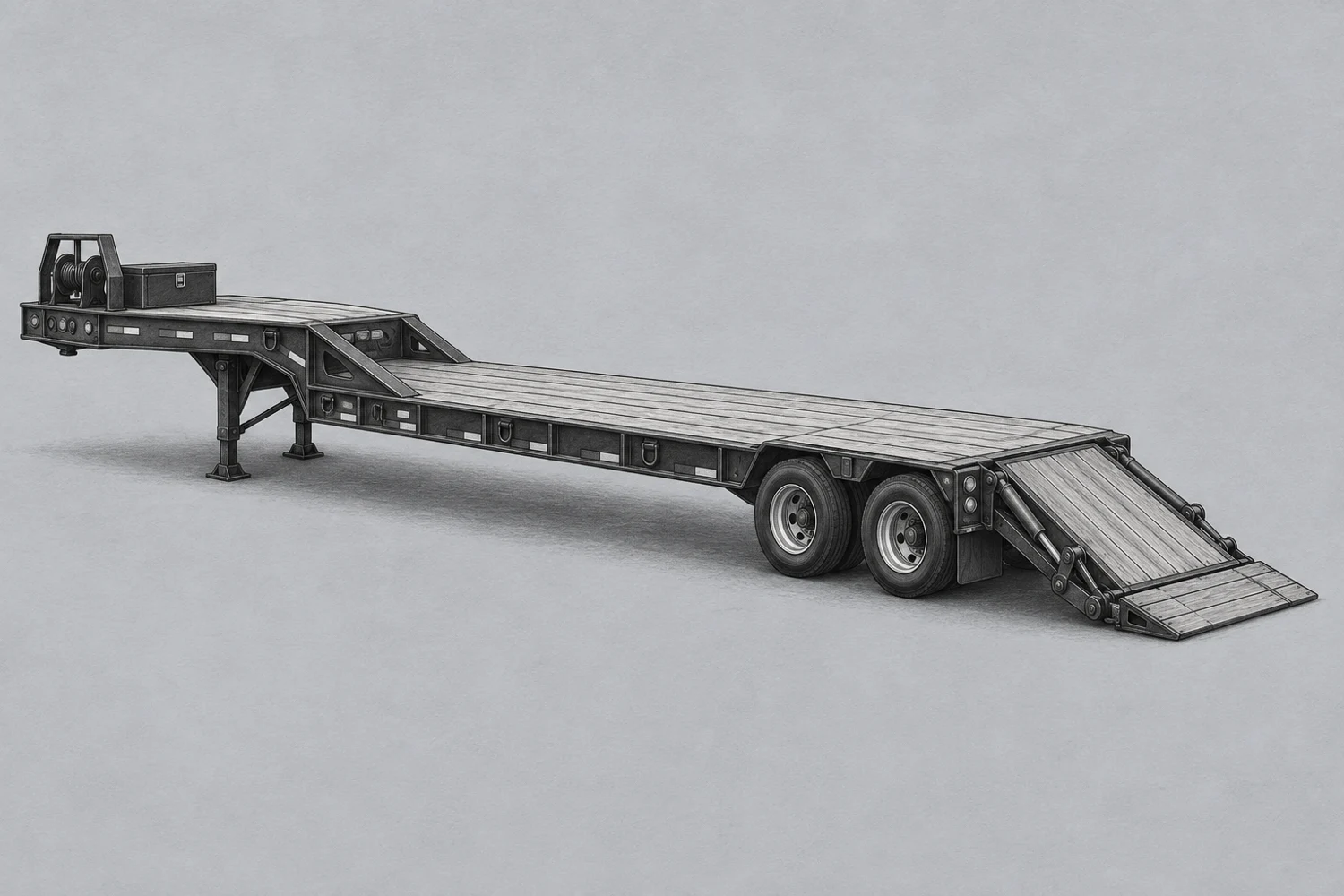
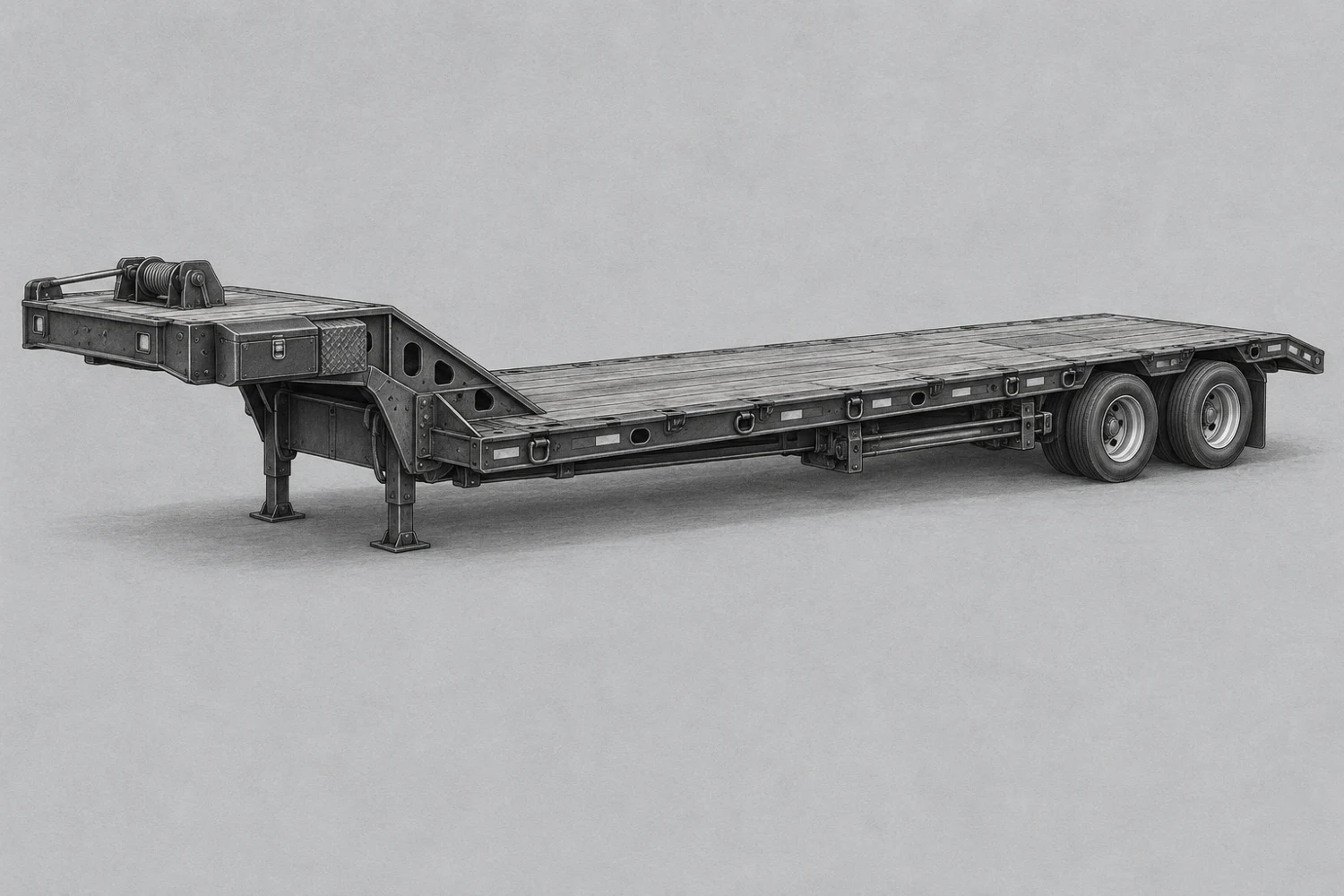
Representative Trail King traveling-axle trailer showing the sliding rear undercarriage and low loading platform
GUIDE H

Traveling axle

The rear undercarriage travels relative to the deck so the platform can approach ground level.

MANUFACTURER MODELS

3 documented models

Explore manufacturer models, documented configurations and source-backed specifications.