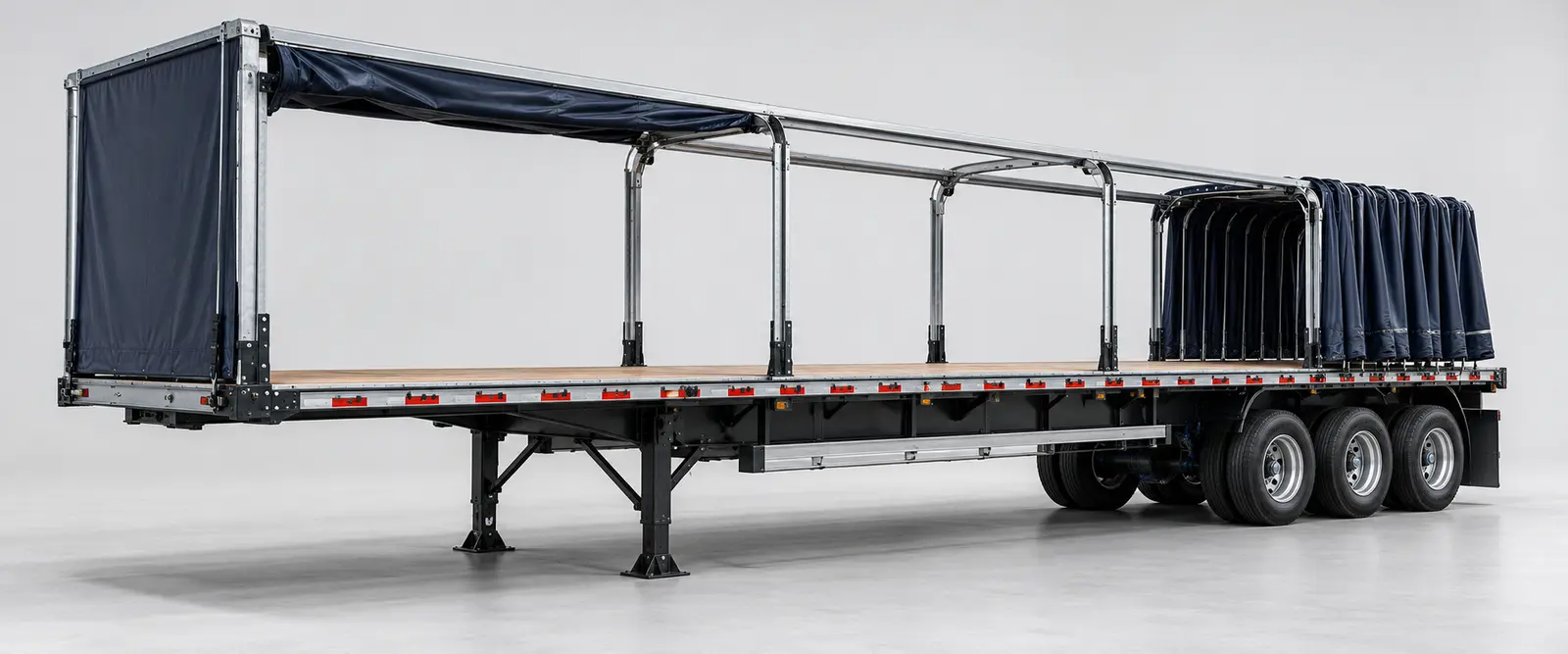
Protected open deck suits freight that needs weather coverage while retaining the loading access of a platform. Identify the underlying flatbed, step deck or low-well geometry first, then choose the enclosure. The cover system changes access and clearances; it does not establish a new frame rating or turn the trailer into a dry van.
Configuration decisions and the documentation to request
Decision
What changes
Ask for
Curtainside
Side curtains open along a framed body, with roof and structural members that may remain in the loading envelope. Confirm which posts move and which loading paths are available.
Clear side openings, post locations, roof access and curtain operation
Rolling tarp or sliding bow
A retracting bow-and-cover assembly exposes portions of the deck. Its parked position and rails can consume useful space or obstruct loading equipment.
Retracted package, track positions, working height and opening sequence
Side kit and rack-and-tarp
Removable boards, stakes and bows create a different handling task from a sliding cover. Storage and manual handling are part of the operating plan.
Kit weight, removable components, secure storage and assembly procedure
Inspect the actual trailer
Run the full opening and closing cycle and inspect tracks, rollers, bows and end locks.
Check curtain or tarp seams and tensioning gear, not just exterior appearance.
Confirm the load-restraint design separately; do not assume a curtain restrains cargo.
Inspect the underlying deck, frame and securement anchors after the enclosure is moved.
Plan the operating environment
Winter ice and contamination can affect sliding components and covers. Confirm the manufacturer’s operating and cleaning procedure and the space needed at the loading site. Branded enclosure systems must be identified by their actual manufacturer and configuration.
For route-specific checks, start with the applicable provincial authority. Alberta permit resources ↗ and Ontario permit resources ↗ explain their respective processes; neither is a Canada-wide clearance rule.