TRAILER BUYER GUIDE

Dry Van & Enclosed Freight

Enclosed freight bodies for weather protection, general freight and specialized side- or rear-loading work.

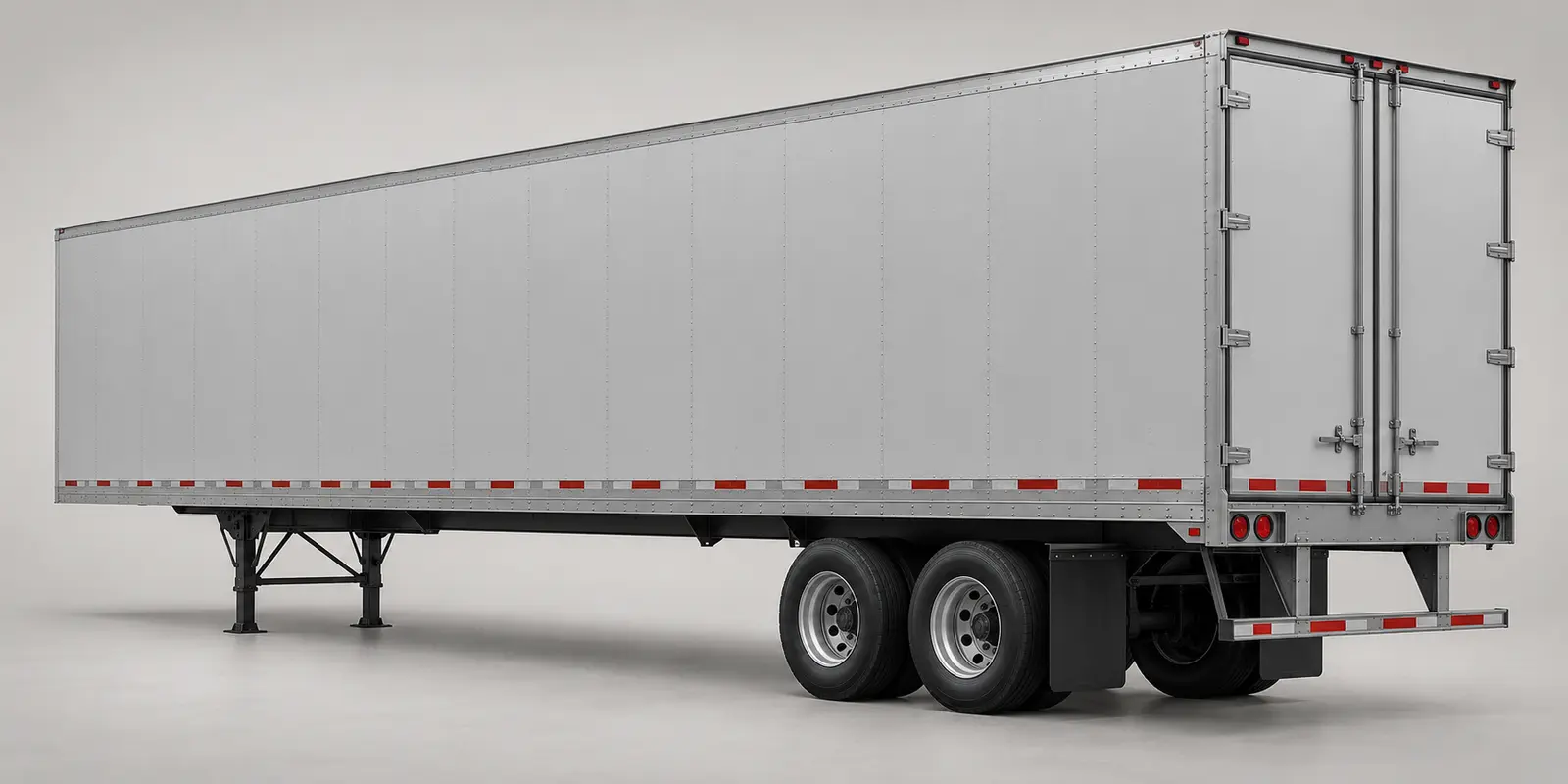
dry-van semitrailer showing the enclosed body and rear swing-door architecture
BUYING & SPECIFYING

Choose around the work.

Choose a dry van when the freight needs a permanent enclosure and the loading sites can work with its door arrangement. Pallet count alone is a poor specification: the door aperture, interior width between obstructions, dock interface and floor loading all influence the job. A heated van can protect against freezing without providing the active cooling of a refrigerated trailer.

Configuration decisions and the documentation to request
DecisionWhat changesAsk for
Composite or sheet-and-postCompare the wall construction, repair method and cargo-control attachments. A smooth interior can reduce snag points, but the wall and restraint system still need to suit the freight.Wall section, repair instructions and rated restraint attachment positions
Dock freight or delivery workSwing doors, roll-up doors and side-access arrangements change the usable opening and how the trailer reaches a dock. A body dimension does not establish the clear door opening.Clear aperture, dock height, threshold and liftgate requirements
Pallets or concentrated floor loadsA forklift crossing the threshold and a dense load standing on small feet create different floor demands. An advertised payload does not replace the floor rating.Forklift axle/contact basis, floor specification and crossmember layout

Inspect the actual trailer

  • Check roof seams and translucent panels for leaks, repairs and water staining.
  • Inspect the threshold, rear frame, door hinges, seals and locking gear with the doors operating.
  • Review floor damage and underside crossmembers, especially at forklift paths and repair patches.
  • Inspect slider pins, rails, suspension attachments, brake components and corrosion around dissimilar materials.

Plan the operating environment

For Canadian year-round service, specify the actual freight temperature requirement rather than assuming an enclosed body provides freeze protection. Check door and slider operation in winter and keep equipped tare separate from the gross and axle limits for the intended route.

For route-specific checks, start with the applicable provincial authority. Alberta permit resources ↗ and Ontario permit resources ↗ explain their respective processes; neither is a Canada-wide clearance rule.
PHYSICAL ARCHITECTURES

Trailer configurations

  • Sheet-and-Post Dry Van
  • Composite / Plate Dry Van
  • Heater / Freeze-Protection Van
  • Side-Load Beverage
BUYER QUESTIONS

Facts that change the shortlist

  • What cargo envelope and door arrangement are required?
  • Does the load need heat, freeze protection or only passive enclosure?
  • Which floor, wall and roof construction suits the service?
SPECIFICATION CHECKLIST

Useful fields for this family

  • body construction
  • length
  • door arrangement
  • floor rating
  • temperature protection
COMMON TERMINOLOGY

Other names you may encounter

dry van · enclosed freight trailer · freight van

COMPARE CAREFULLY

Similar terms, different equipment

refrigerated trailer · reefer container

MANUFACTURER REFERENCES

7 documented models

7 specification references cover 3 trailer architectures. Open the specification library for model-specific documentation.

MODEL COVERAGE

Documented trailer configurations

Model references are supported by manufacturer documentation. Check each configuration for its available dimensions and ratings.

ARCHITECTURE REFERENCE

1 reviewed mechanism view

Each reference shows the feature that controls classification. It is not a dimension, rating, compatibility or availability source.

TRAILER MECHANISMS

Enclosure versus active refrigeration

A dry van is an enclosed freight body. A refrigerated trailer adds insulation, active temperature control and its installed refrigeration system.

Dry van body

Enclosed cargo body; no active refrigeration is implied.

Refrigerated body

Insulated body with a front-mounted transport refrigeration unit.

Heaters and freeze-protection systems are configuration facts; they do not automatically create a refrigerated architecture.
PHYSICAL BOUNDARY

How to identify this trailer family

A permanent enclosed freight body is canonical here. Heater or freeze-protection equipment does not establish active refrigeration.

KEEP SEPARATE

Related equipment with a different purpose

  • Refrigerated trailer with an active temperature-control system
  • Reefer container carried on an intermodal chassis
  • Stationary enclosure or storage body
INSTALLED SYSTEMS

Components do not replace the trailer identity

  • Heater / freeze-protection package
  • Captive-beam / double-deck system
  • Side-load beverage door and body equipment