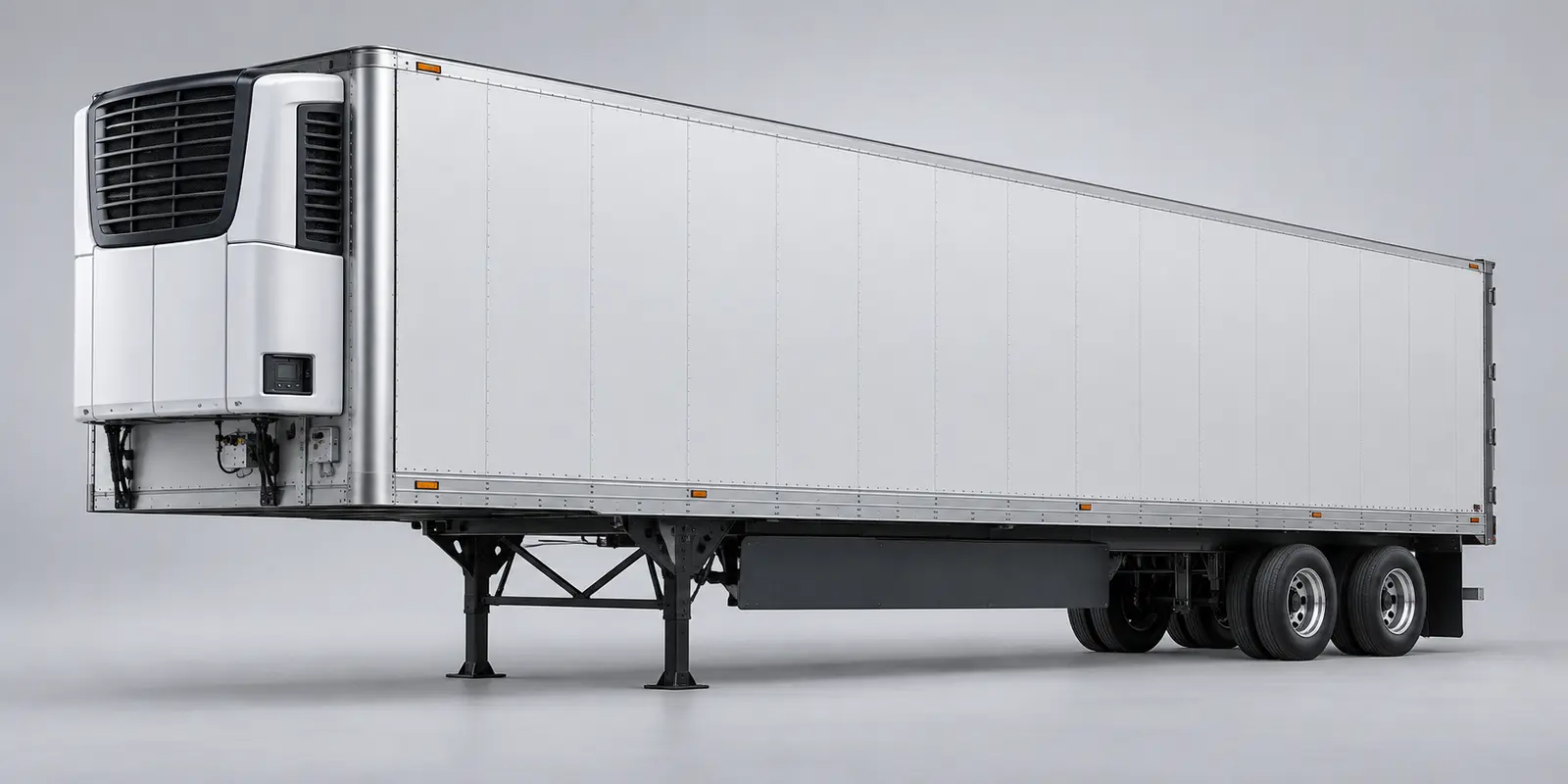
Start with the product temperature, loading pattern and delivery cycle. A refrigerated trailer combines an insulated body with an installed temperature-control system; the body model and the refrigeration-unit model answer different questions. Refrigeration should be selected around the cargo and operation, not simply the presence of a front-mounted unit.
Configuration decisions and the documentation to request
Decision
What changes
Ask for
Single or multiple temperature zones
Mixed freight may require partitions, remote evaporators and a verified airflow arrangement. A movable bulkhead alone does not prove that separate temperatures can be maintained.
Zone layout, evaporator arrangement, bulkheads and unit capability
Linehaul or frequent deliveries
Door openings, dwell time and loading practices affect the thermal task. Rear-door geometry and optional side doors must be assessed alongside the temperature system.
Delivery cycle, door openings, return-air path and cargo loading plan
Power and body condition
Standby power, heating, fuel supply and refrigeration controls are installed-system details. Insulation condition and door seals matter independently of the unit hours.
TRU model/service record, power options and body/insulation inspection
Inspect the actual trailer
Obtain refrigeration maintenance history and a witnessed functional check under relevant conditions.
Inspect the liner, floor channels, drains and return-air path for damage or obstruction.
Look for wet insulation, damaged door seals, panel repairs and evidence of corrosion beneath the body.
Confirm partitions, remote evaporators, temperature sensors and standby connections against the order sheet.
Plan the operating environment
Cold ambient weather does not eliminate the need for temperature control: some freight needs heat or freeze protection. Establish the loading temperature, washout expectations and monitoring responsibilities for the actual commodity. A reefer container on a chassis remains an intermodal configuration.
For route-specific checks, start with the applicable provincial authority. Alberta permit resources ↗ and Ontario permit resources ↗ explain their respective processes; neither is a Canada-wide clearance rule.
What temperature range and recovery performance are required?
Is one zone sufficient or are remote evaporators needed?
Which TRU, standby and telematics systems are installed?
SPECIFICATION CHECKLIST
Useful fields for this family
temperature zones
TRU
insulation
airflow
standby power
COMMON TERMINOLOGY
Other names you may encounter
reefer · refrigerated van · temperature-controlled trailer
COMPARE CAREFULLY
Similar terms, different equipment
passive insulated van · reefer container
MANUFACTURER REFERENCES
3 documented models
3 specification references cover 1 trailer architecture. Open the specification library for model-specific documentation.
MODEL COVERAGE
Documented trailer configurations
Model references are supported by manufacturer documentation. Check each configuration for its available dimensions and ratings.
ARCHITECTURE REFERENCE
1 reviewed mechanism view
Each reference shows the feature that controls classification. It is not a dimension, rating, compatibility or availability source.
TRAILER MECHANISMS
Temperature zones and installed systems
Zone count is established by the documented interior partition and airflow system. The TRU is an installed system, not the trailer body identity by itself.
Single temperature
One controlled cargo zone served by the documented airflow system.
Multi temperature
A physical partition and secondary evaporator create separately controlled zones.
Installed TRU
Front refrigeration unit shown as a component attached to the body.
PHYSICAL BOUNDARY
How to identify this trailer family
An insulated highway trailer with a documented active temperature-control system is canonical here; the refrigeration equipment remains a separate installed component.
KEEP SEPARATE
Related equipment with a different purpose
Passive insulated or heater-equipped dry van
Reefer container carried on a chassis
Stationary refrigeration equipment
INSTALLED SYSTEMS
Components do not replace the trailer identity
Transport refrigeration unit (TRU)
Remote evaporator
Generator / electric standby
Telematics and heating package
BEFORE YOU SELECT
Unknown values stay unknown.
Family membership does not establish a model's dimensions, rating, legal payload, compatibility or current availability.