Talbert
Explore 27 documented model identities across 3 trailer families. Compare the actual loading mechanism and selected configuration before comparing dimensions or ratings.
Find the right product architecture
A manufacturer product family may include several configurations. The reference selector retains each documented state and its source conditions; it does not turn every length, axle or option into a separate model. Current product documentation does not establish an individual trailer’s condition, production-year range or sale availability.
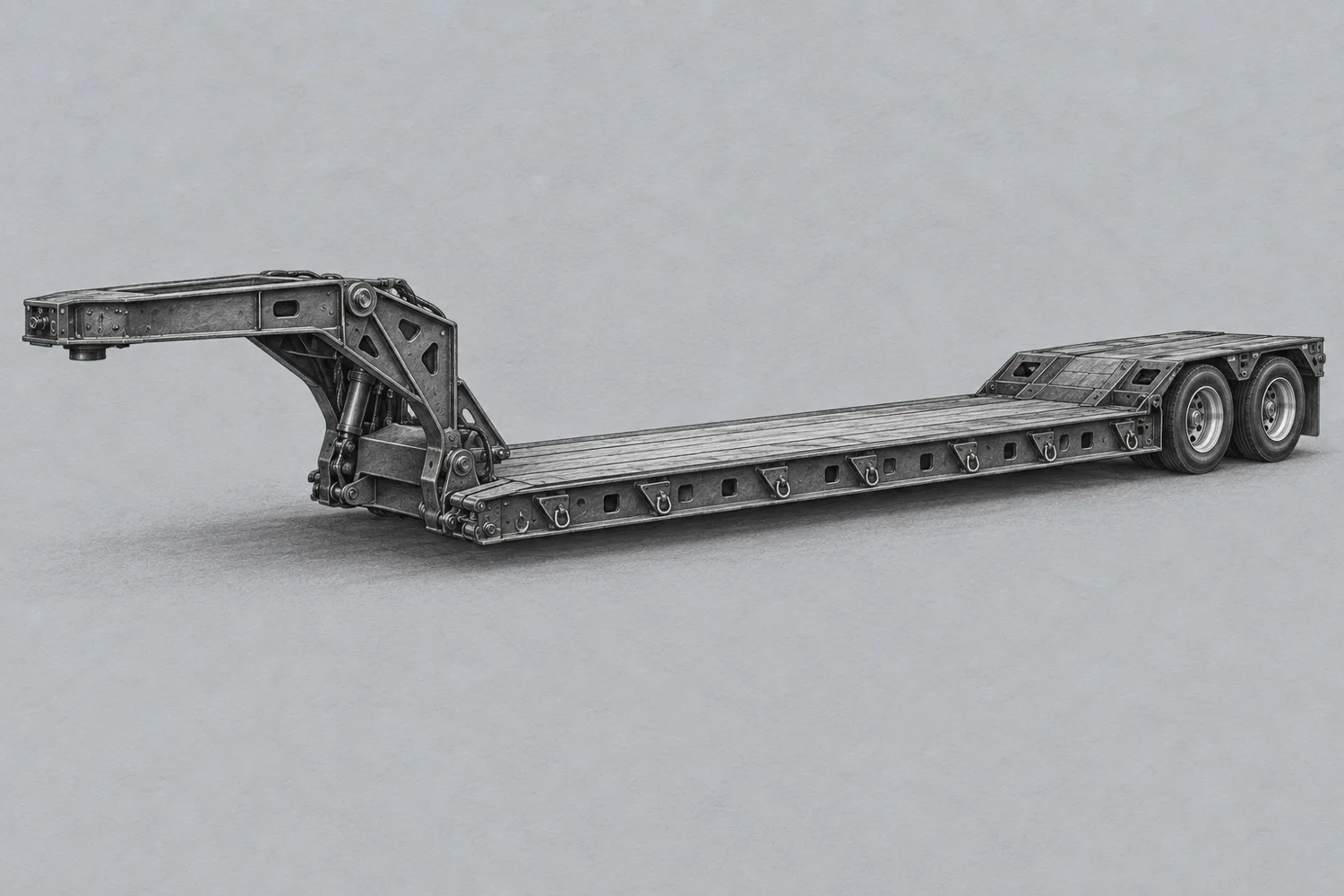
35CC
A hydraulic-detachable lowbed with a nominal 24 ft main deck and a 22 in deck-height reference. Its published concentrated rating requires the stated support condition and the actual build configuration.
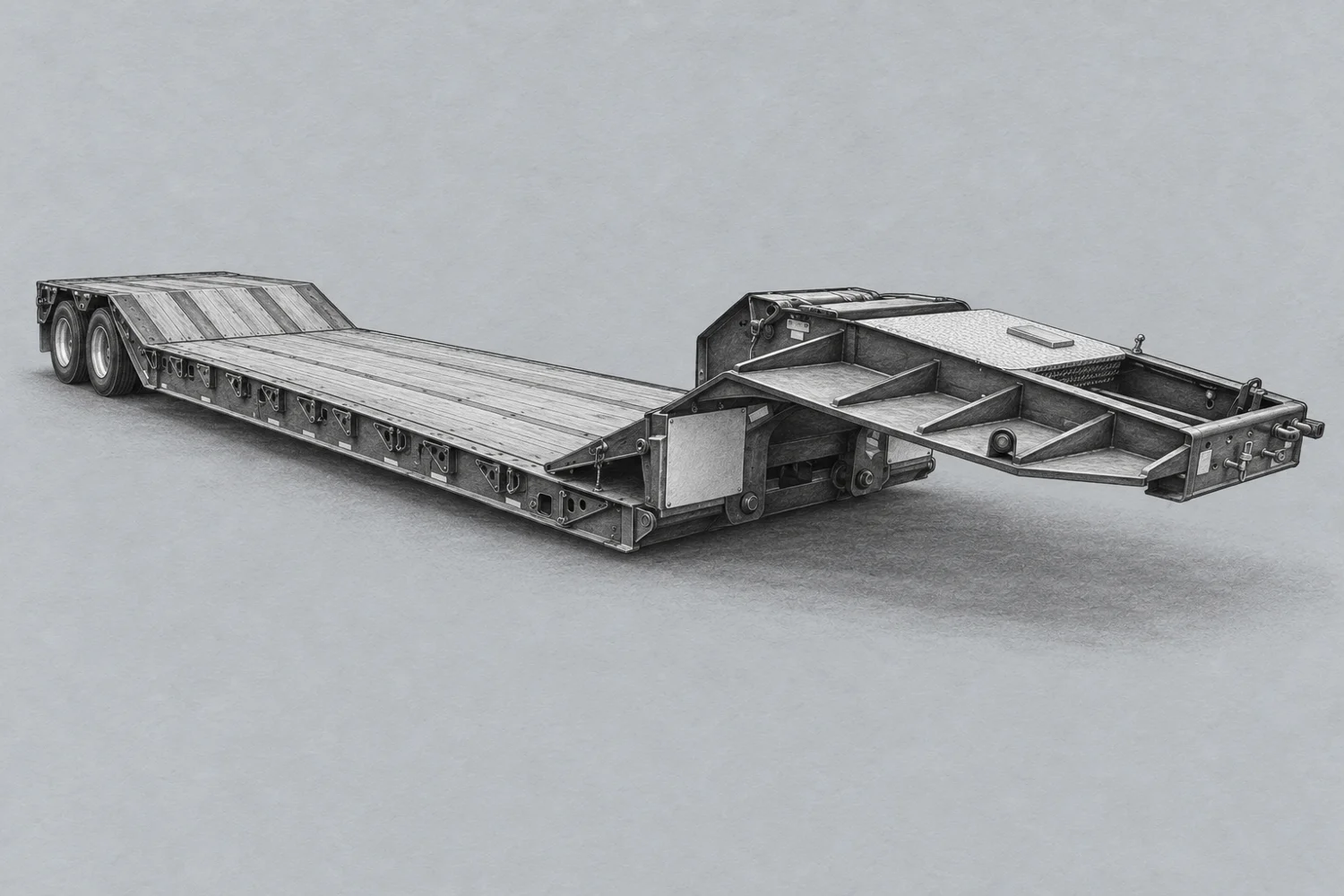
35CC-RP
A hydraulic-detachable lowbed with a documented usable well and overall transport length. The reference keeps deck space, neck geometry and clearance separate; a model designation is not a verified payload rating.
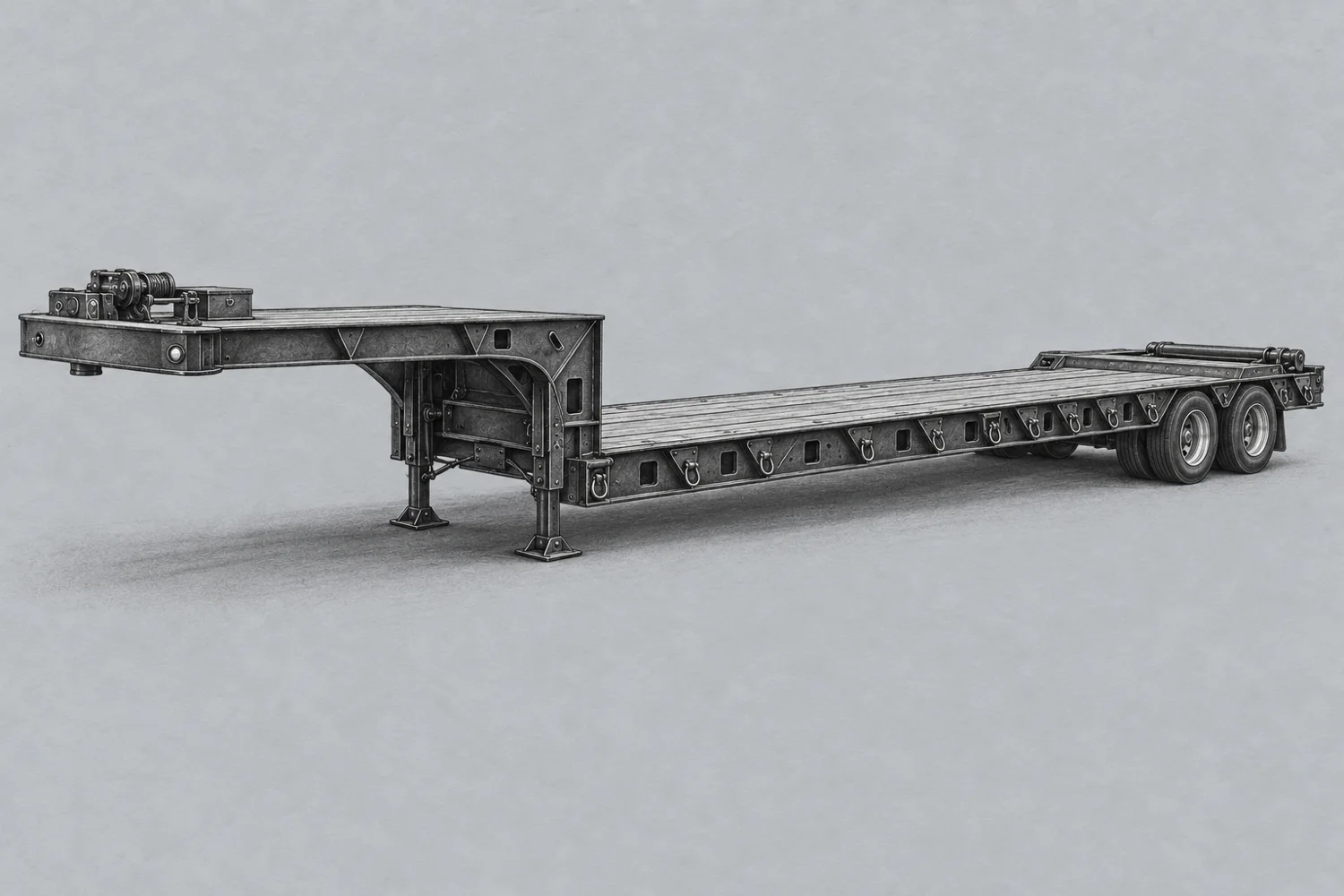
35HT
A fixed-neck hydraulic-tail trailer with a documented 12 ft tail. Loading geometry must be checked separately from transport deck height, and distributed and concentrated capacity remain distinct.
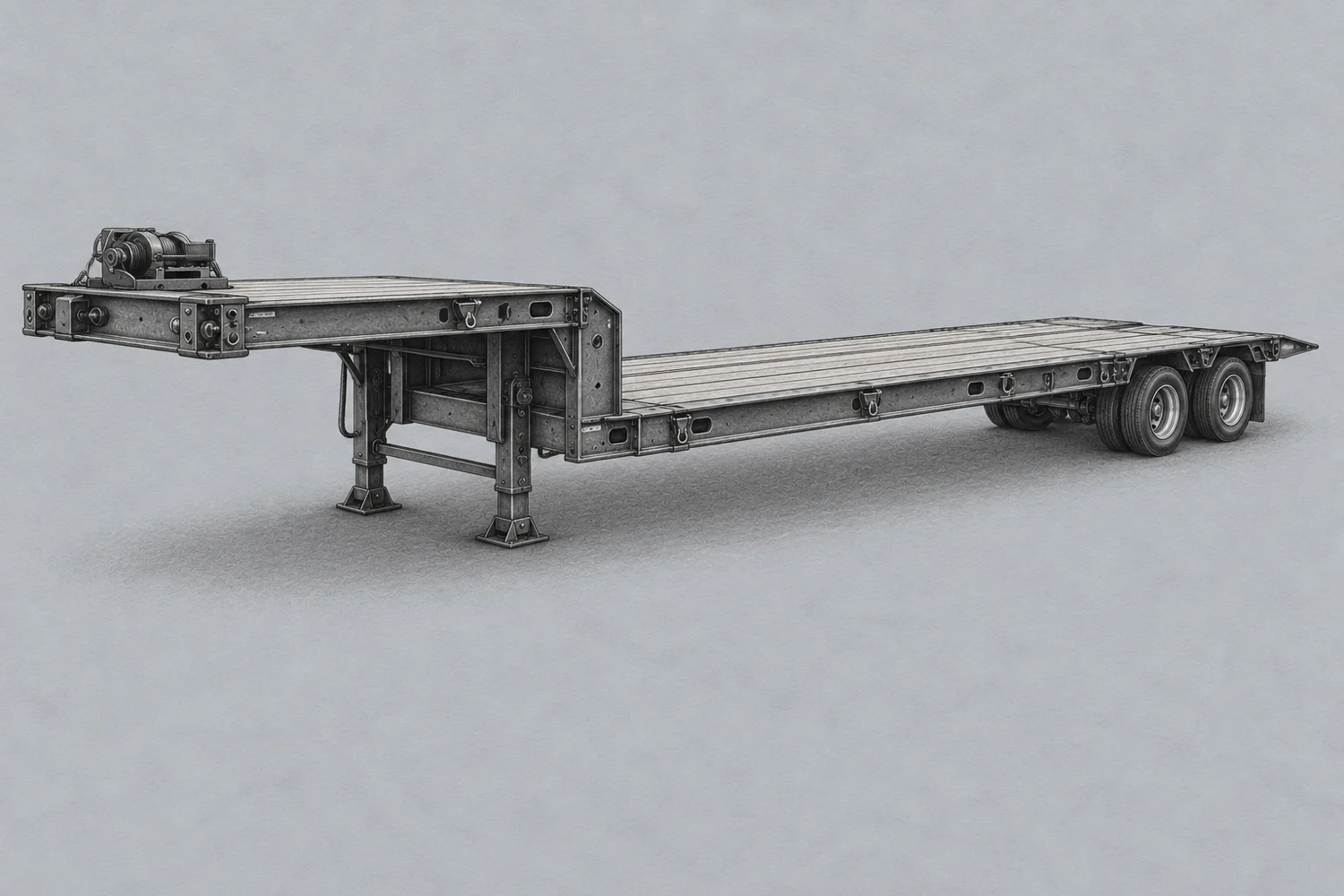
4048TA
A 48 ft traveling-axle trailer with a 37 ft 2 in nominal lower deck. The manufacturer-linked TA brochure identifies a tandem configuration and a loaded deck-height condition; verify both against the actual build.
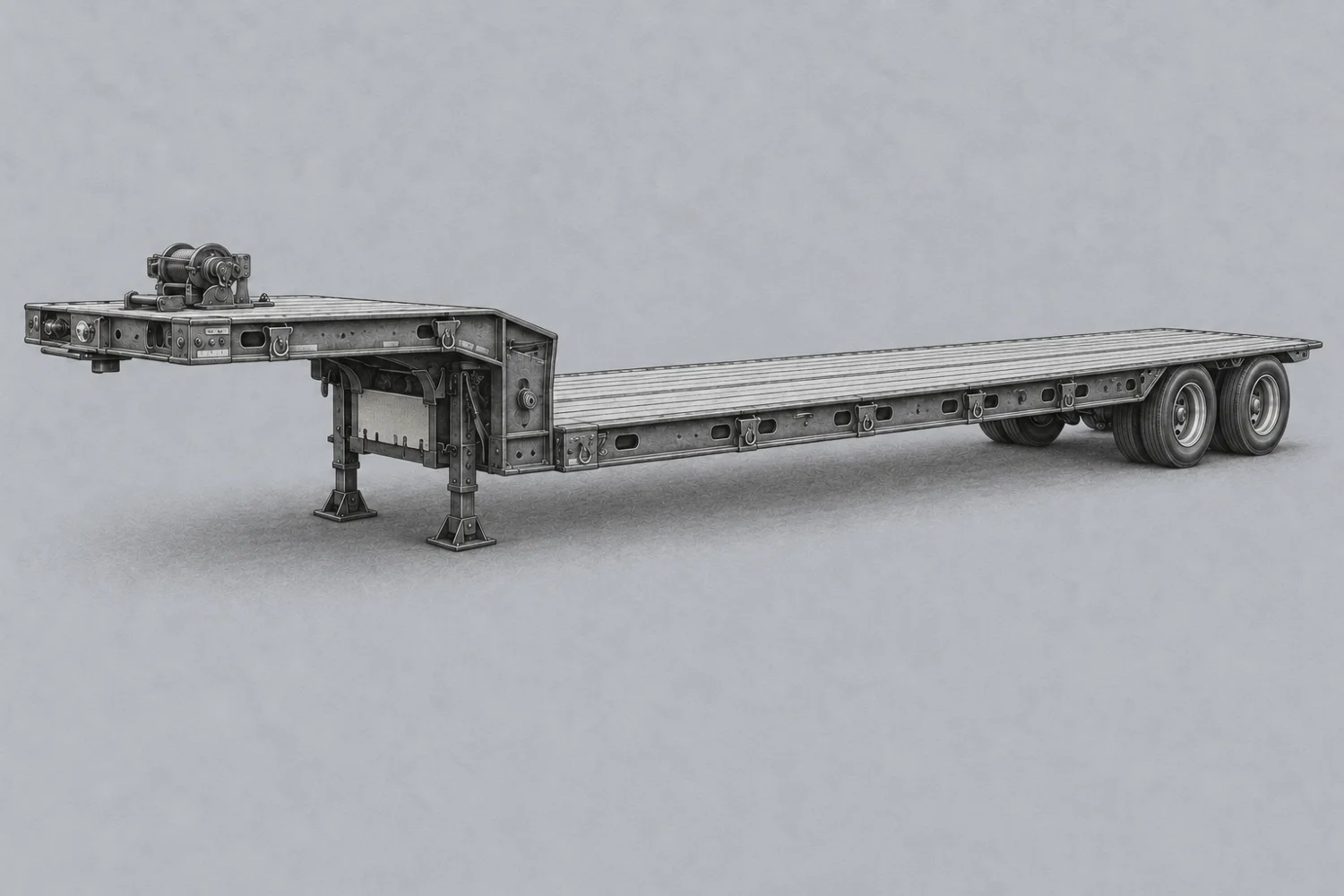
4050TA
A 50 ft traveling-axle trailer with a 39 ft 2 in nominal lower deck. The sliding running gear supports a different loading procedure from a fixed-axle step deck; brochure axle and loaded-height conditions remain explicit.
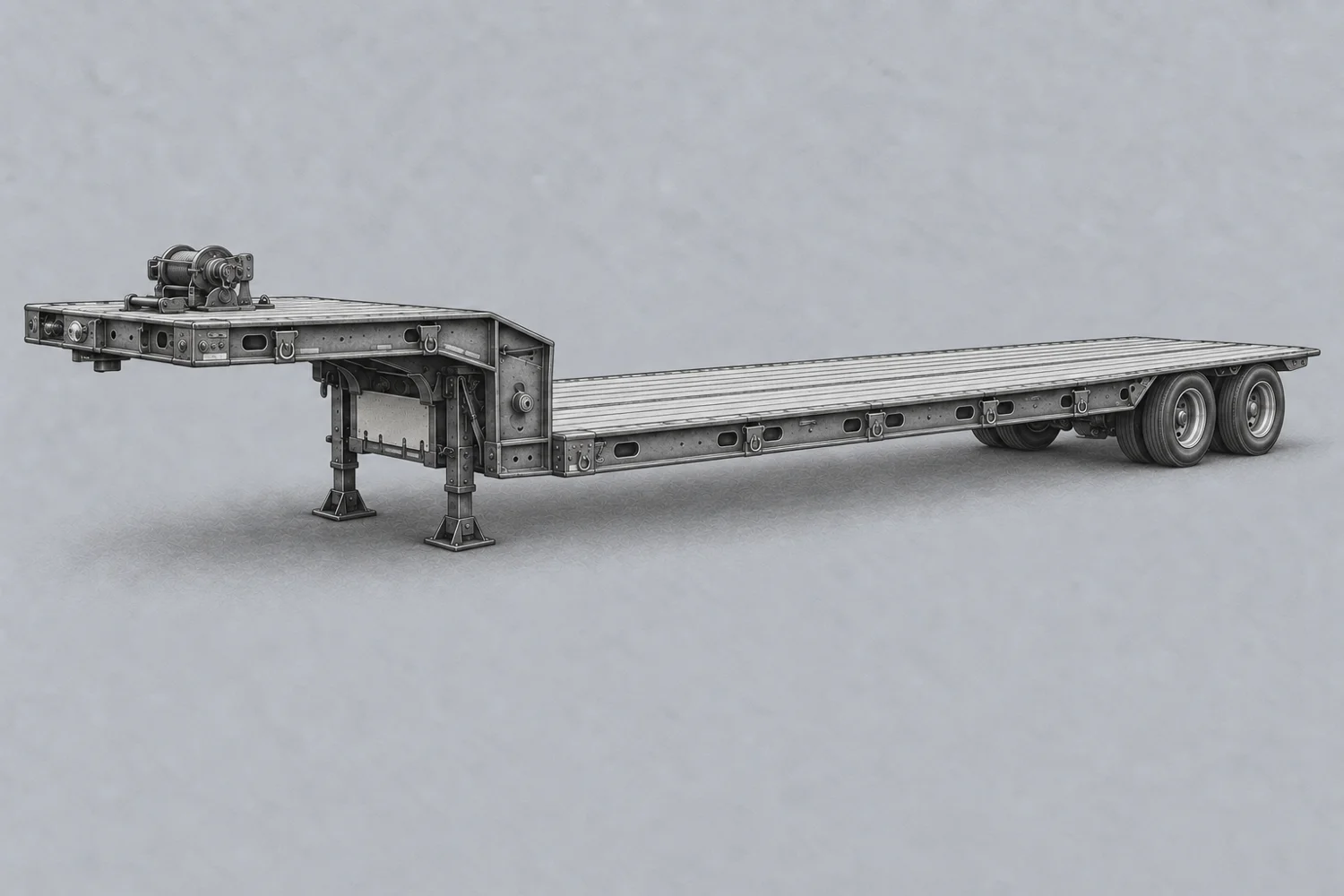
4053TA
A 53 ft traveling-axle reference with a 41 ft 6 in nominal lower deck and brochure-documented tandem axles. Conflicting upper-deck lengths are withheld until a build-specific drawing resolves them.
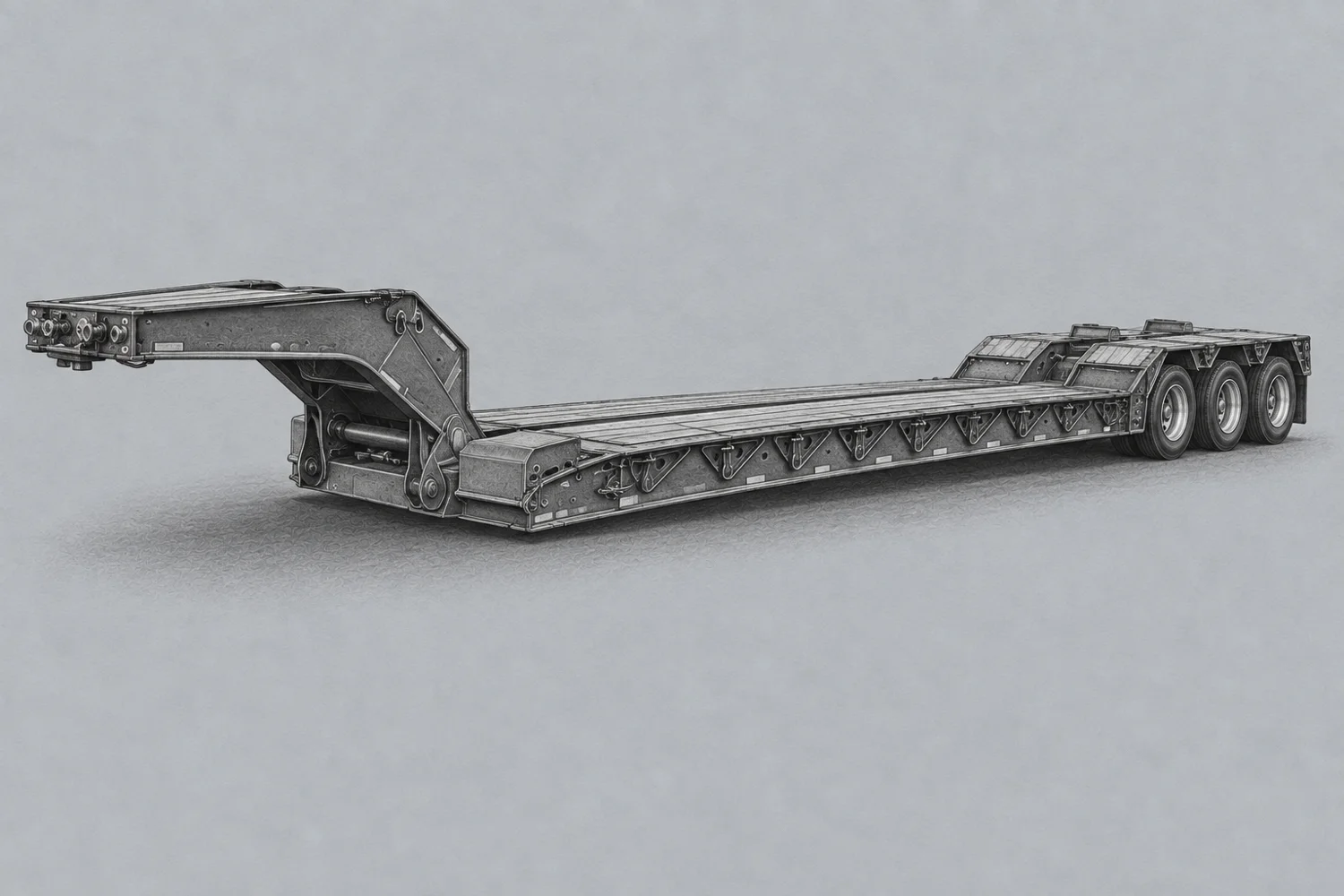
50CC
A hydraulic-detachable lowbed with a nominal 25 ft main deck and a 22 in deck-height reference. Use the documented concentrated rating and support length rather than estimating capacity from the model name.
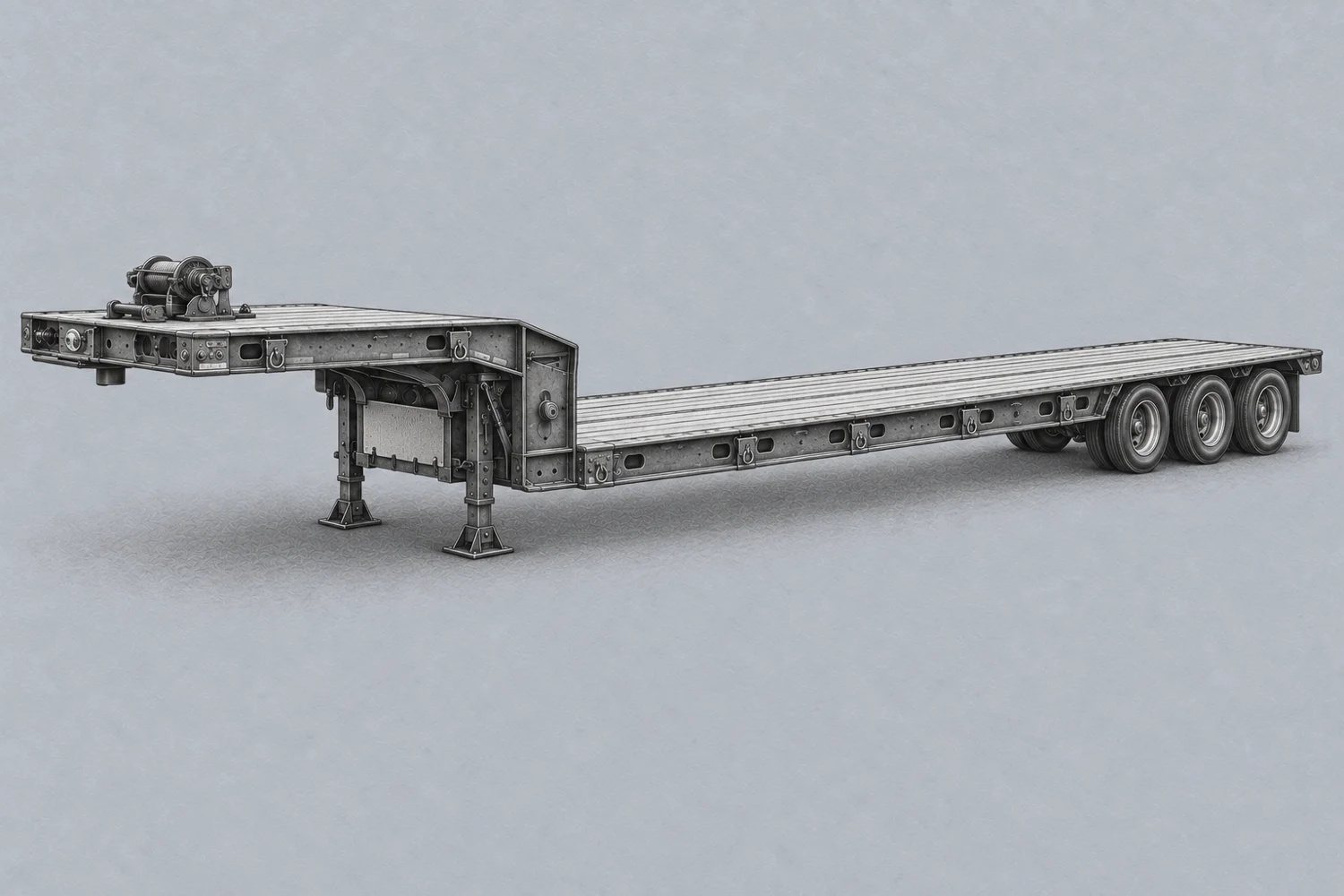
5548TA
A traveling-axle model with a brochure-documented three-axle configuration. Conflicting product-page and brochure lengths, ratings and swing clearances remain visible and are withheld from automatic comparisons.
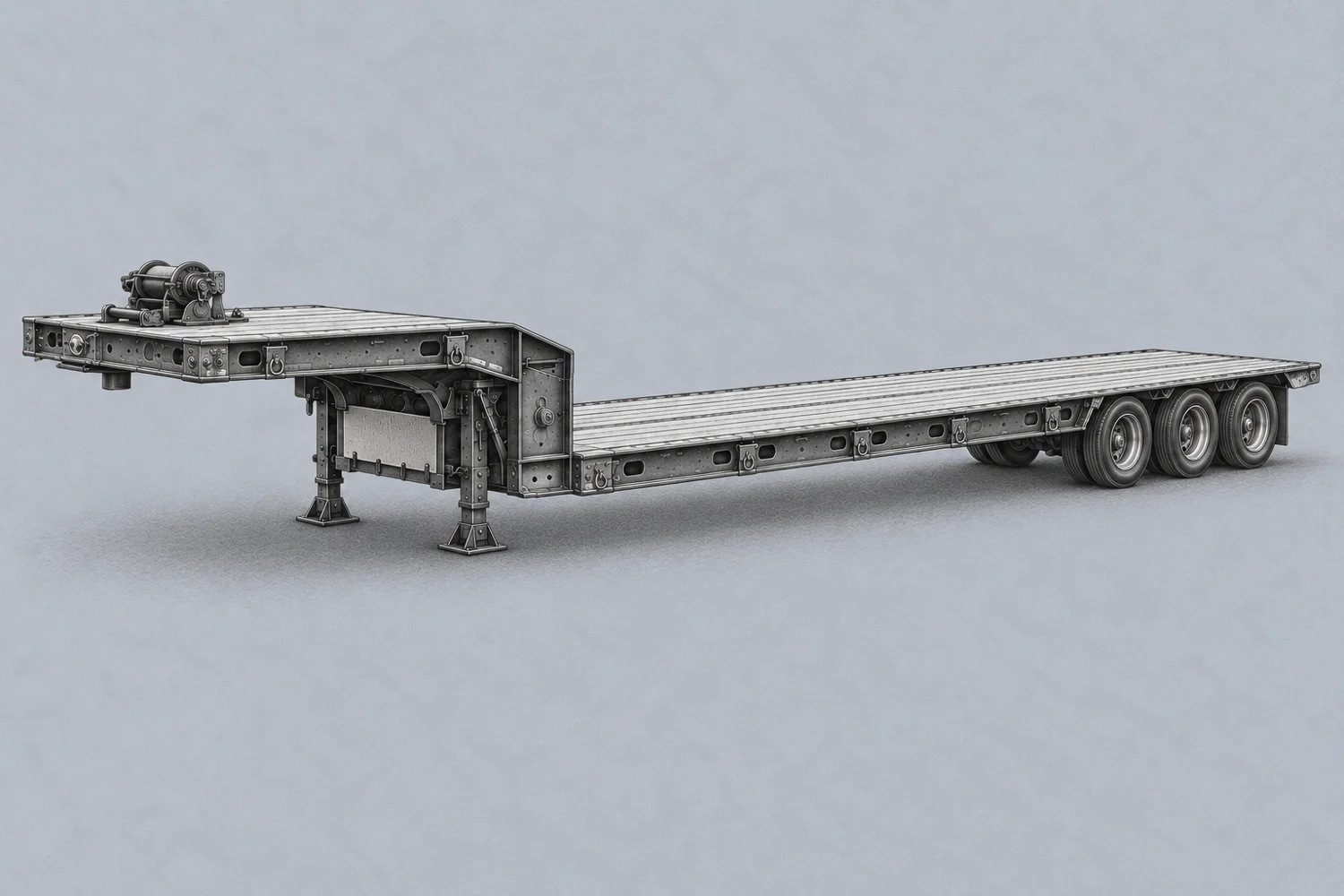
5553TA
A 53 ft traveling-axle trailer with a 41 ft 6 in nominal lower deck and three axles in the linked TA brochure. Distributed and concentrated ratings are separate; the conflicting upper-deck length remains unresolved.
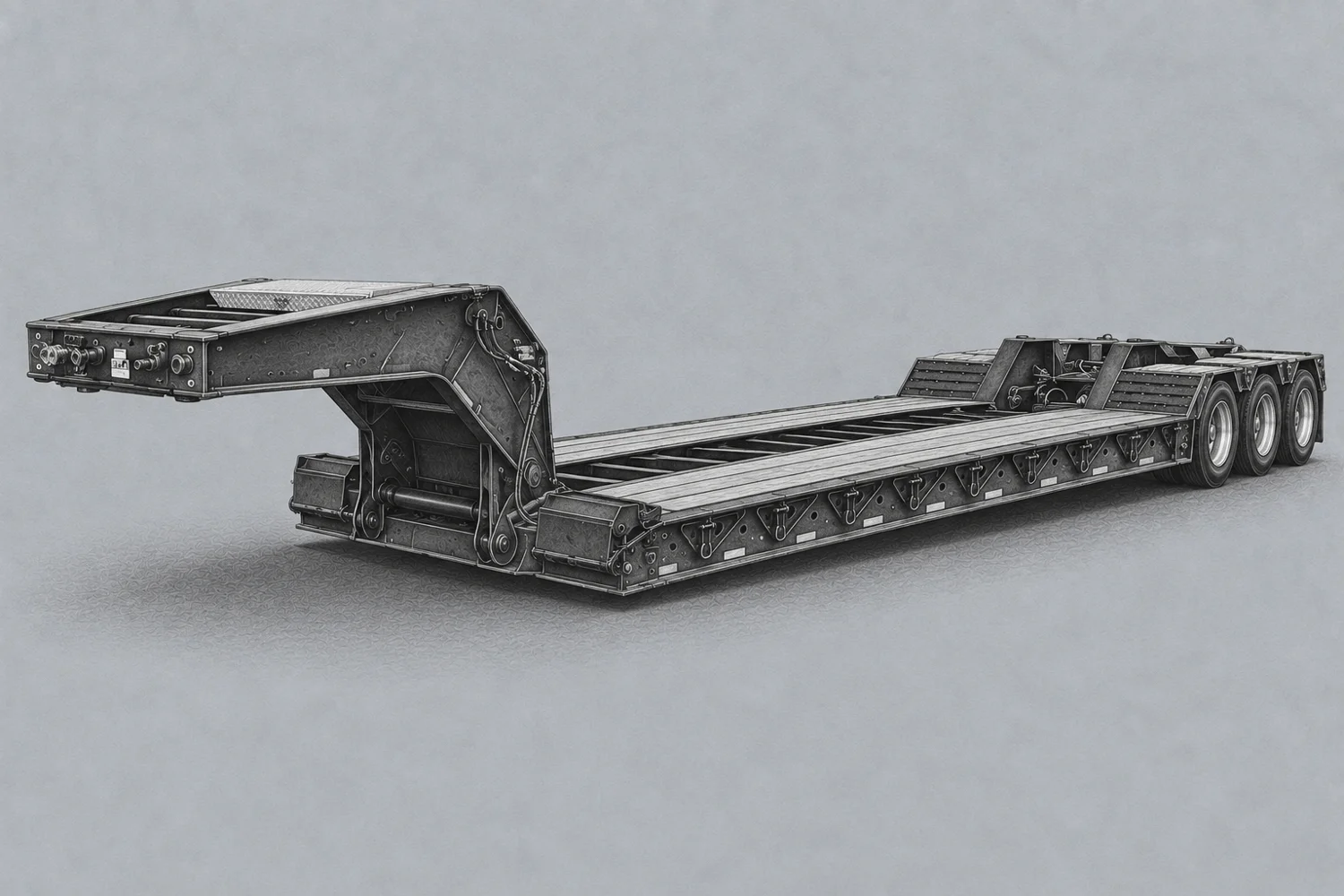
55CC
A hydraulic-detachable lowbed with a nominal 26 ft main deck and an 18 in deck-height reference. The concentrated rating is tied to its documented support length and requires confirmation for the actual trailer.
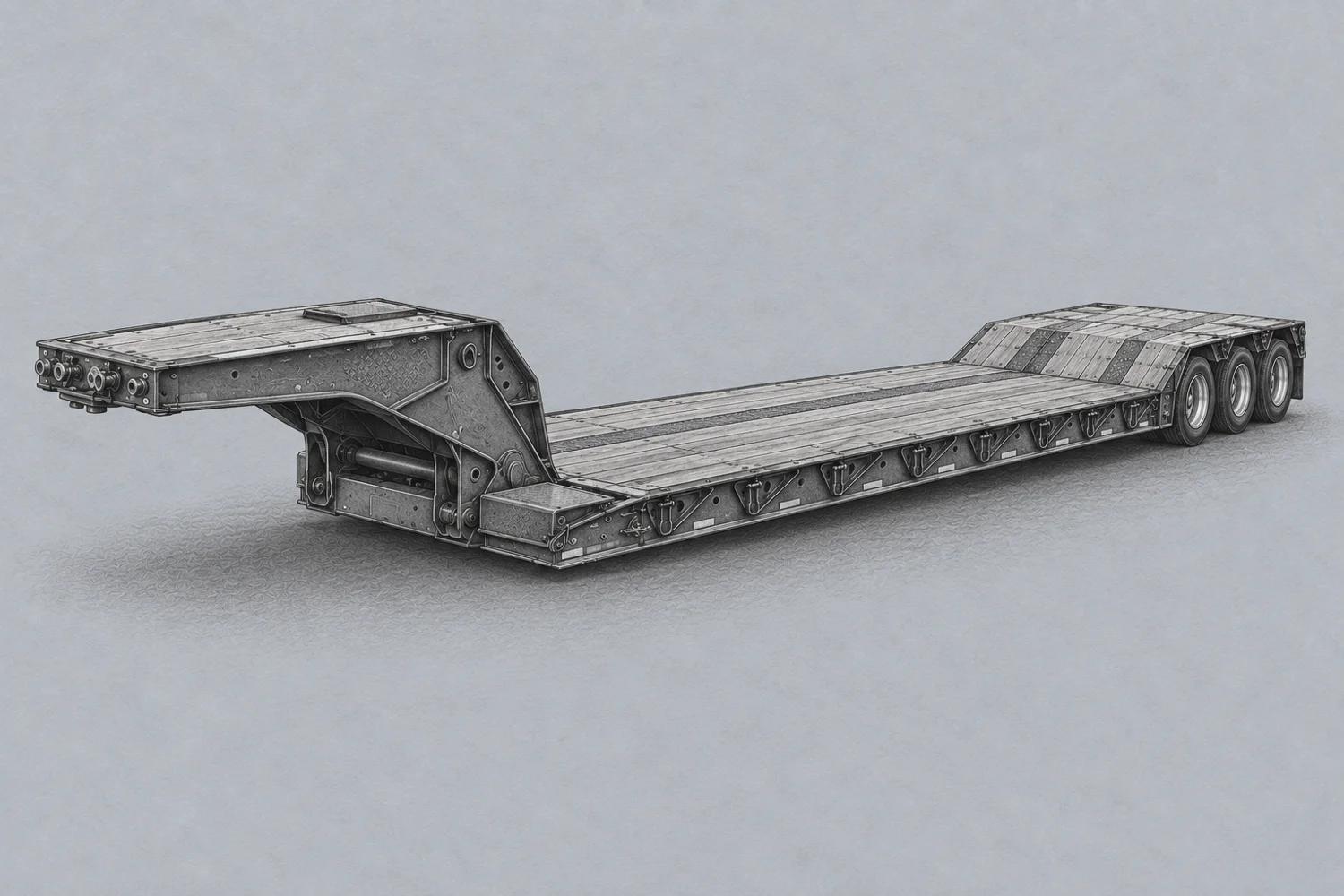
55CC-RP
A hydraulic-detachable lowbed with documented overall and usable well lengths. Distributed and concentrated capacities are recorded separately so the support footprint remains part of equipment selection.
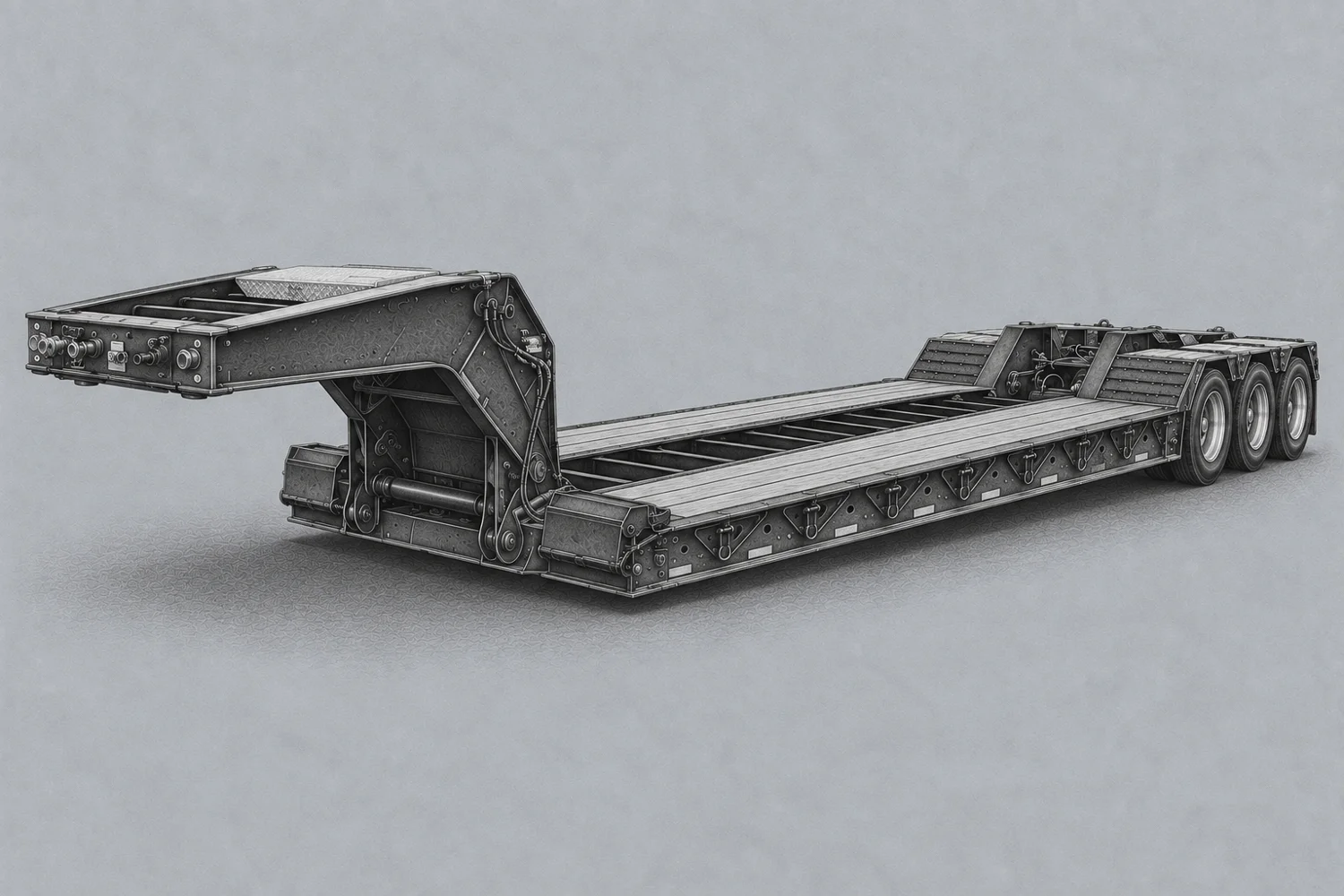
55SA-HX
A hydraulic-detachable lowbed with a nominal 26 ft main-deck reference. Conflicting manufacturer deck-height and ground-clearance statements are deliberately excluded from numeric fit checks.
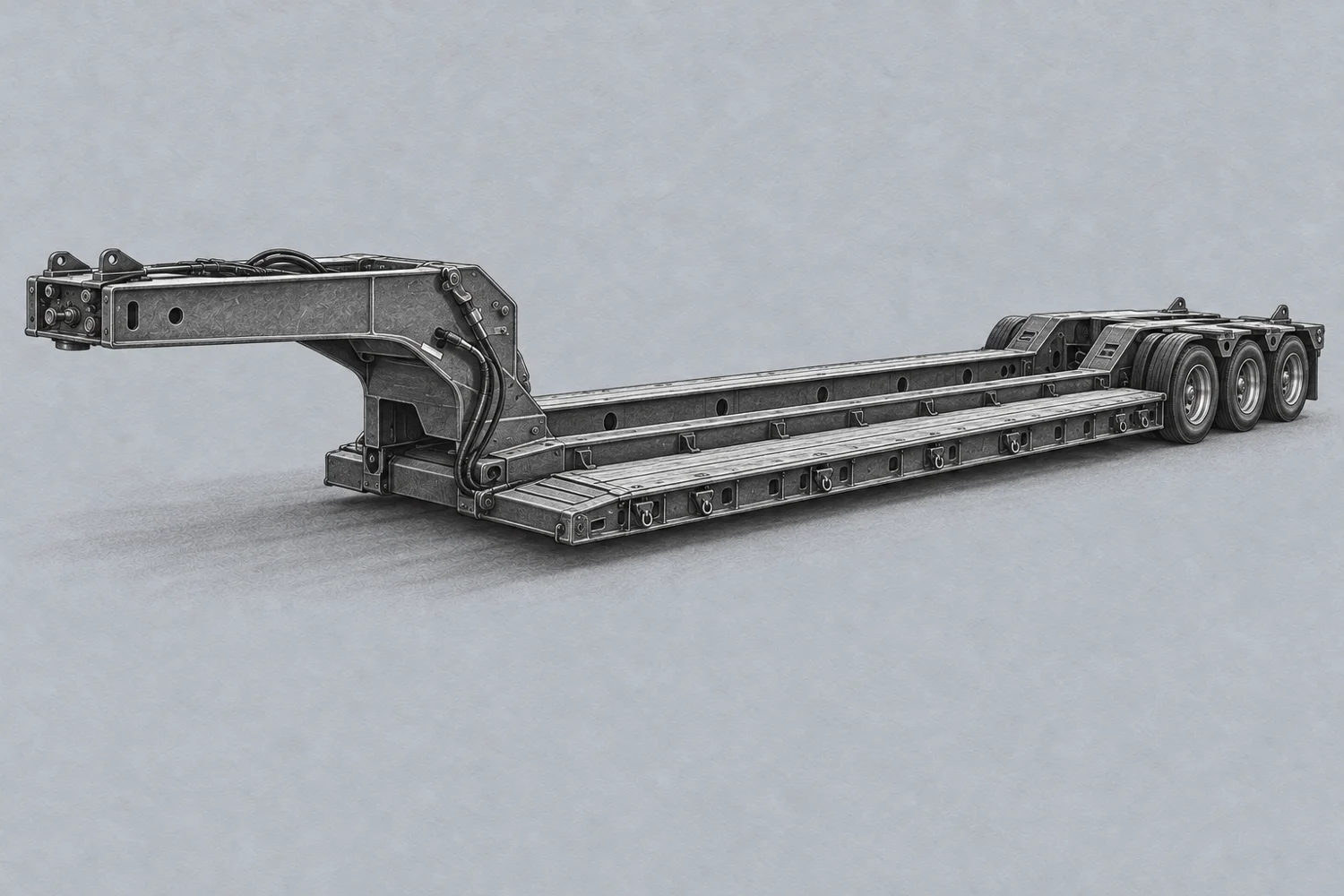
55SA-RC
A hydraulic-detachable raised-centre configuration with a nominal 26 ft main deck. Raised central structure and lower support areas require a load-support drawing; one overall deck dimension cannot describe every contact surface.
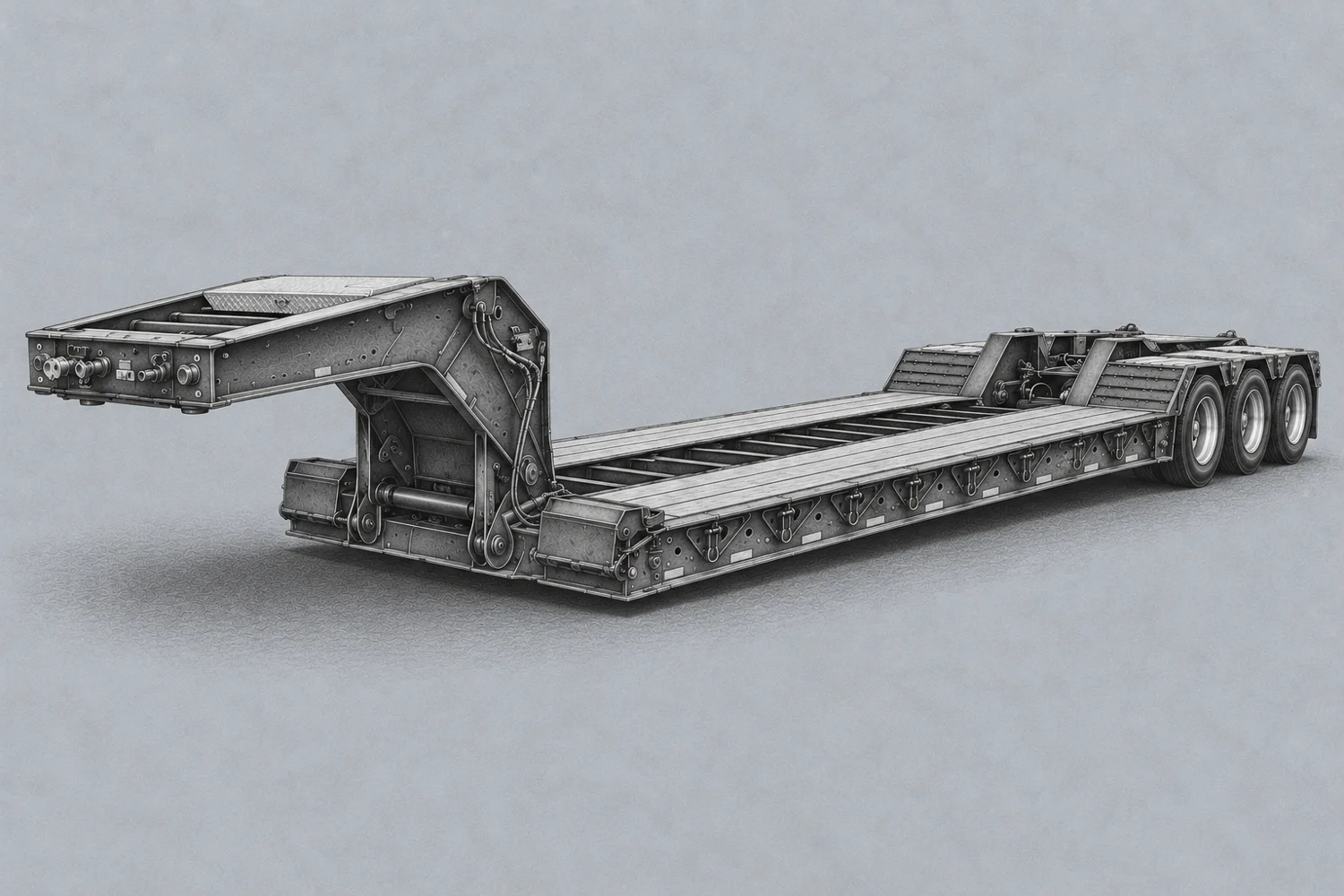
55SA
A hydraulic-detachable lowbed with a nominal 25 ft main deck and a 20 in deck-height reference. Its concentrated capacity remains tied to the stated support length and configuration.
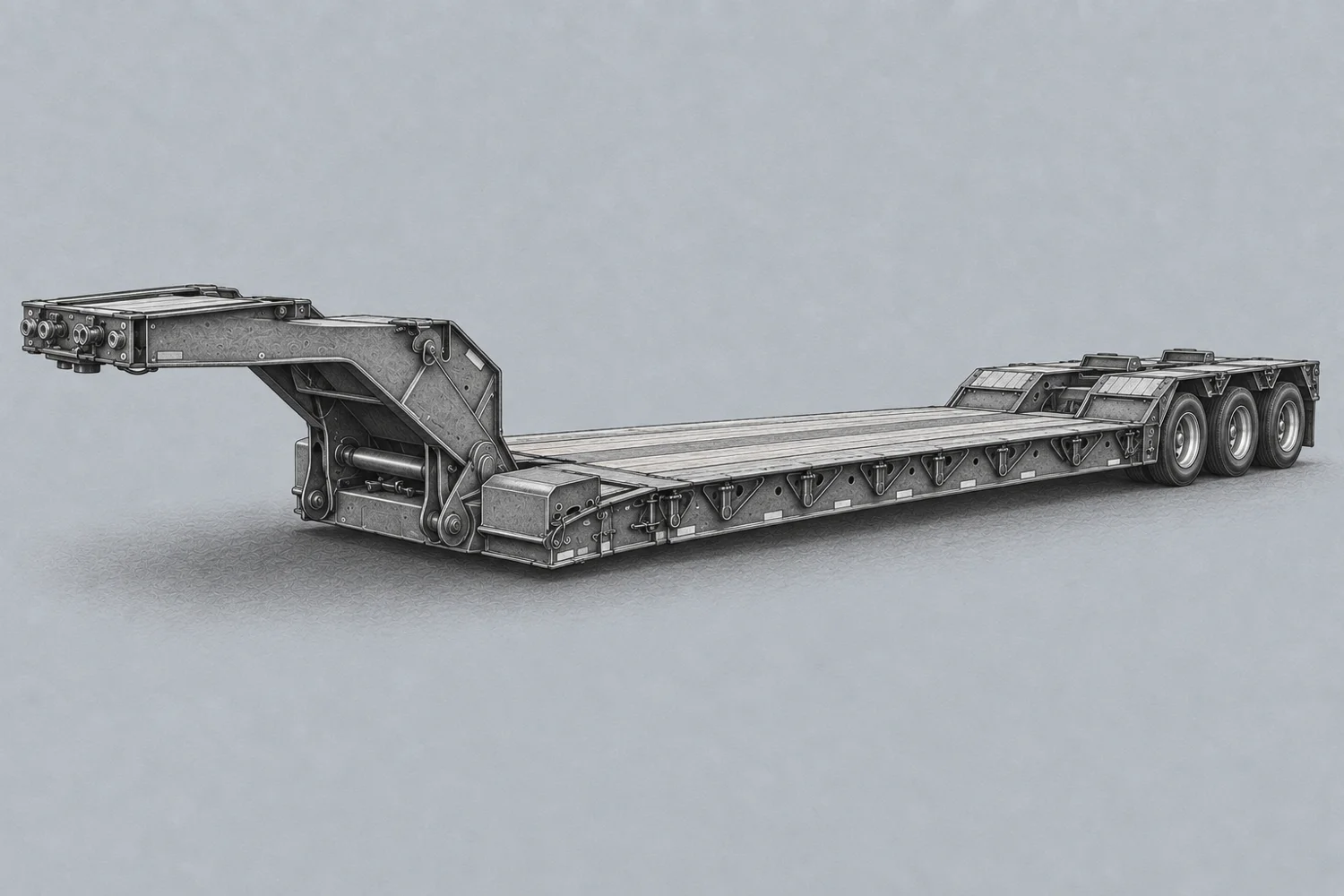
55SA TELE
A hydraulic-detachable telescoping lowbed with a 20 in deck-height reference. The record leaves unsupported extension dimensions unknown; obtain the selected extension position and load chart before assessing support.
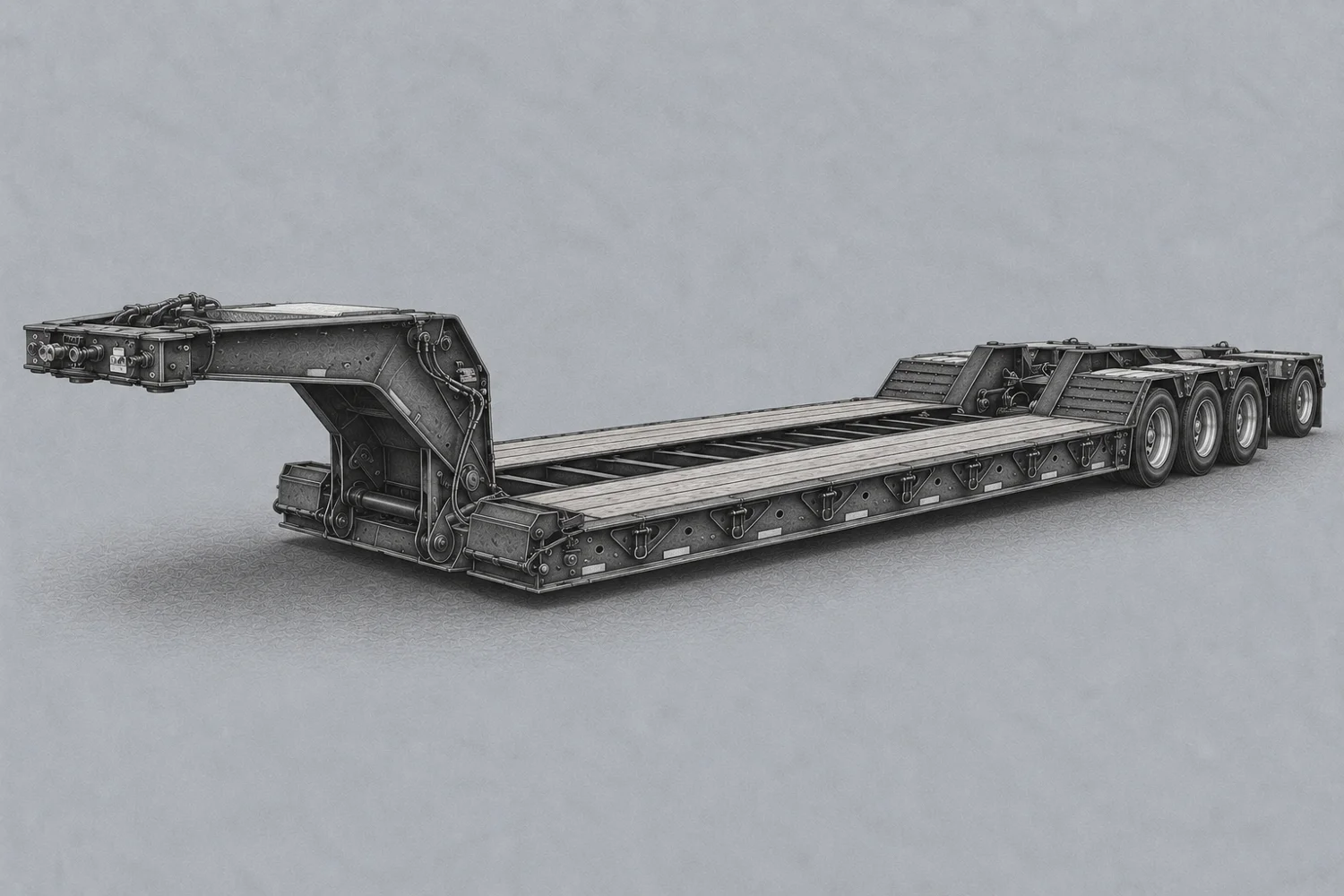
60CC/55SA-LD
A hydraulic-detachable lowbed reference with a nominal 26 ft main deck and an 18 in deck-height condition. The combined manufacturer designation does not establish one unrestricted capacity for every build.
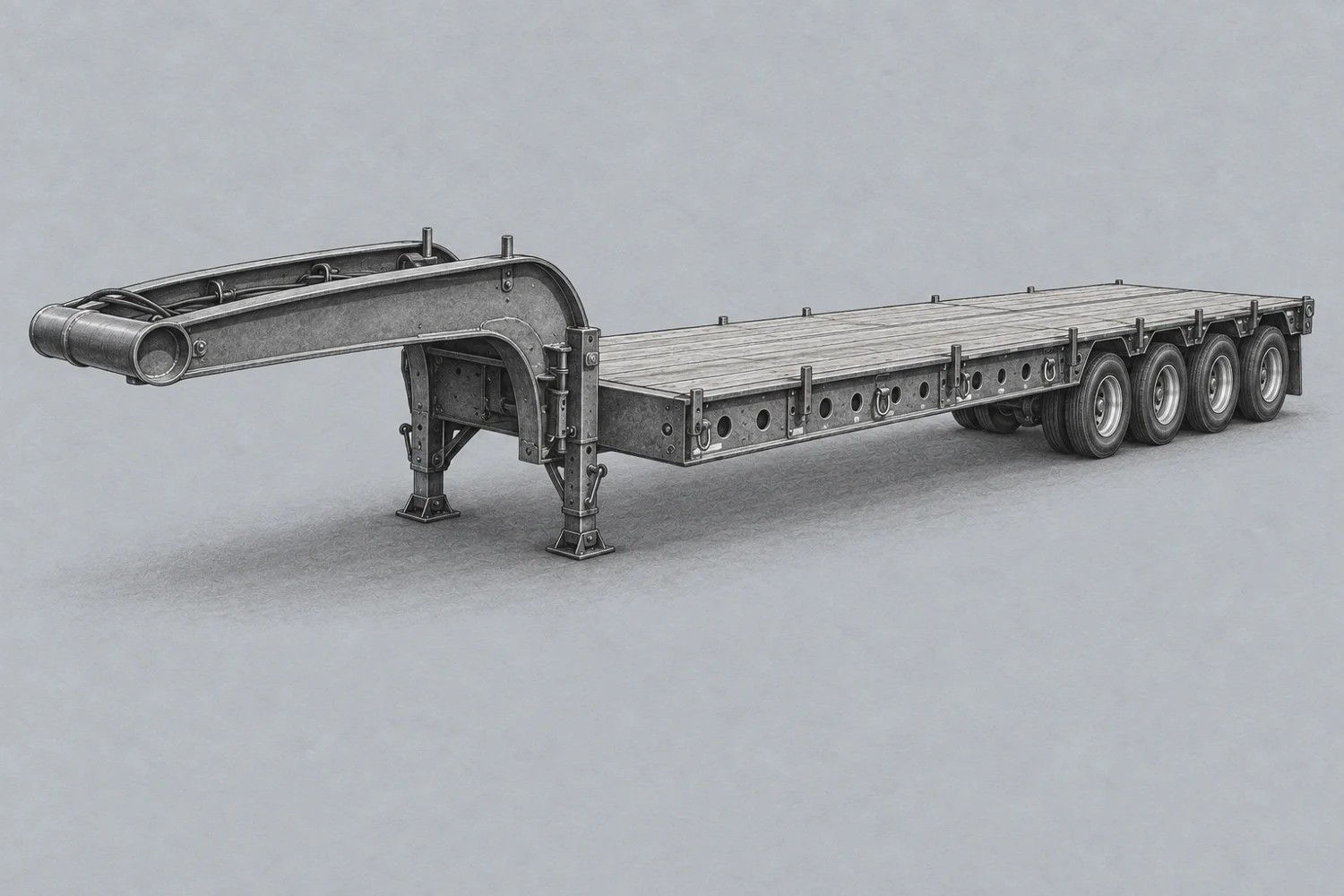
60FG
A fixed-gooseneck oil-field trailer with standard and alternate swing-clearance references. Distributed and concentrated capacities retain separate support conditions, and the neck setting must match the tractor configuration.
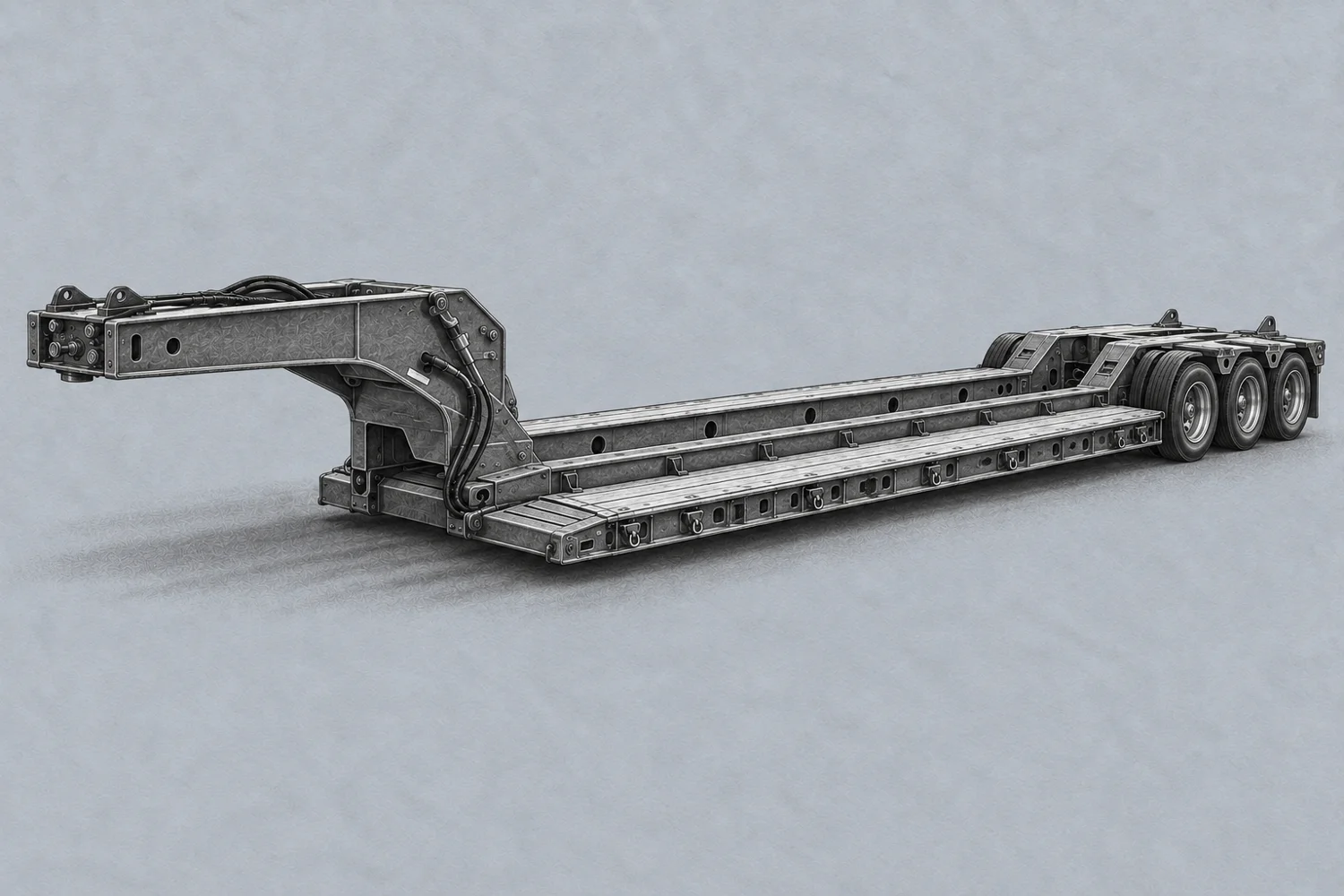
60SA-RC
A hydraulic-detachable raised-centre lowbed with a nominal 25 ft main deck. Load contact on the lower support areas must be checked against the raised central structure and actual build drawing.
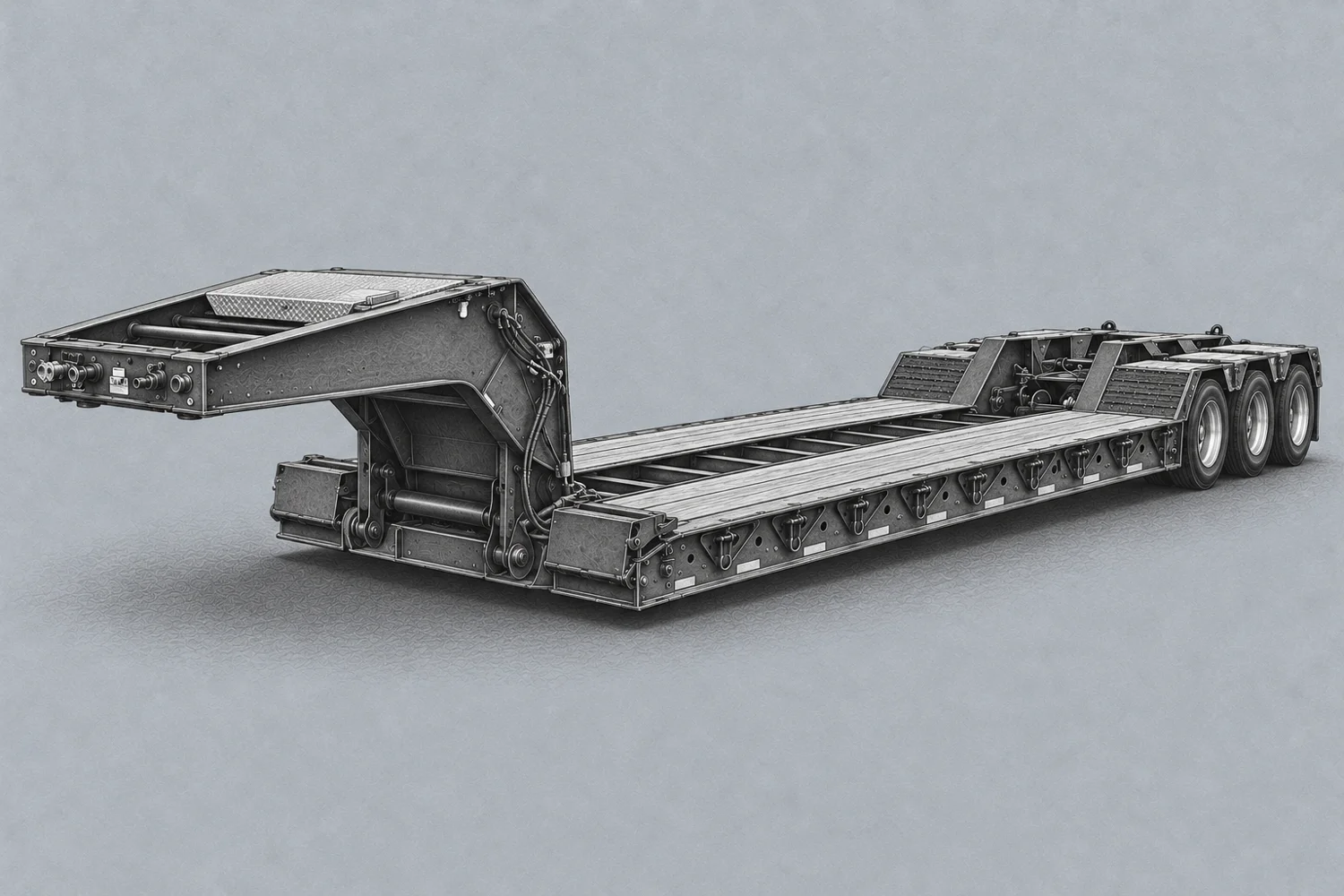
60SA
A hydraulic-detachable lowbed with a nominal 25 ft main deck and a 22 in deck-height reference. The published concentrated rating requires the documented support footprint rather than a simple total-weight comparison.
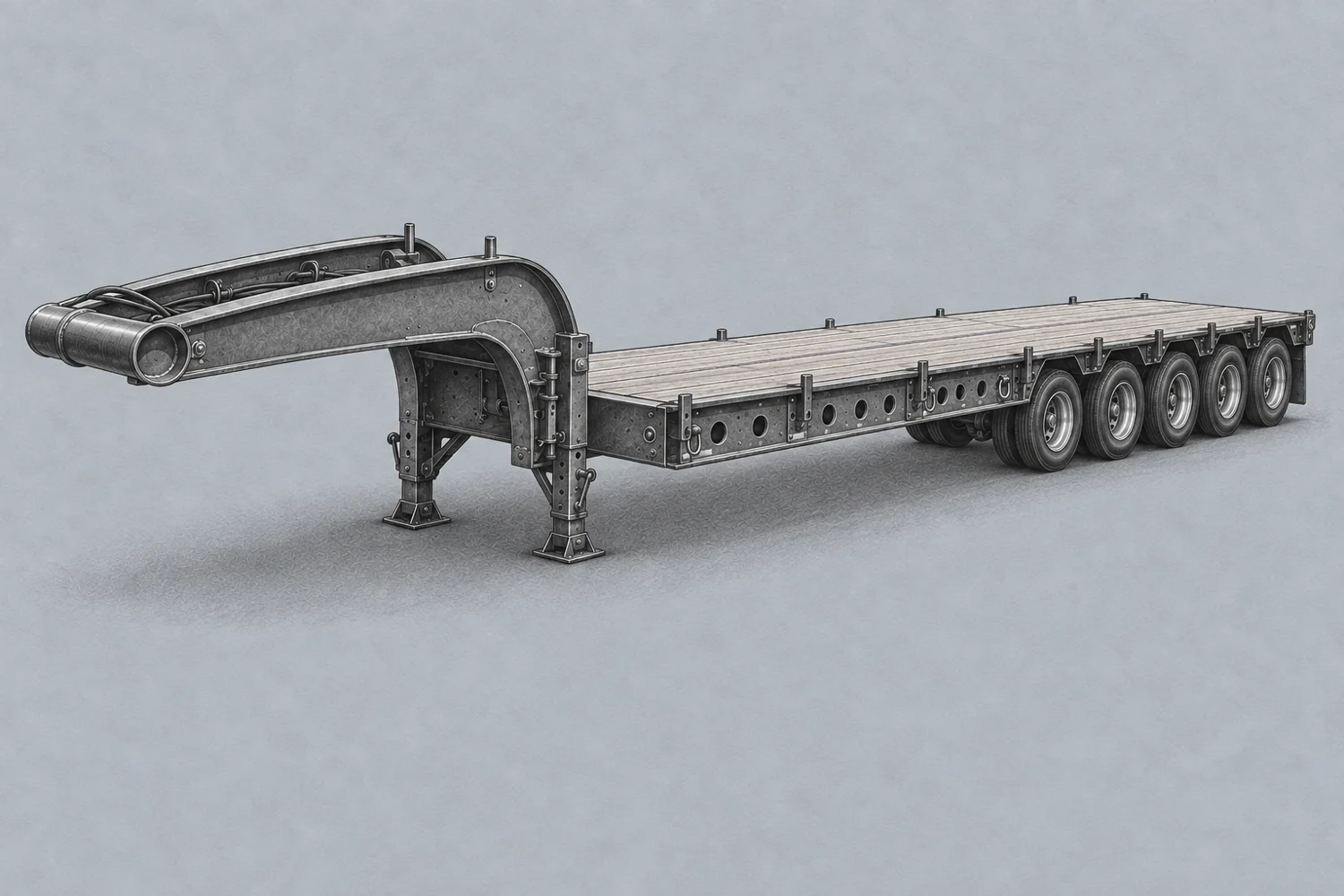
65FG
A fixed-gooseneck oil-field trailer with separate distributed and concentrated capacity records. Confirm neck clearance, axle arrangement and loading method from the actual build before choosing it for an industrial load.
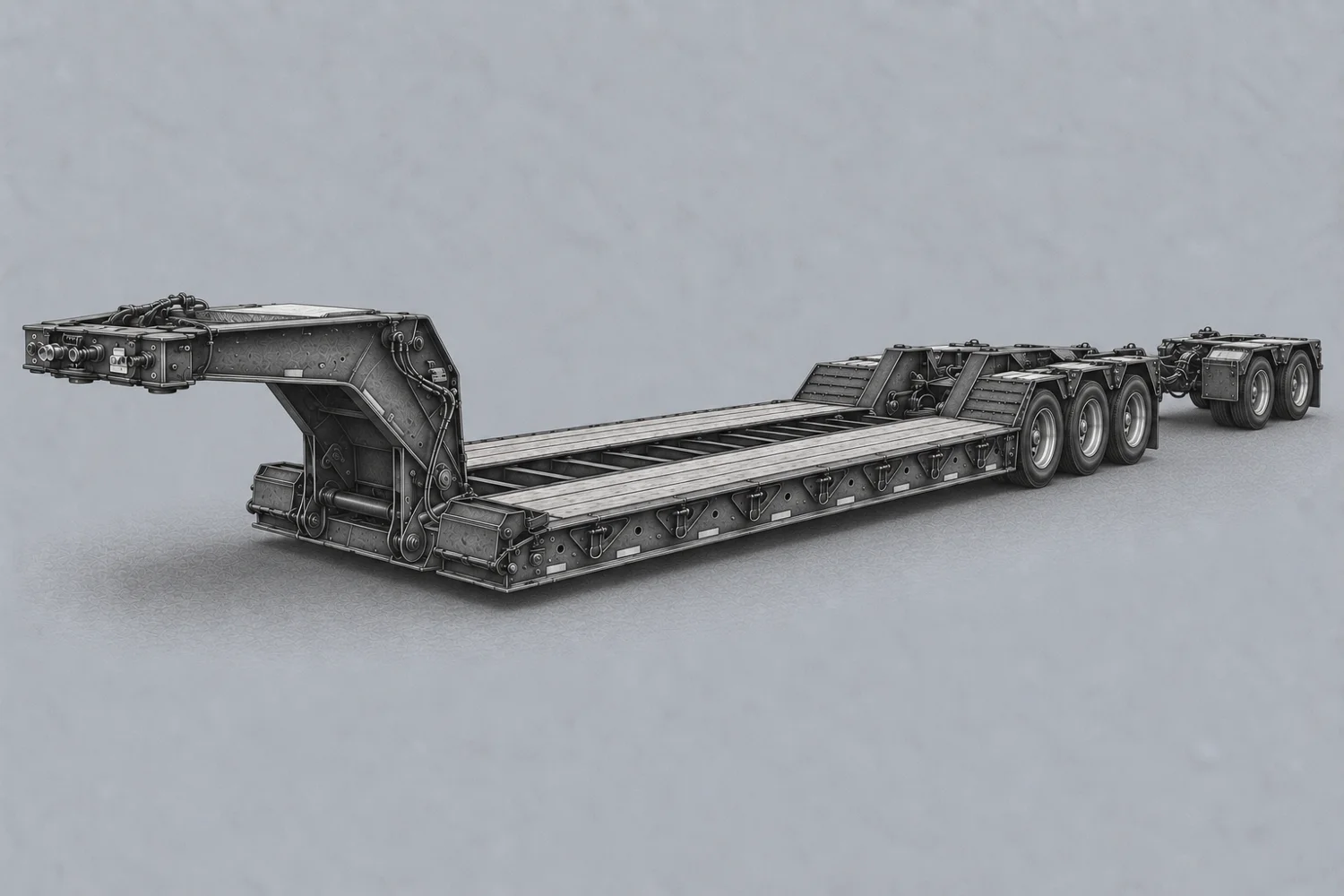
65SA Modular
A modular hydraulic-detachable heavy-haul configuration with a nominal 28 ft main deck and a 24 in deck-height reference. Axle modules and load support must be assessed as a complete configuration.
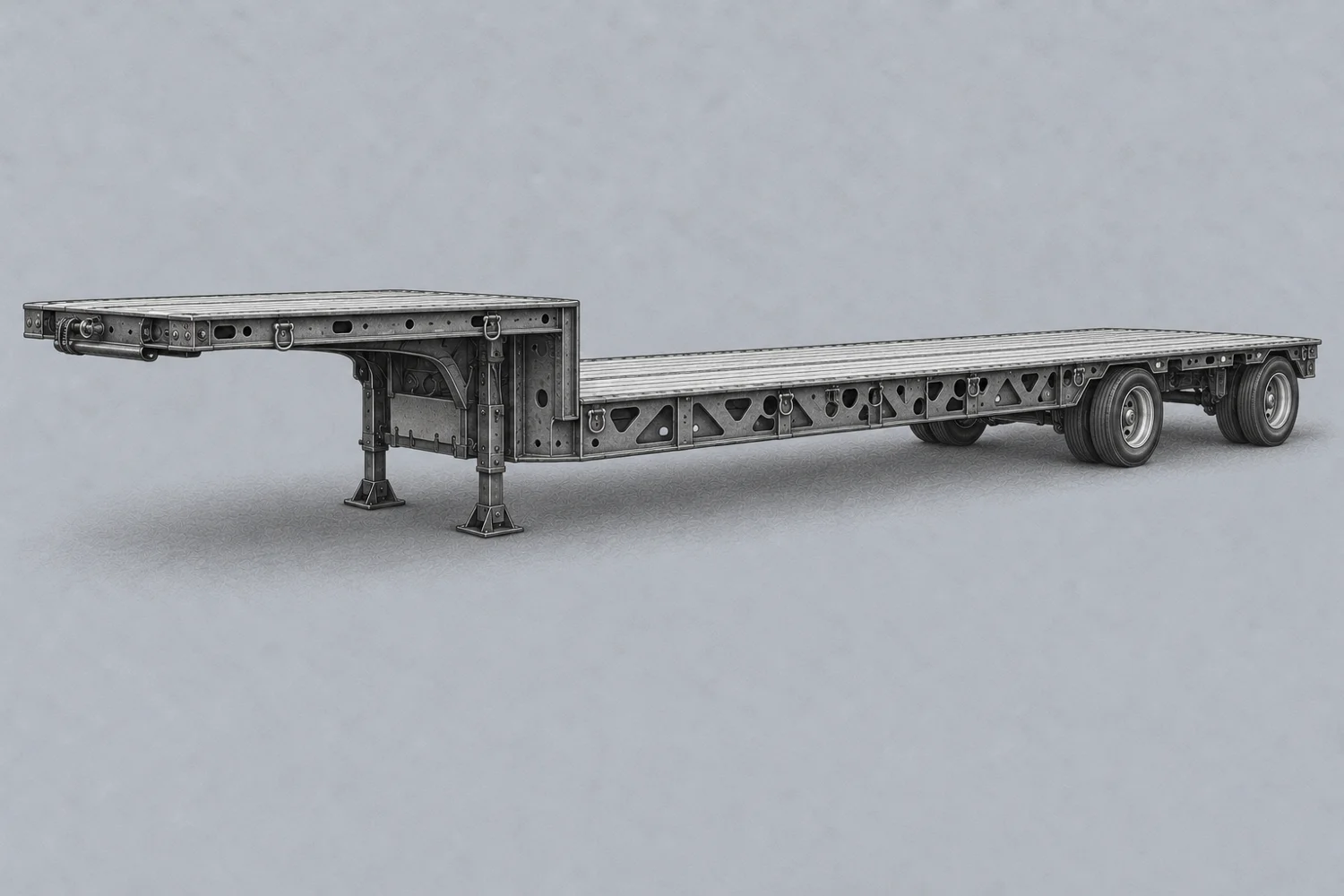
Drop Deck
A fixed-neck steel step deck with separate upper and lower loading areas. The record distinguishes distributed capacity from concentrated support conditions while leaving undocumented deck dimensions unknown.
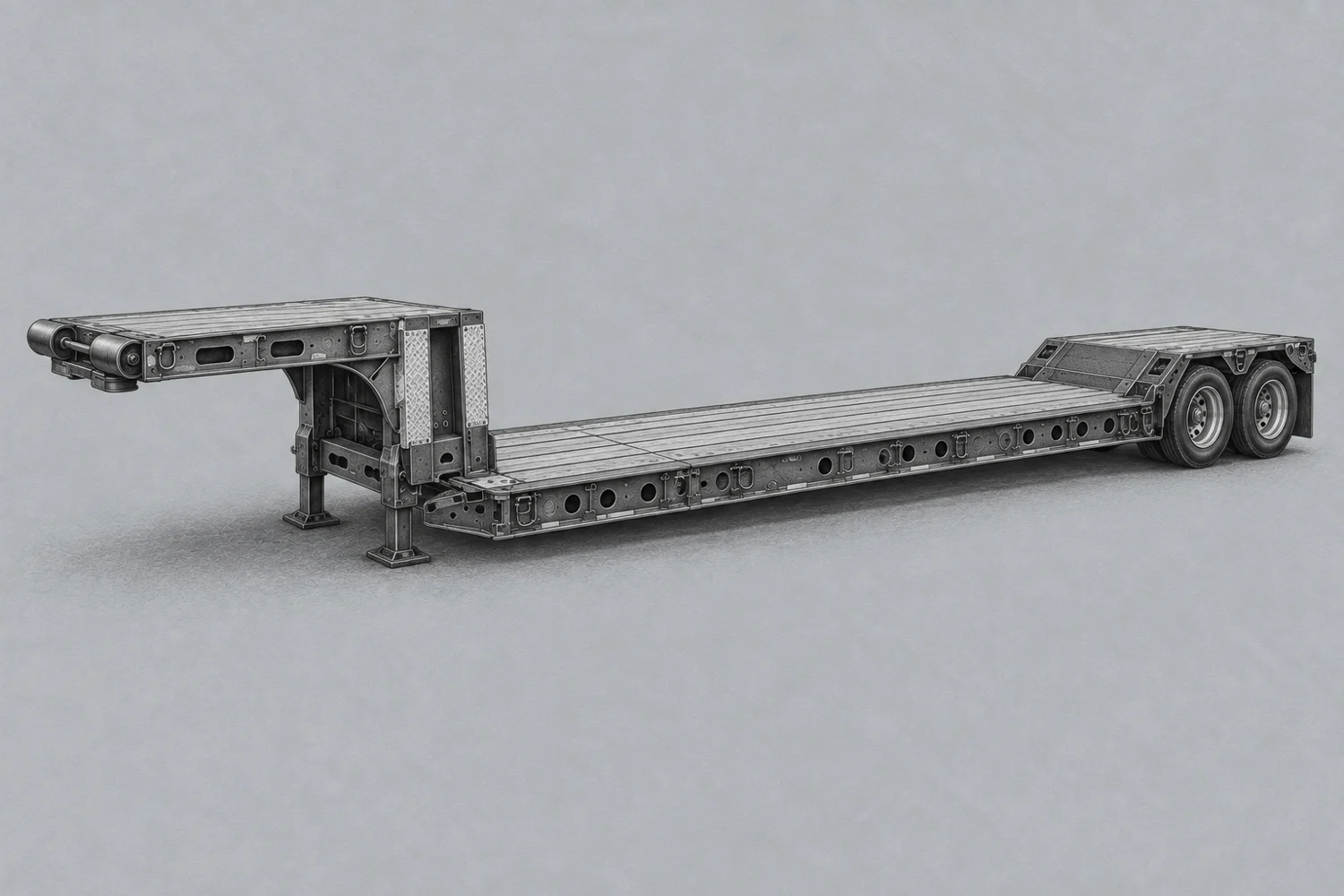
30-55 Extendable Double Drop
A mechanical-detachable extendable double drop with a documented 48 ft overall reference and tandem axle arrangement. Extension position and support capacity require their own evidence; the family name does not define a single rating.
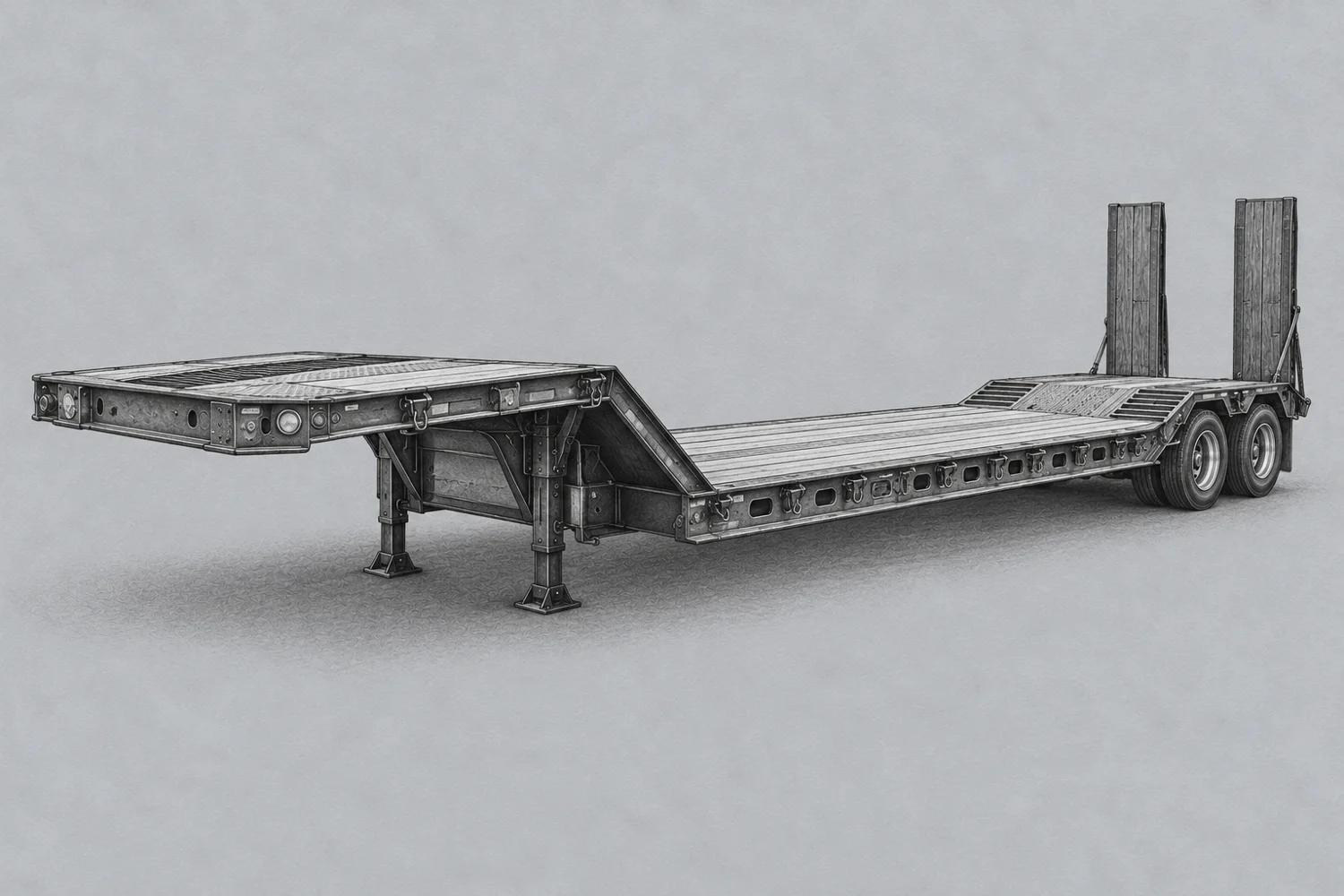
30-55 FG Double Drop
A fixed-gooseneck double drop with a nominal 29 ft main deck and an 18 in deck-height reference. The fixed neck changes the loading procedure compared with the detachable versions in this family.
Read the source with the configuration
Start with the linked manufacturer documentation, then obtain the build sheet and operating instructions for the trailer under consideration. Compare distributed and concentrated ratings on their stated support basis. Keep tare, gross rating, floor strength and route permissions separate.
How to read load-rating conditions →