Inspect the actual trailer
- Inspect floors and ramps for damage, wear and traction.
- Operate gates, partitions and moving decks.
- Review ventilation openings and seasonal closure equipment.
- Inspect hinges, latches, drainage and cleaning access.
Multi-level, ground-load, stock, equine and poultry trailers configured around animal welfare and handling systems.
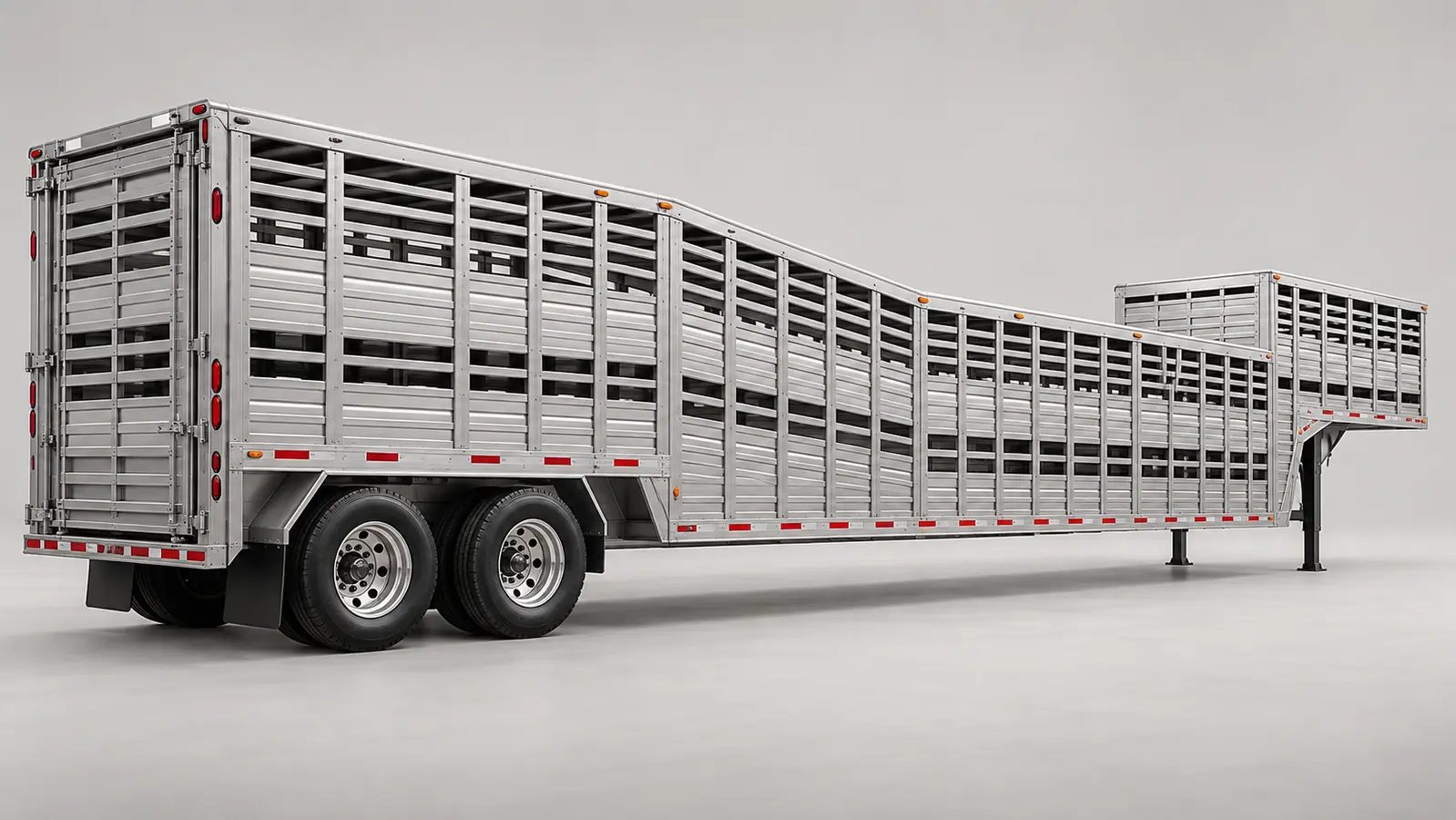
Livestock trailer choice begins with species, handling and the complete loading/unloading route. Drop-centre, straight or shallow-drop, ground-load, equine and poultry systems do different work. Exterior body shape does not establish the internal deck arrangement or animal capacity.
| Decision | What changes | Ask for |
|---|---|---|
| Loading interface | Ground loading and dock loading require different paths. | Ramp/deck arrangement, slopes, gate layout and receiver access |
| Species and internal layout | Partitions, deck mechanisms, floor traction and clearance must suit the animals and operating procedure. | Species configuration, compartments and internal clearances |
| Ventilation and cleaning | Seasonal closures and cleanout access are operating systems, not optional cosmetic details. | Ventilation arrangement, closures, drainage and cleaning procedure |
The responsible operator must confirm animal-handling and transport requirements for the actual trip. This guide does not establish stocking density, trip duration or welfare compliance. Keep condition, species and installed systems attached to the actual trailer record.
For route-specific checks, start with the applicable provincial authority. Alberta permit resources ↗ and Ontario permit resources ↗ explain their respective processes; neither is a Canada-wide clearance rule.
cattle pot · livestock pot · stock trailer · horse trailer
potbelly as an automatic architecture match · general enclosed freight van
3 specification references cover 3 trailer architectures. Open the specification library for model-specific documentation.
Model references are supported by manufacturer documentation. Check each configuration for its available dimensions and ratings.
Each reference shows the feature that controls classification. It is not a dimension, rating, compatibility or availability source.
The animal-handling body, deck arrangement and loading route distinguish the highway livestock architectures.
Dropped centre body supports a documented multi-level internal layout.
Rear body and internal path allow loading from ground level.
Shorter ventilated animal body with its own gate and floor arrangement.
The animal-handling body, floor arrangement and loading path establish the architecture; species and deck count refine rather than replace that identity.