Hydraulic detachable lowbed · Fontaine

Magnitude 60

Magnitude 60 DSR

Full model specifications →

Hydraulic detachable lowbed

How this platform works

A hydraulic-detachable family covering recessed, flat and beam-deck configurations. The references share a nominal 26 ft main-deck length, while deck form and height evidence remain configuration-specific.

The usable well, loaded height and neck clearance govern the starting configuration.

Loading path

Front detach

Front access depends on detaching and reconnecting the hydraulic neck. Review the approach, supporting ground and the machine’s lowest components with the actual operating procedure.

Supporting the load

Track or tyre contacts must sit on suitable structure inside the well. A nominal well length does not establish unobstructed support space.
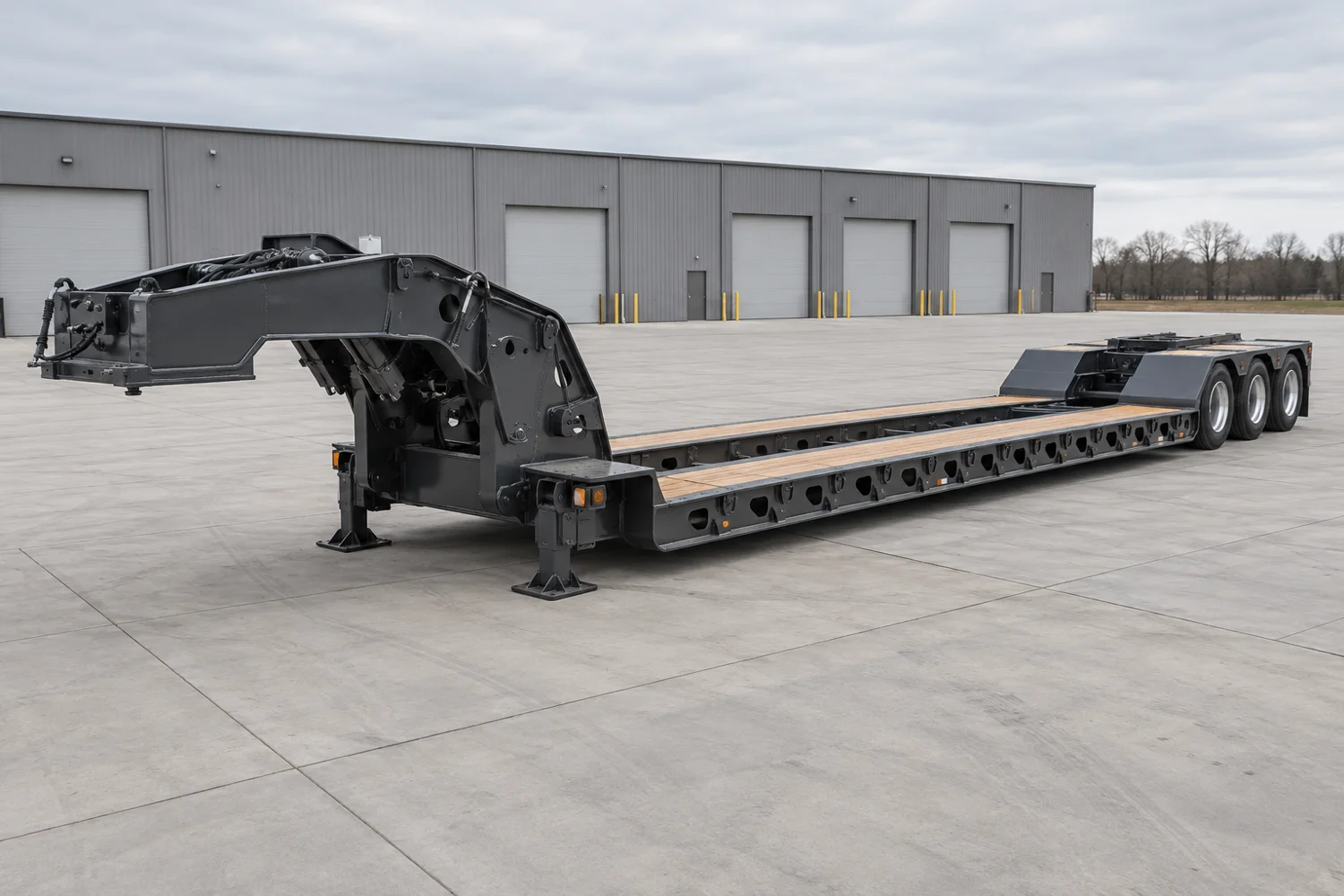
Other configurations of this model

Compare the changes in height, coupling or extension state before switching references.

Dimensions that govern this configuration

Usable support space, nominal deck spans and the overall transport envelope remain separate measurements.

B
Main deck / well length (nominal)26 ft7,925 mm

Documented spans Shared numeric scale

B Main deck / well length (nominal): 26 ft; E Ground clearance: 6 inB26 ftE6 in

Spans compare documented values. They are not positioned or scaled to the photograph.

Manufacturer reference summary; clear-length drawing still required

View dimension source ↗

Documented dimensions

Deck & transport envelope

Main deck / well length (nominal)
26 ft7,925 mm · Manufacturer reference summary; clear-length drawing still requiredSource ↗

Height & loading

Ground clearance
6 in152 mm · loadedSource ↗

Still needed from the build sheet

  • Usable main deck / well length
  • Main-deck height
  • Usable support width
  • Swing clearance

Ratings & support conditions

The exact build’s load chart is required. A model-family capacity range does not establish this configuration’s rating.

Tare, gross vehicle rating and structural load ratings describe different limits. None alone establishes allowable payload or legal axle loads.

Plan around the actual load

These applications identify what to investigate. Suitability depends on the transported assembly, support points and the selected trailer build.

Excavators

Will the stowed machine fit the well?

Track footprint length alone is insufficient. Record where the rollers react into the tracks, and check side rails, outriggers and the position of the machine centre of gravity.

  • Track contact length and shoe width
  • Stowed boom / bucket height
  • Counterweight and attachment weight
Tall industrial machinery

Is height or the footprint the controlling constraint?

Check the cradle and the trailer together. The cradle may concentrate weight or raise the load enough to defeat the height benefit.

  • Transport height in intended orientation
  • Support footprint and centre of gravity
  • Dunnage / cradle height
Generators & industrial skids

Does the skid footprint match the structural support?

Locate the skid rails over suitable structure. Check whether levelling blocks, isolators or delicate equipment prohibit support at other points.

  • Skid contact rails and support spacing
  • Total packaged height with dunnage
  • Lifting-point access and enclosure width

Documented build details

Construction
Steel
Neck
hydraulic detachable
Running gear
3
Deck type
DSRSource ↗
Deck width
8' 6" or 9"Source ↗
Loaded deck height/clearance
22 inches with 6 inches ground clearanceSource ↗
Standard trailer axles
3Source ↗
Axle spread
54.5" or 60"Source ↗

Configuration & inspection

  • Deck-height scope or source consistency requires review; do not derive a loaded-height result from the artwork or model name.
  • Match the selected deck, neck and axle configuration to the actual build sheet.
  • Read the complete capacity and support conditions at the source; a model-family rating is not automatically transferable.

Equipment selection requires verified weights and ratings, load support, coupling and axle analysis, securement planning and route review. This reference is not engineering, permit or route-clearance approval.