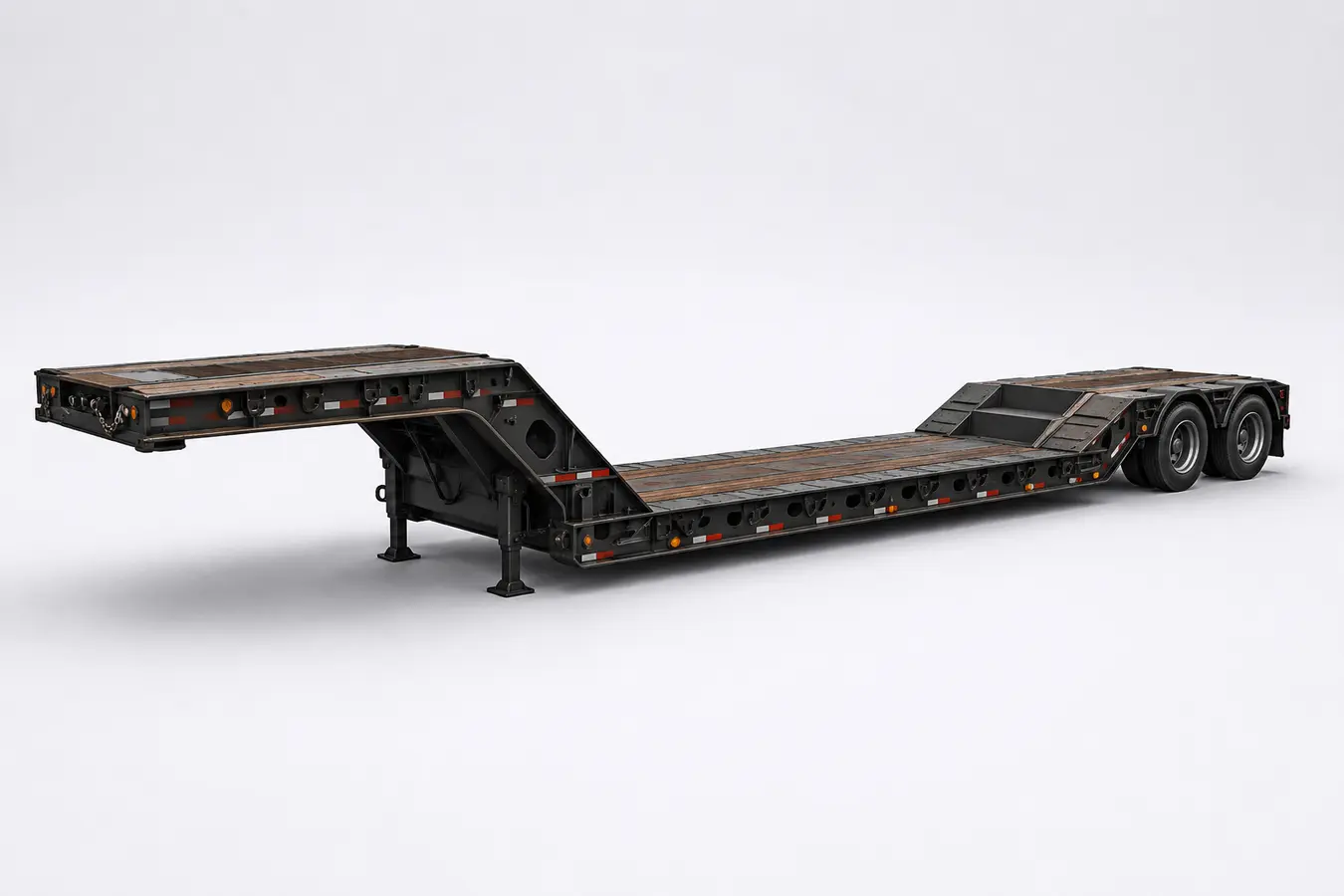
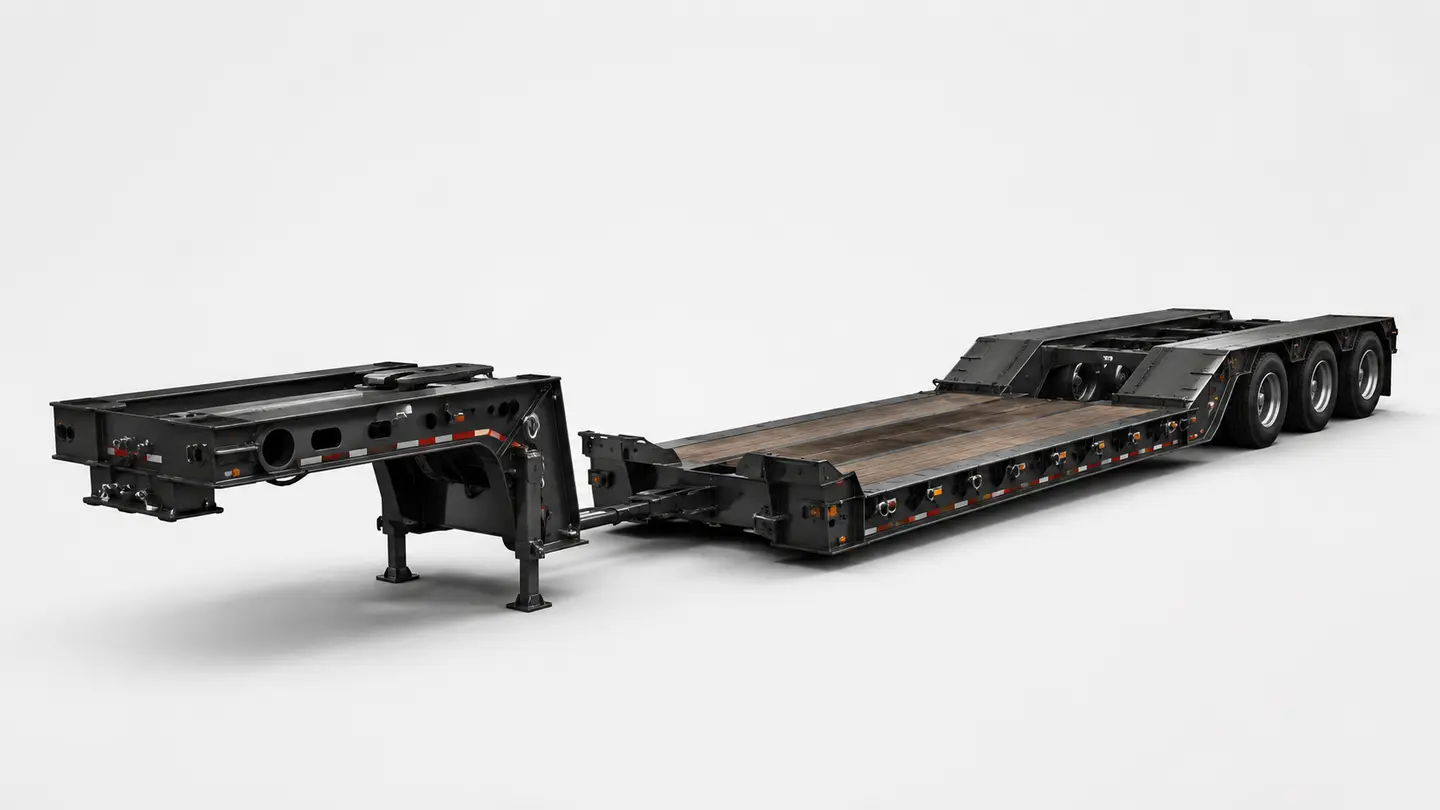
Double-drop well
Compare the footprint with the unobstructed well and transitions before using the low deck height in arithmetic.
Compare measured transport height with a documented loaded deck height. A low well helps only when the support footprint fits between its transitions.
The transported orientation, cradle and support footprint determine whether a low deck helps. Document the height of the complete assembly, including blocking and projections, and identify its centre of gravity. Rotating machinery onto another face requires a suitable handling and support procedure.
Compare the footprint with the unobstructed well and transitions before using the low deck height in arithmetic.
Investigate approved support interfaces and stability where a conventional deck cannot support the assembly.
A device-local worksheet for measurements, sources and unresolved questions.
Confirm lift access and the stability of the assembly during placement. A change of orientation needs an approved support and lifting procedure.
Check the cradle and the trailer together. The cradle may concentrate weight or raise the load enough to defeat the height benefit.
A static height sum is not route-clearance verification. Suspension movement, deck deflection and the planned route remain separate checks.
Build a measured configuration brief →Keep the model reference, actual attachment configuration, measured transport envelope and support drawing together. A change to the machine or its loading position requires the affected comparisons to be updated.
Equipment links support research. Highway Match uses the measurements you enter and does not silently import a related model’s values.