Landoll
Explore 17 documented model identities across 2 trailer families. Compare the actual loading mechanism and selected configuration before comparing dimensions or ratings.
Find the right product architecture
A manufacturer product family may include several configurations. The reference selector retains each documented state and its source conditions; it does not turn every length, axle or option into a separate model. Current product documentation does not establish an individual trailer’s condition, production-year range or sale availability.
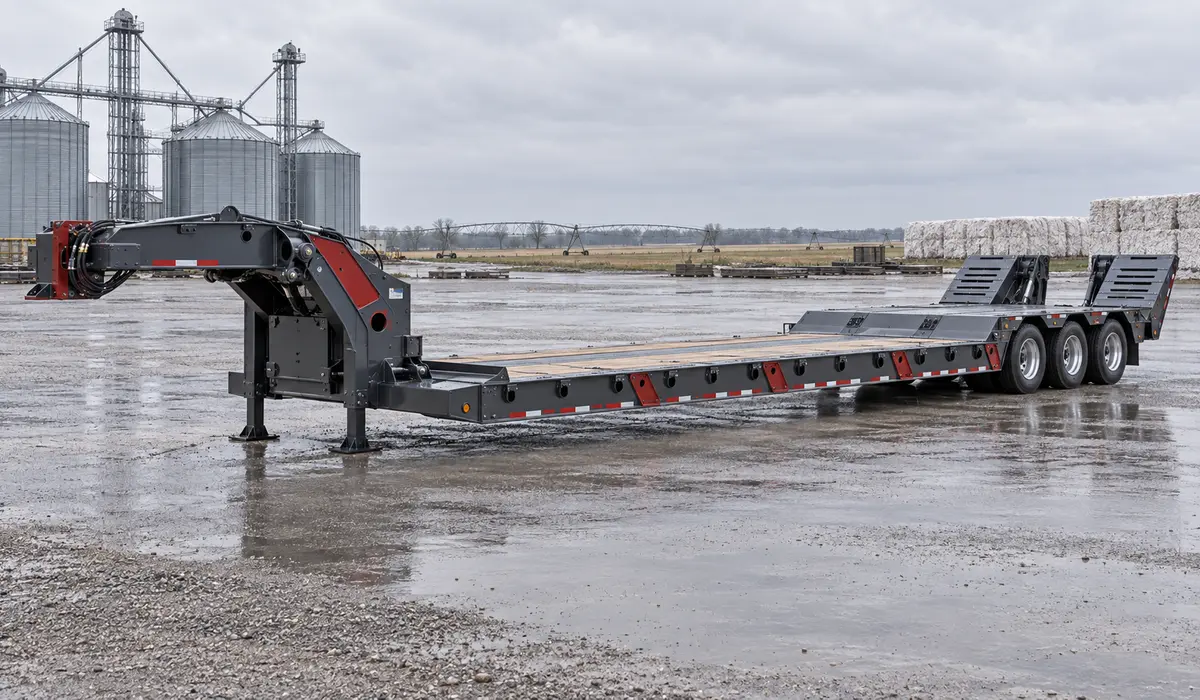
800 Series AG Detachable
Hydraulic detachable-gooseneck family for ultra-low agricultural loading, covering the documented 825-AG, 835-AG, 840-AG and 845-AG identities as configurations.
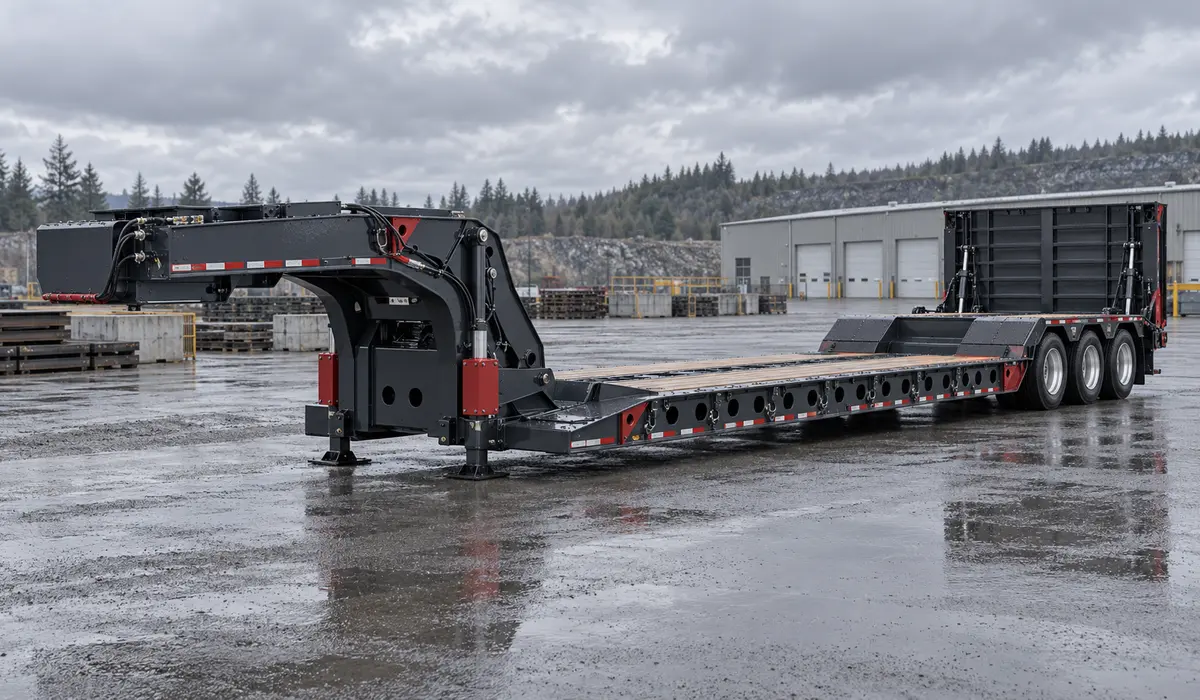
800 Series Detachable 835 / 855
Hydraulic detachable-gooseneck family retaining 835 and 855 product choices without inventing separate undocumented configuration pages.
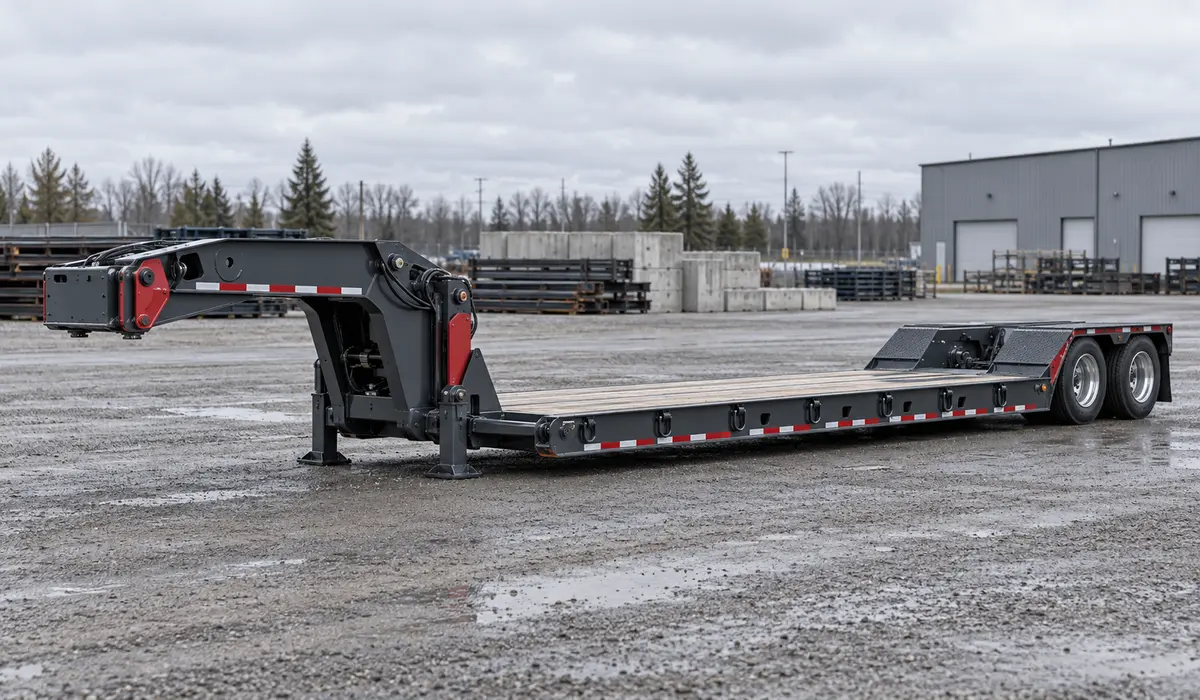
326
Current Landoll 326 hydraulic detachable-gooseneck lowbed for front-loading equipment transport.
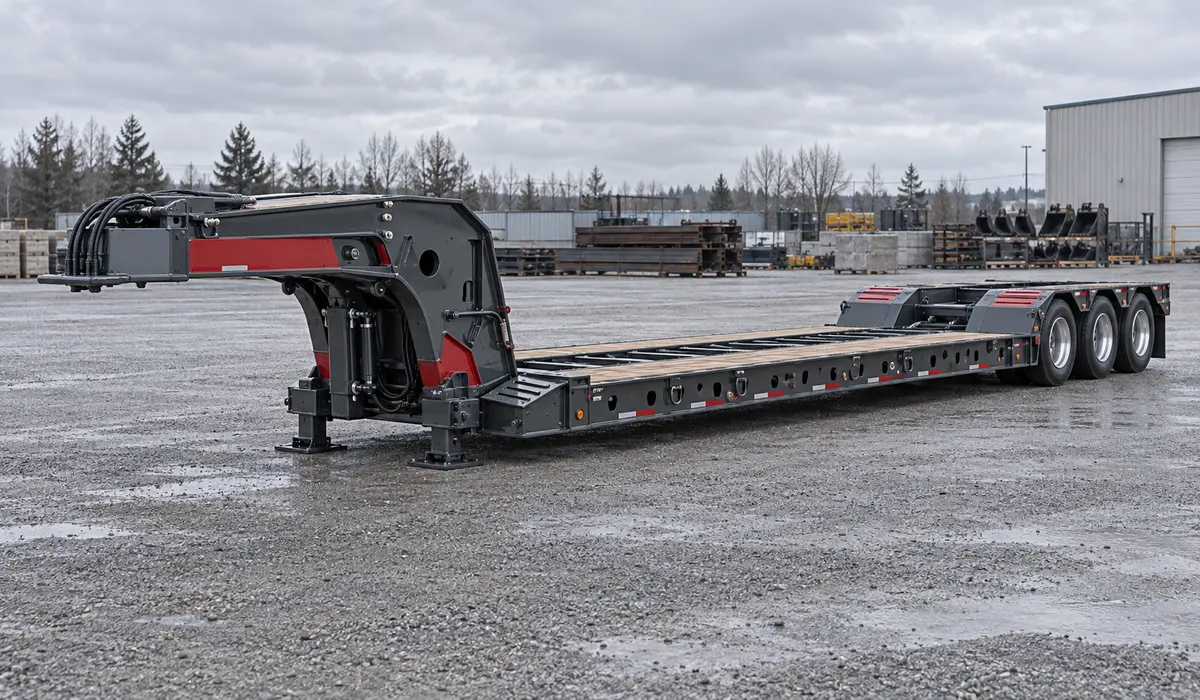
327
Current Landoll 327 hydraulic detachable-gooseneck lowbed for front-loading equipment transport.
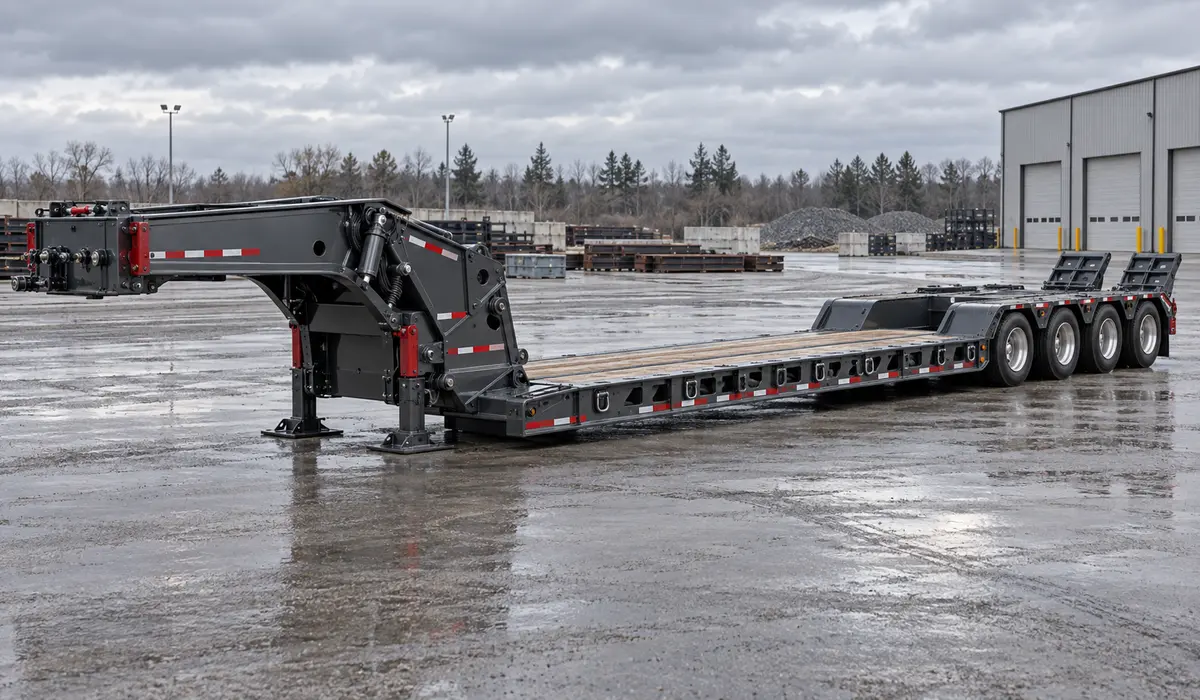
329
Current Landoll 329 hydraulic detachable-gooseneck lowbed for front-loading equipment transport.
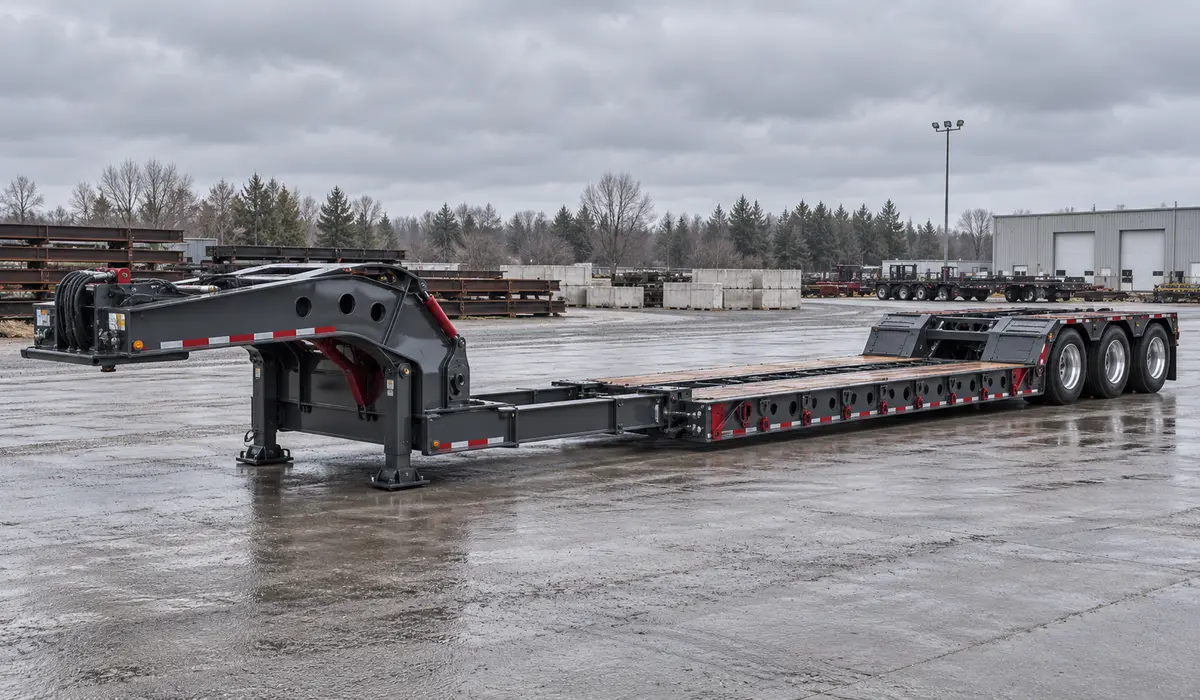
850XT
Extendible Landoll 850XT hydraulic detachable-gooseneck lowbed, with 48 ft and 53 ft forms retained as configurations.
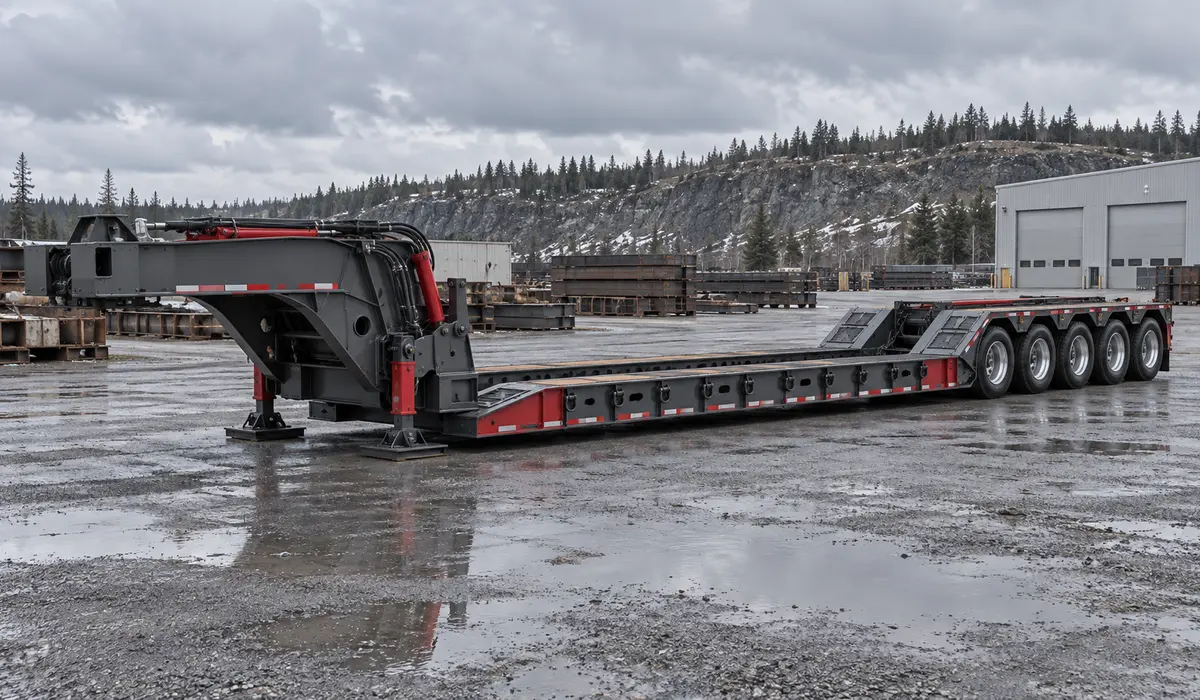
860
Current Landoll 860 hydraulic detachable-gooseneck heavy-haul lowbed.
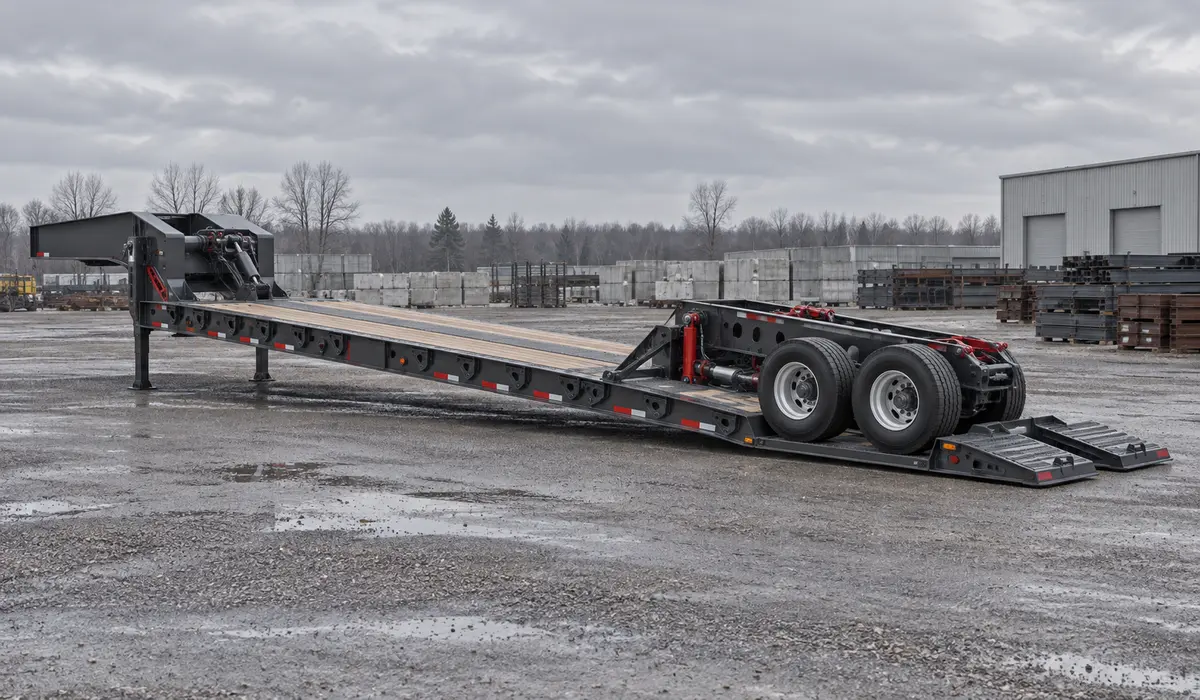
317
Landoll 317 traveling-axle trailer using a hydraulic traveling undercarriage and full-deck tilt for low-angle ground loading.
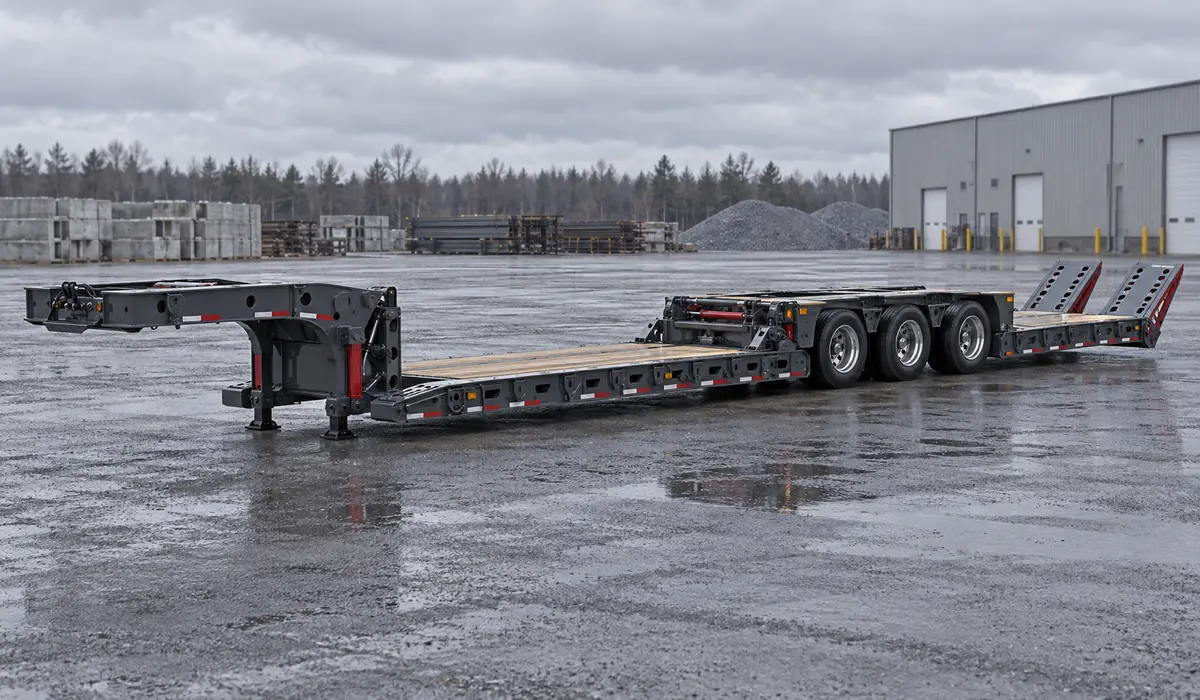
318
Current Landoll 318 traveling-axle model with hydraulic undercarriage travel and full-deck tilt.
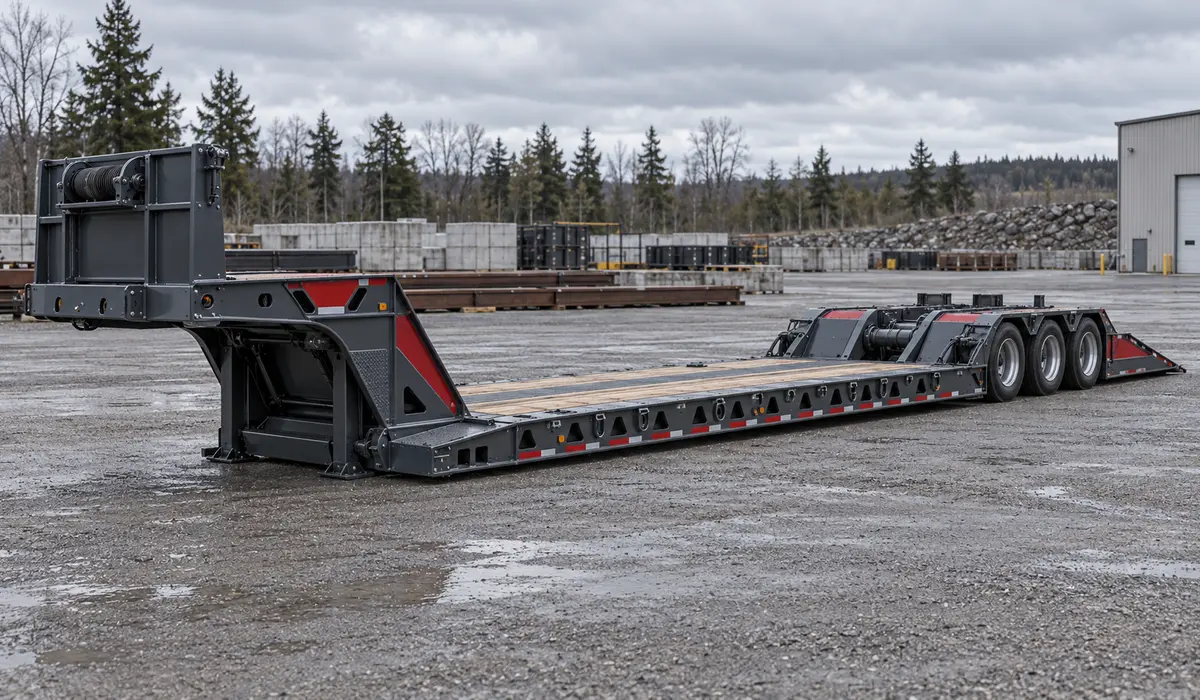
440
Landoll 440 traveling-axle model with hydraulic undercarriage travel and full-deck tilt.
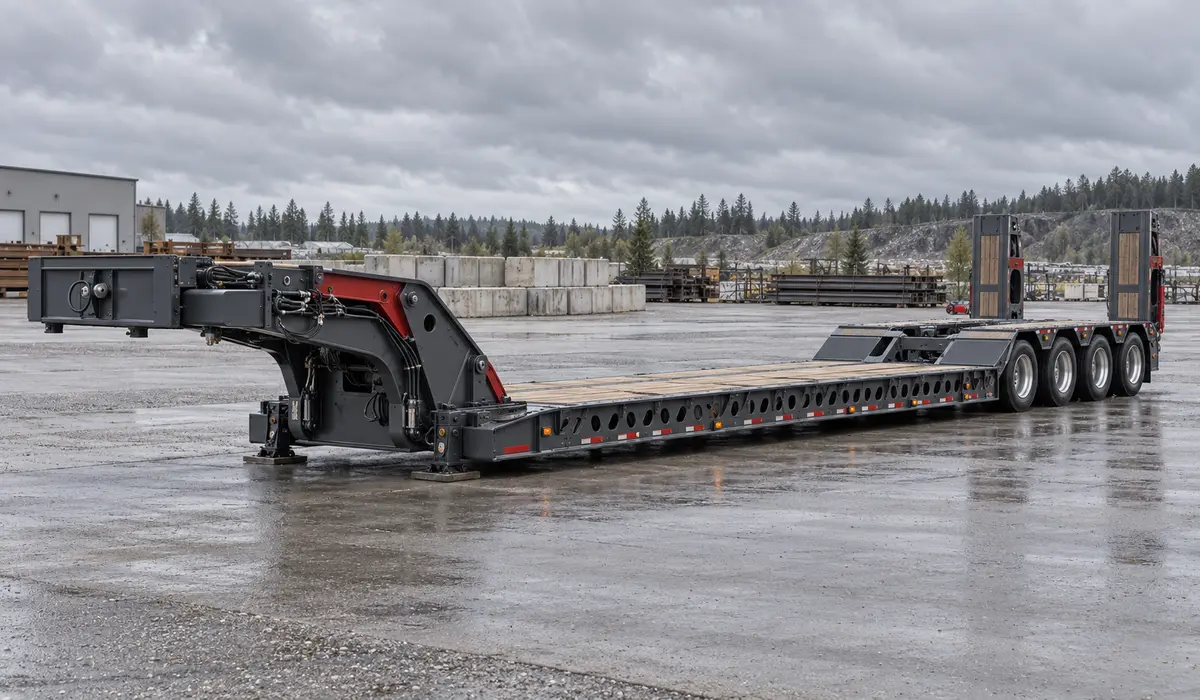
455
Current Landoll 455 traveling-axle trailer for low-angle loading through hydraulic undercarriage travel and full-deck tilt.
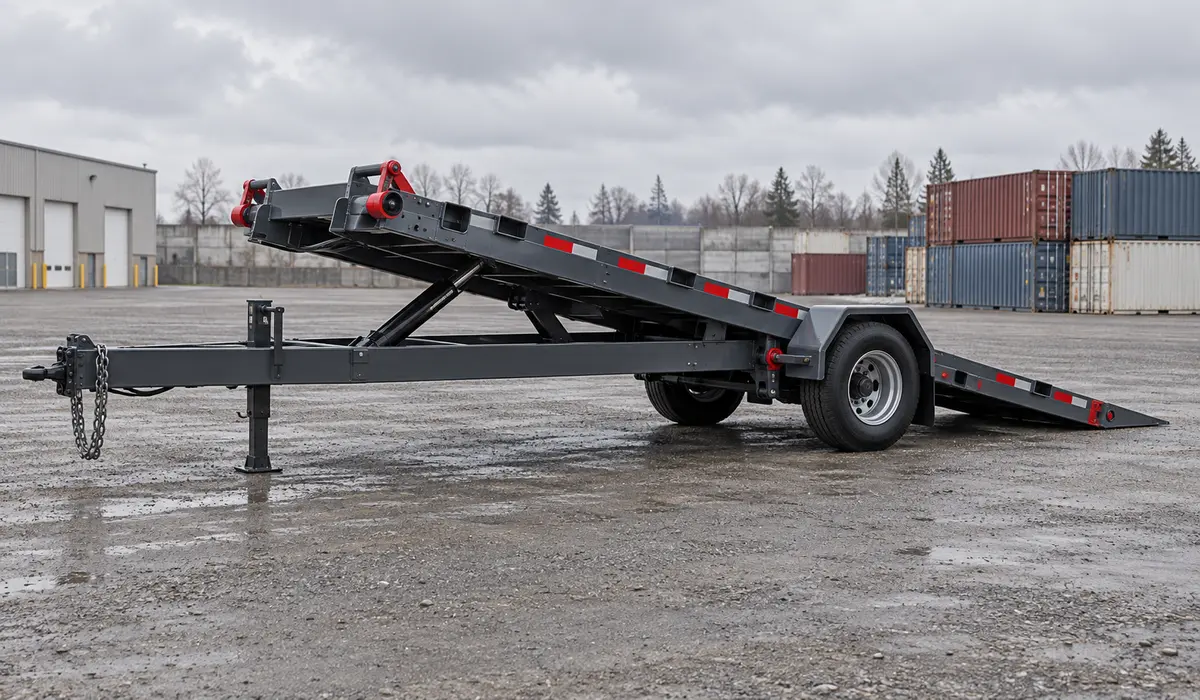
330-1
Single-axle Landoll 330-1 hydraulic traveling-axle container trailer, distinct from the current two-axle 330-2.
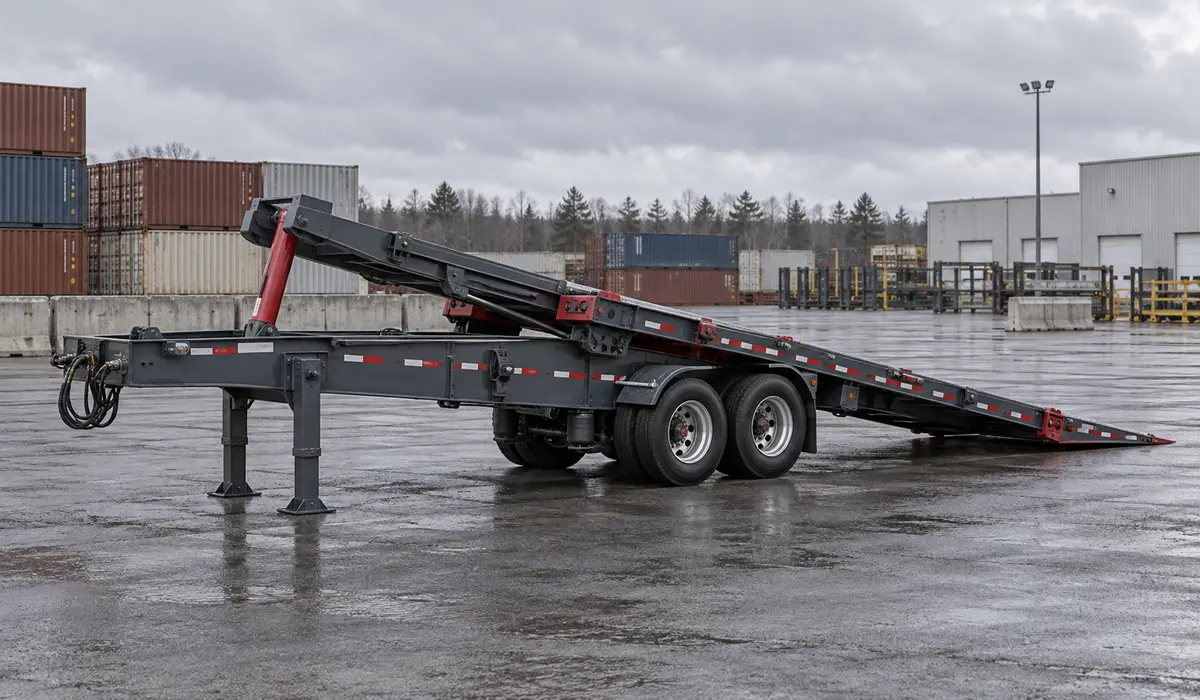
330-2
Two-axle Landoll 330-2 hydraulic traveling-axle container trailer, retained as a distinct current model rather than a 330-1 configuration.
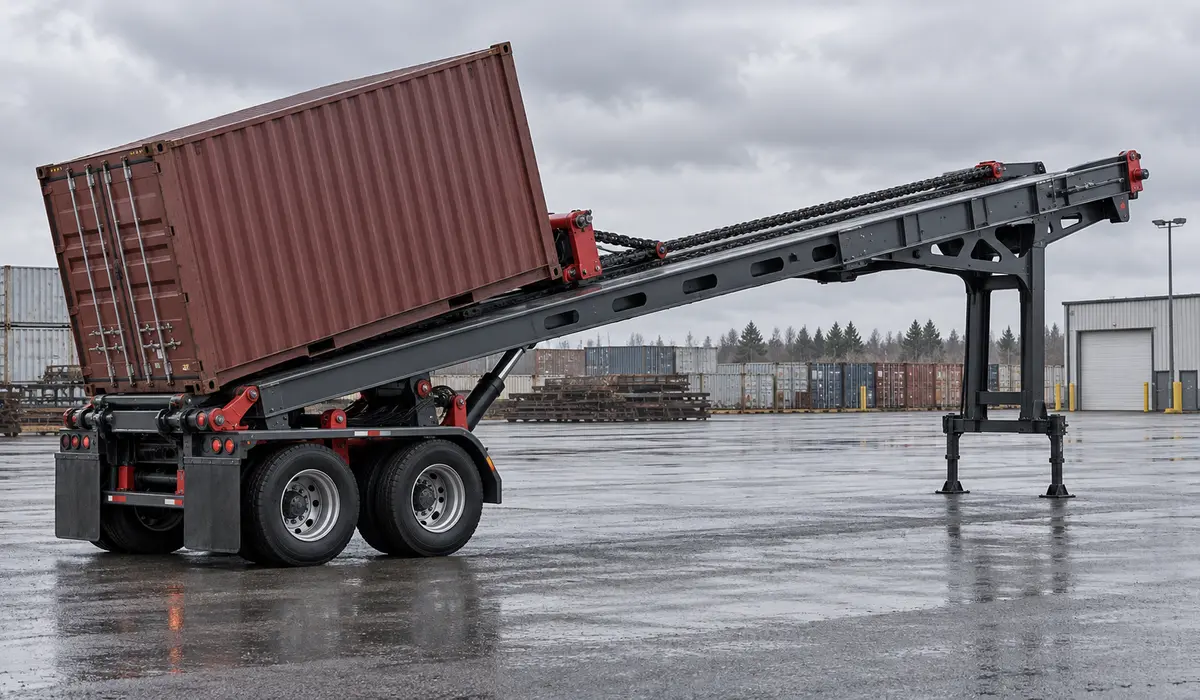
343
Landoll 343 container-hauling trailer combining traveling-axle tilt with hydraulic chain-drive loading.
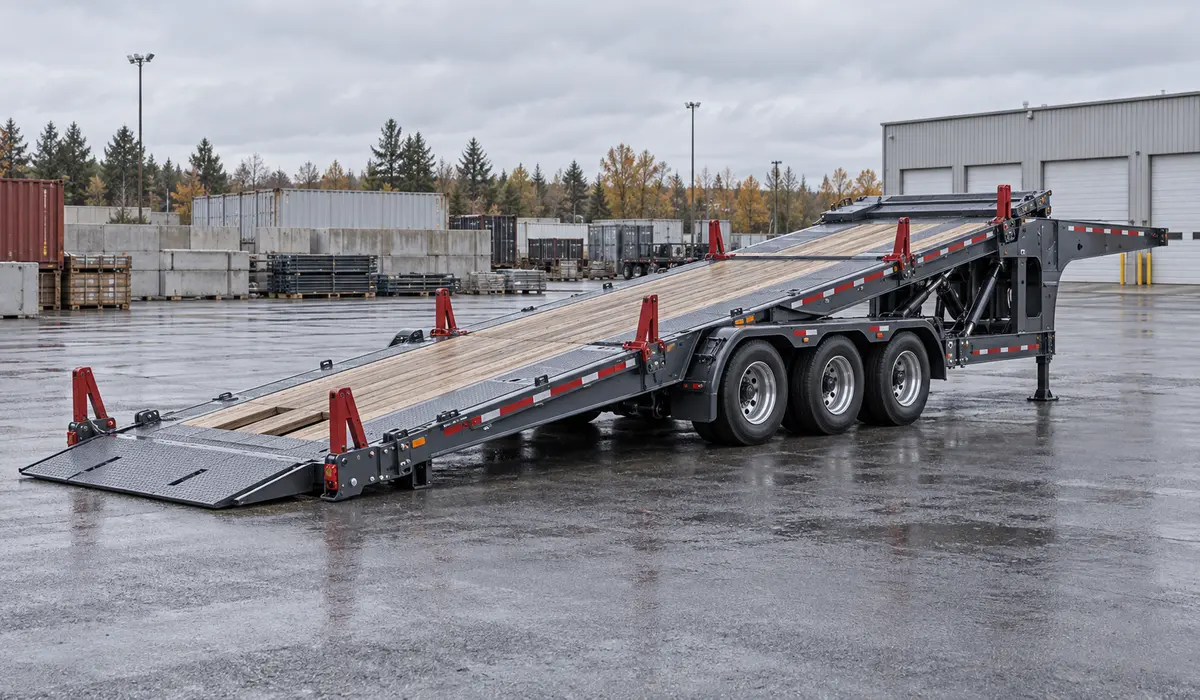
344
Landoll 344 traveling-axle trailer for container and equipment loading with configuration-specific running gear.
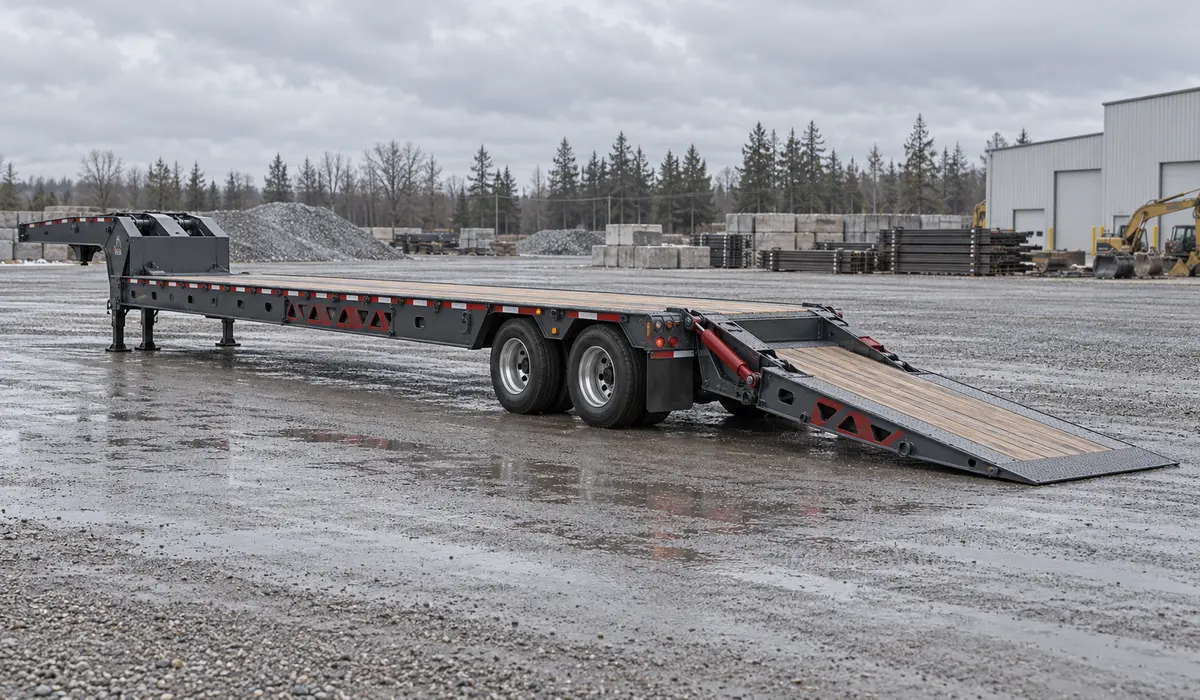
930
Landoll 930 traveling-tail trailer with a hydraulic dock-height tail for ground and dock loading.
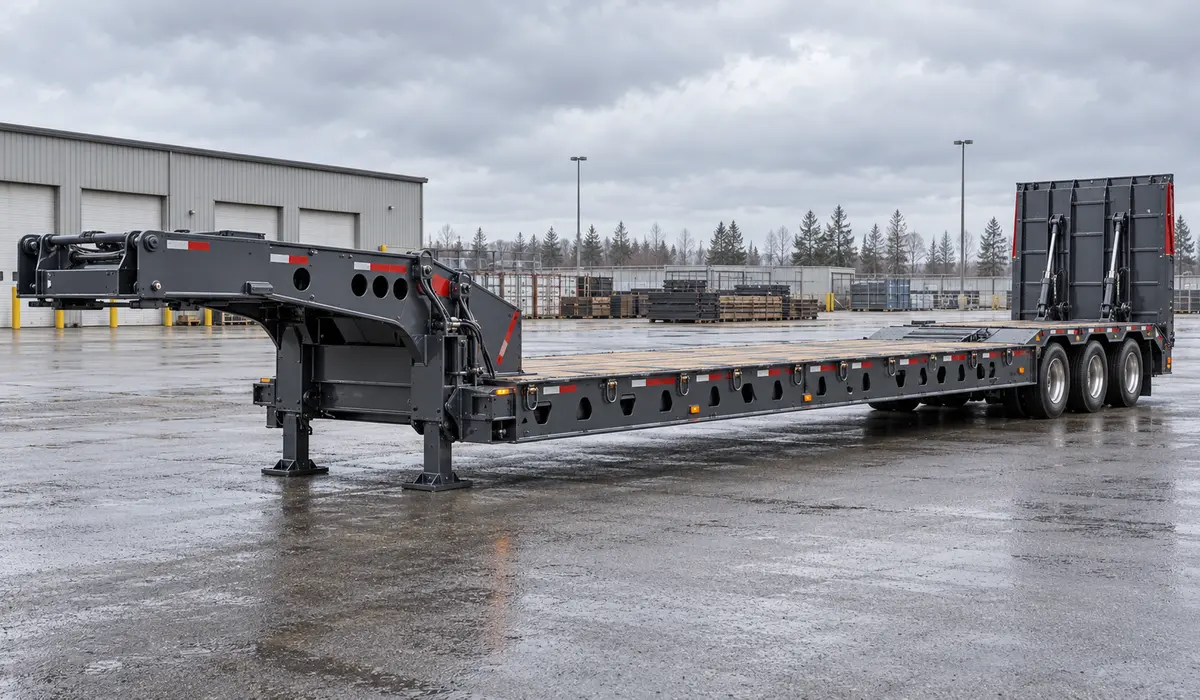
950
Landoll 950 traveling-tail trailer with a hydraulic dock-height tail for ground and dock loading.
Read the source with the configuration
Start with the linked manufacturer documentation, then obtain the build sheet and operating instructions for the trailer under consideration. Compare distributed and concentrated ratings on their stated support basis. Keep tare, gross rating, floor strength and route permissions separate.
How to read load-rating conditions →