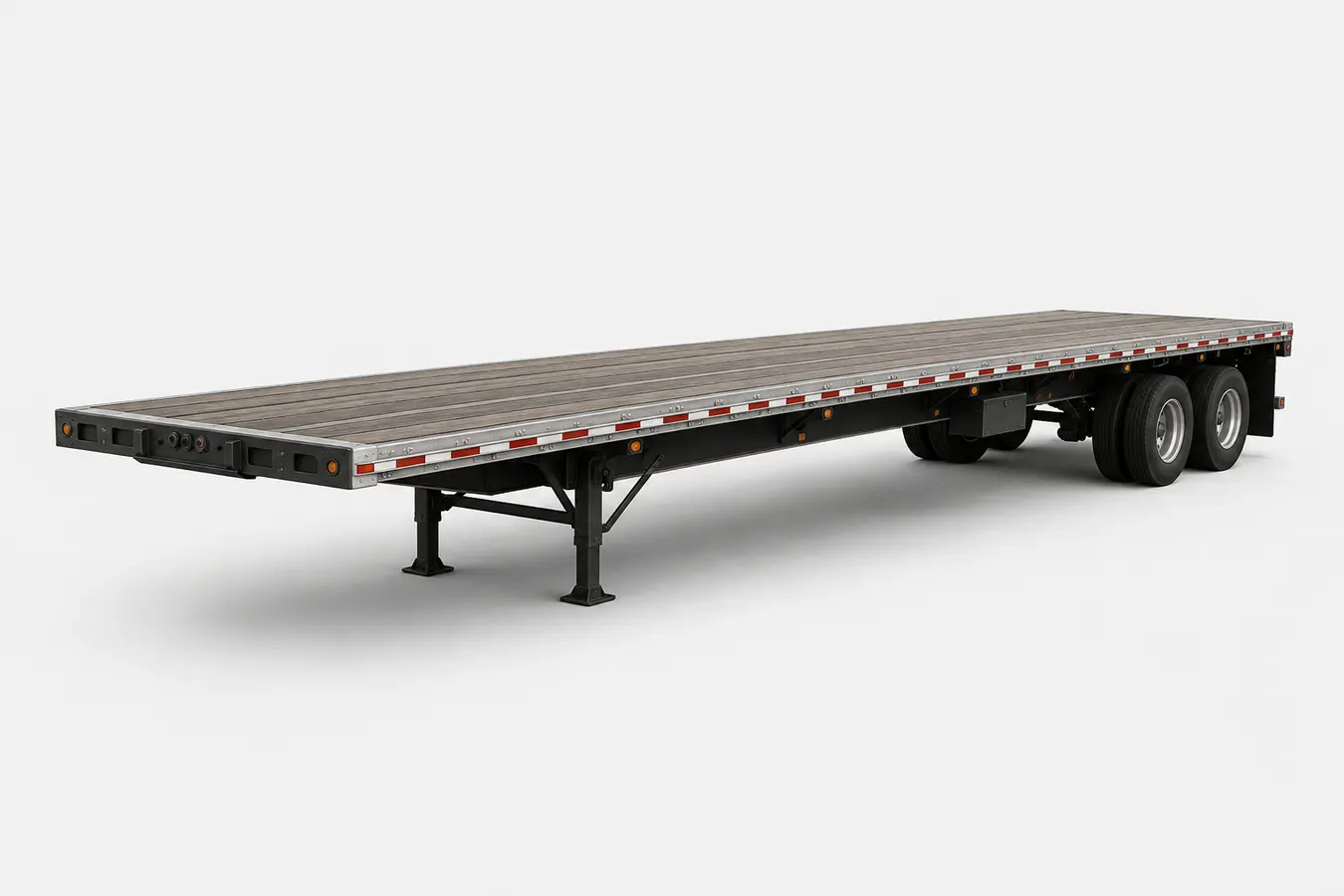
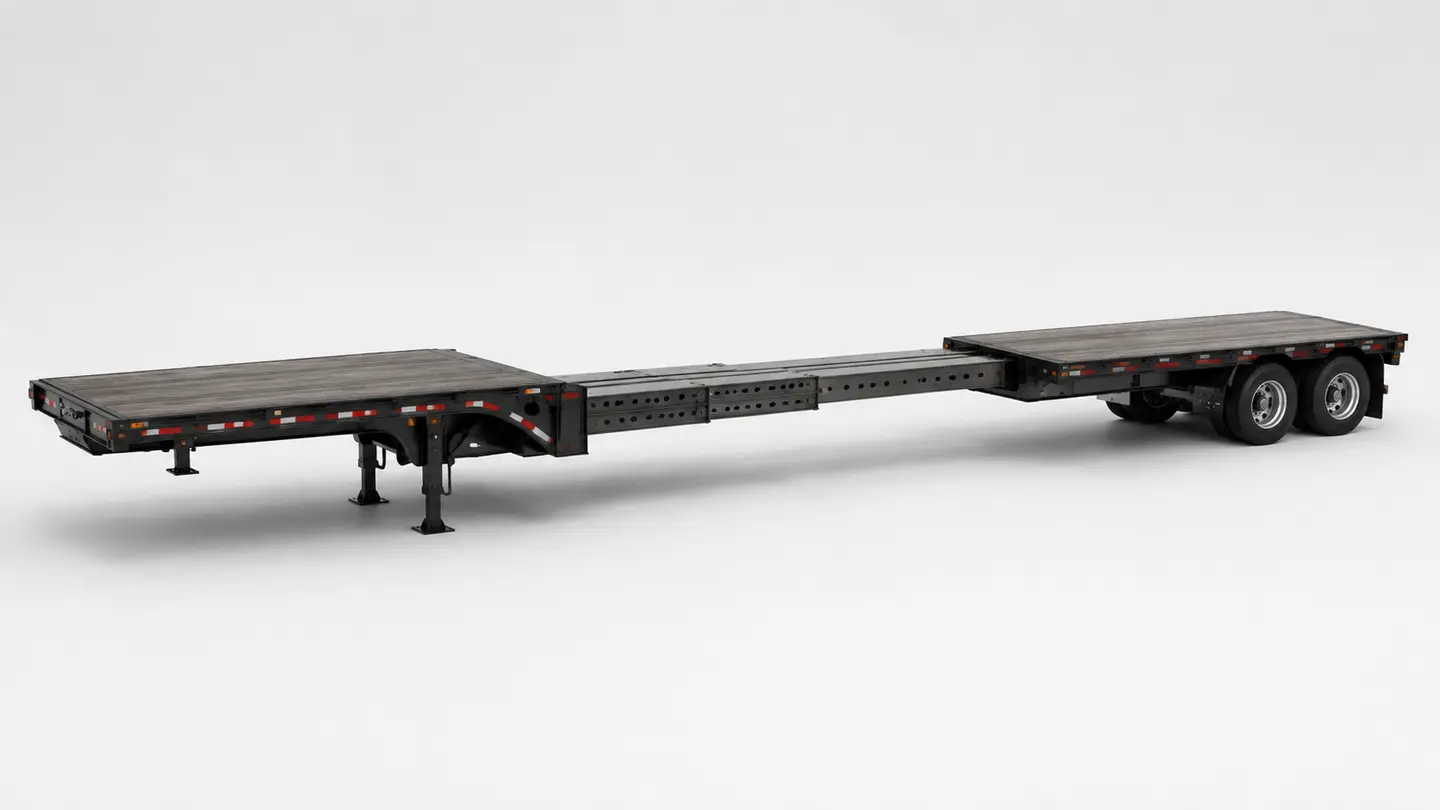
Continuous platform
Compare support spacing, overhang, anchor access and loading equipment reach.
A long load is governed by support span, bending sensitivity and extension state as well as overall length.
Long fabricated loads need a support and stiffness review as well as an envelope measurement. Identify individual pieces, bundle arrangements, approved dunnage locations and lifting order. A trailer extension changes the load span; it is not a continuous floor of the same strength in every position.
Compare support spacing, overhang, anchor access and loading equipment reach.
Check the exact open state and any requirement for the load to bridge the unsupported section.
A device-local worksheet for measurements, sources and unresolved questions.
Plan side or crane access and dunnage placement before opening an extendable deck. Establish the securement sequence.
Use the manufacturer’s chart for the selected extension and support layout. An open telescoping centre is not a continuous solid floor.
Long nominal deck length does not prove the load can support itself across the extension gap.
Build a measured configuration brief →Keep the model reference, actual attachment configuration, measured transport envelope and support drawing together. A change to the machine or its loading position requires the affected comparisons to be updated.
Equipment links support research. Highway Match uses the measurements you enter and does not silently import a related model’s values.