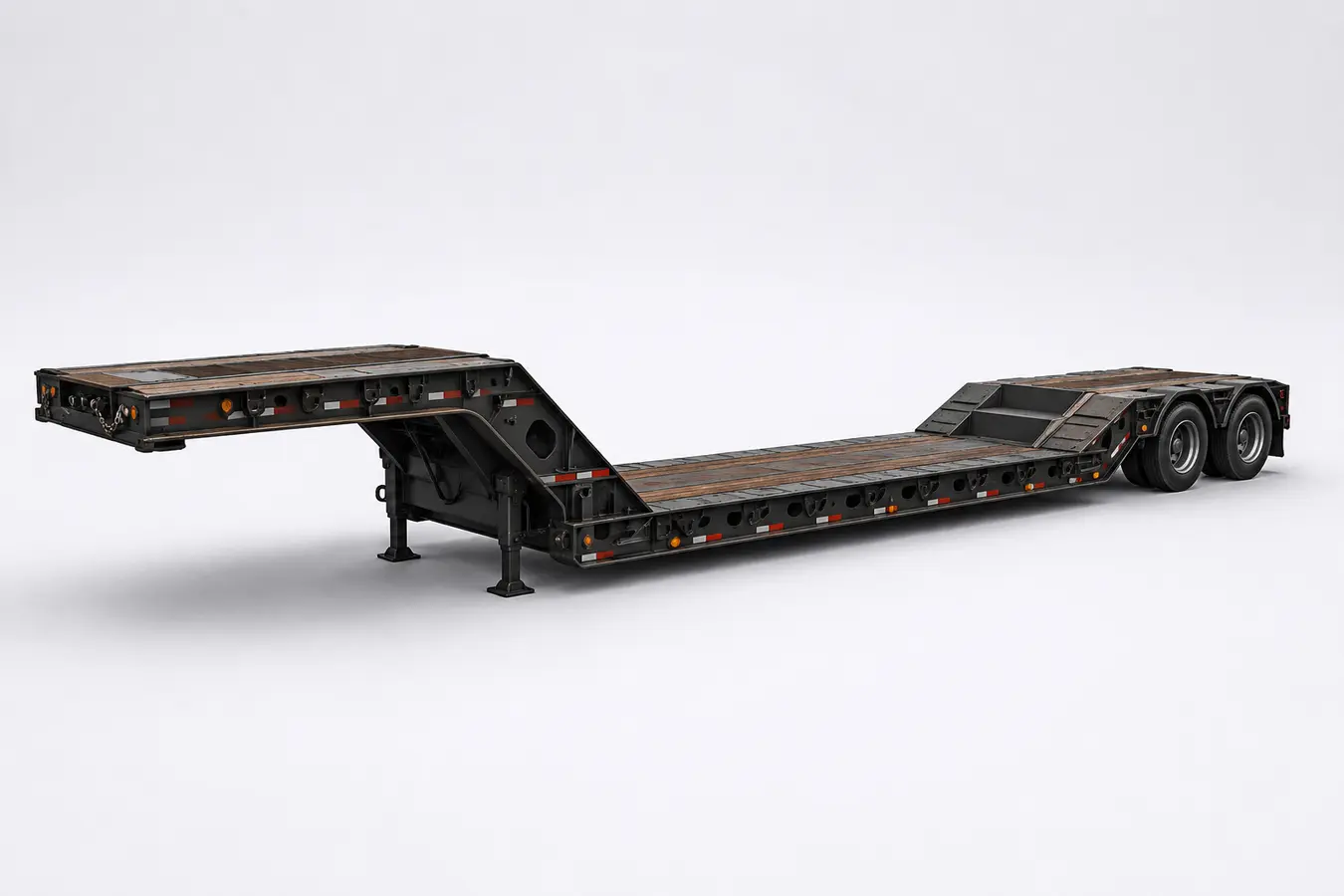
Continuous or low-well deck
Compare the approved support positions with available structure and securement access.
Boom sections, counterweights and machinery-house components each have prescribed lifting and transport support locations.
Boom sections, counterweights and machinery-house components need separate records. Obtain the approved lifting and transport support locations for each component. Do not shift supports or stack components to fit a deck without the required technical confirmation.
Compare the approved support positions with available structure and securement access.
Use the selected extension-state chart and support drawing; an open gap cannot be assumed to support the component.
A device-local worksheet for measurements, sources and unresolved questions.
Plan crane reach, rigging access and placement before choosing the deck. Do not move support points just to match a trailer.
Counterweight stacks create concentrated reactions; lattice boom sections may require separated supports. A distributed deck rating cannot stand in for either case.
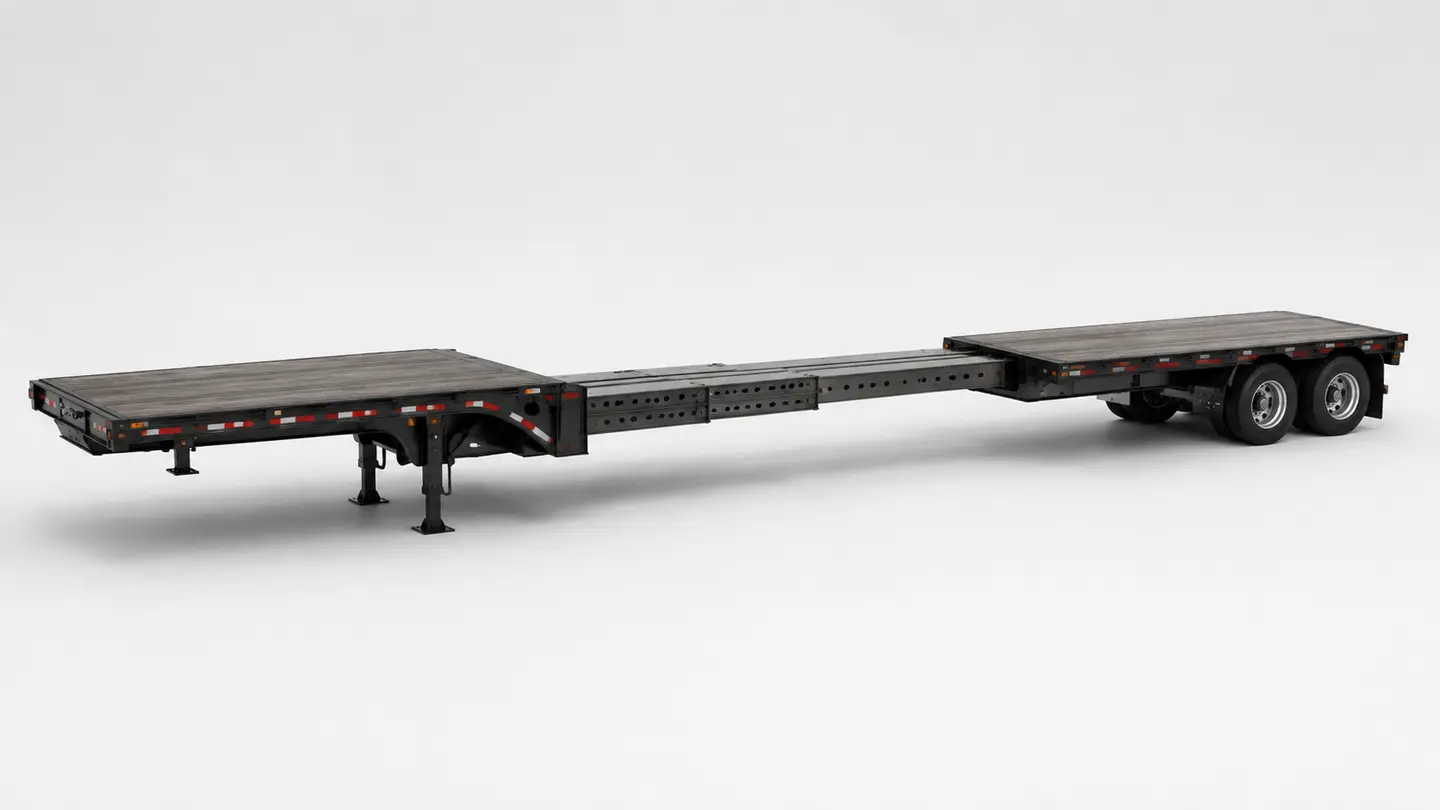
An extendable trailer’s open-state rating may depend on load span and support position.
Build a measured configuration brief →Keep the model reference, actual attachment configuration, measured transport envelope and support drawing together. A change to the machine or its loading position requires the affected comparisons to be updated.
Equipment links support research. Highway Match uses the measurements you enter and does not silently import a related model’s values.