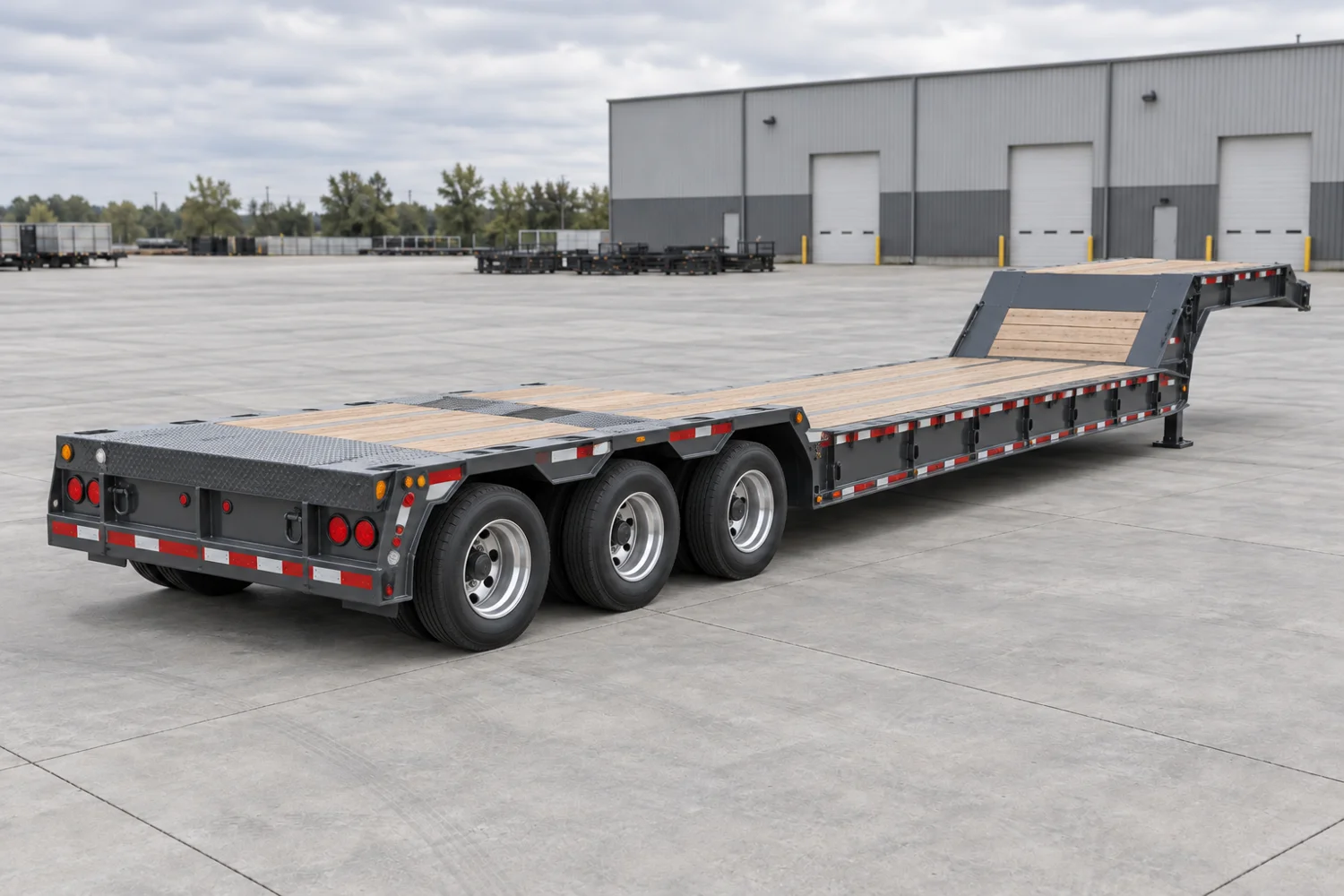
A sliding-axle equipment platform whose running gear moves for loading. Tyre-dependent loaded deck heights are kept as separate references.
Loading position and transport position have different axle and deck geometry.
Loading path
Sliding axle / tilting deck
Review the moving running gear, tilting deck and transition to the upper deck using the operating instructions. Confirm the running gear is in its required transport position.
Supporting the load
Tyre diameter, axle count and suspension settings can change height and load distribution. Retain the exact reference when comparing alternatives.
Other configurations of this model
Compare the changes in height, coupling or extension state before switching references.
1 ft 2 in356 mm · Manufacturer stated; loading condition not specifiedSource ↗
Swing clearance
7 ft 2 in2,184 mm · Manufacturer stated; loading condition not specifiedSource ↗
Axle spacing
4 ft 2 in1,270 mm · Manufacturer stated; loading condition not specifiedSource ↗
Still needed from the build sheet
Overall transport length
Main deck / well length (nominal)
Usable support width
Usable main deck / well length
Ratings & support conditions
The exact build’s load chart is required. A model-family capacity range does not establish this configuration’s rating.
Tare, gross vehicle rating and structural load ratings describe different limits. None alone establishes allowable payload or legal axle loads.
Plan around the actual load
These applications identify what to investigate. Suitability depends on the transported assembly, support points and the selected trailer build.
Wheel loaders
Can the tyres and articulation fit the loading path?
Concentrated wheel loads need deck and crossmember verification. Record the actual tyre contact lines rather than treating the whole machine length as load distribution.
7° loading angle and 15° dump angle in the manufacturer performance table; verify the operating configuration.Source ↗
Axle movement
Hydraulic running-gear movement and a tilting main deck provide the loading path to the upper deck.Source ↗
Winch
20,000 lb published winch rating; confirm the pull and rigging conditions.Source ↗
Configuration & inspection
Documented optional configuration. Numeric ratings are withheld until the matching build-specific chart is confirmed.
The 80,000 lb uniform rating is not the 50,000 lb concentrated rating.
Confirm the transport lock position and axle count on the actual trailer.
Equipment selection requires verified weights and ratings, load support, coupling and axle analysis, securement planning and route review. This reference is not engineering, permit or route-clearance approval.