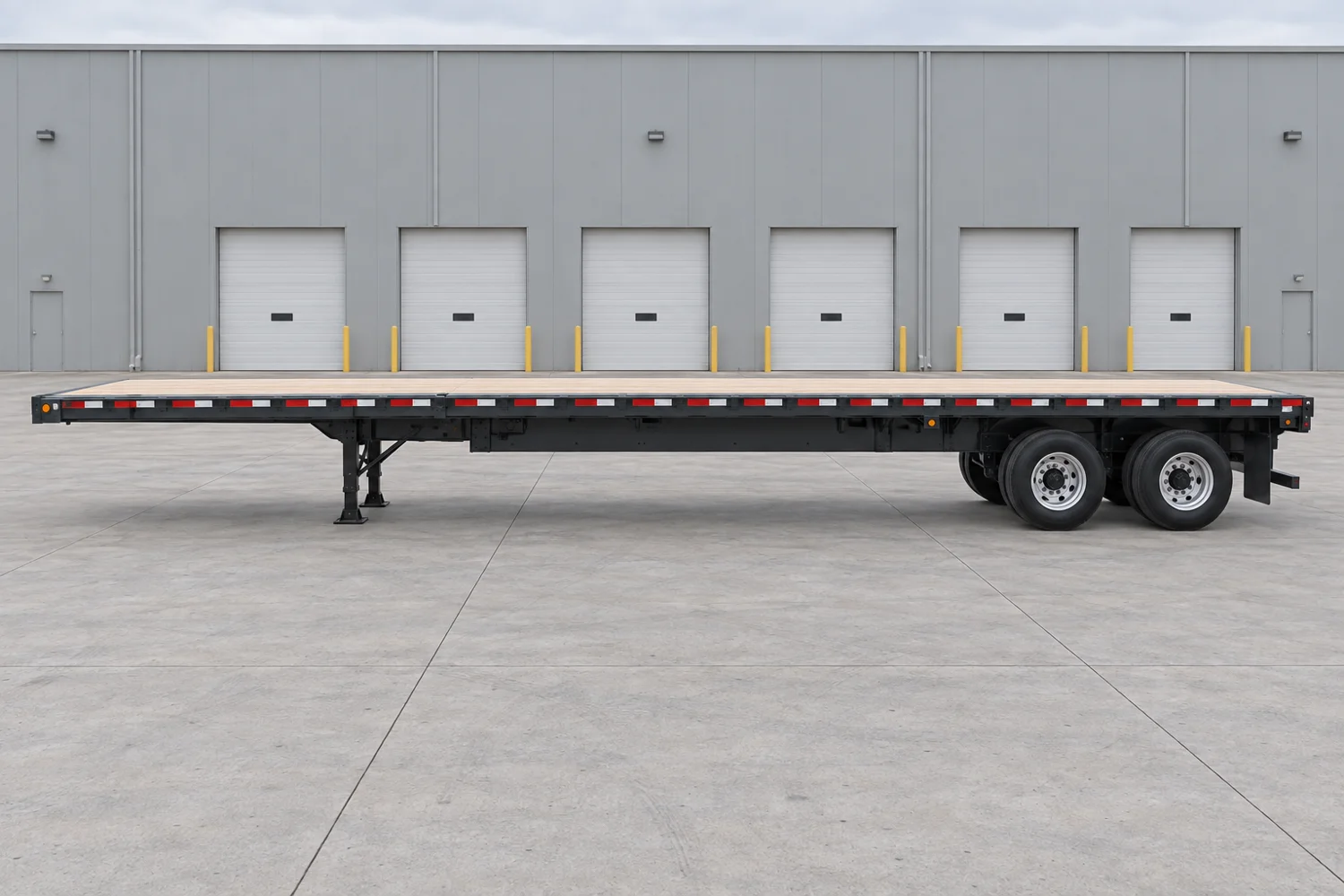
Telescoping / extendable platform · Fontaine

Xcalibur XTP4880

Xcalibur XTP4880SS2 / closed

Full model specifications →

Telescoping / extendable platform

How this platform works

A telescoping flatbed family with 48 ft closed and 80 ft extended overall references. Tandem and three-axle configurations are separated; overall extension does not establish an equivalent continuous support deck.

The selected open or closed state belongs with its own dimensions and rating chart.

Loading path

Crane / forklift

Establish the required extension, locking position and loading sequence using the manufacturer’s procedure. Check the trailer in its transport state after loading.

Supporting the load

An open telescoping span is not necessarily continuous flooring. Confirm the cargo’s permitted support positions and the extension-specific chart.

Other configurations of this model

Compare the changes in height, coupling or extension state before switching references.

Dimensions that govern this configuration

Usable support space, nominal deck spans and the overall transport envelope remain separate measurements.

A
Overall transport length48 ft14,630 mm

Documented spans Shared numeric scale

A Overall transport length: 48 ftA48 ft

Spans compare documented values. They are not positioned or scaled to the photograph.

Documented dimensions

Deck & transport envelope

Overall transport length
48 ft14,630 mm · closed stateSource ↗
Overall / side-rail width
8 ft 6 in2,591 mm · Manufacturer stated; loading condition not specifiedSource ↗

Coupling & running gear

Axle spacing
4 ft 1 in1,245 mm · Manufacturer stated; loading condition not specifiedSource ↗

Still needed from the build sheet

  • Usable main deck / well length
  • Main deck / well length (nominal)
  • Usable support width
  • Main-deck height

Ratings & support conditions

distributed80,000 lb36,287 kg

Self-supporting, properly blocked load; exact extension chart required

Rating source ↗

Tare, gross vehicle rating and structural load ratings describe different limits. None alone establishes allowable payload or legal axle loads.

Plan around the actual load

These applications identify what to investigate. Suitability depends on the transported assembly, support points and the selected trailer build.

Structural steel & long fabricated loads

How does the load bridge the supports?

Use the manufacturer’s chart for the selected extension and support layout. An open telescoping centre is not a continuous solid floor.

  • Overall length and section depth
  • Approved support spacing
  • Bundle width and restraint arrangement
Crane components

Where must the component be supported?

Counterweight stacks create concentrated reactions; lattice boom sections may require separated supports. A distributed deck rating cannot stand in for either case.

  • Component length and maximum section width
  • Approved support and lifting points
  • Component weight and centre of gravity

Documented build details

Construction
Steel
Neck
fixed
Running gear
2
Capacity
80,000 lbs distributed - self-supporting, properly blockedSource ↗
Length
48 feet (closed) to 80 feet (open)Source ↗
Width
8 feet 6 inchesSource ↗
Deck type
Extendable FlatbedSource ↗
Deck length
53 feet (closed) to 90 feet (open)Source ↗
Deck width
8 feet 6 inchesSource ↗
Loaded deck height/clearance
49 inchesSource ↗
Standard trailer axles
2Source ↗
Axle spread
49"Source ↗

Configuration & inspection

  • Deck-height scope or source consistency requires review; do not derive a loaded-height result from the artwork or model name.
  • Source conflict: deck-length row repeats 53–90 ft while the overall-length row identifies this product’s own range. Usable deck length is withheld.
  • Rating basis: 80,000 lbs distributed - self-supporting, properly blocked
  • Match the selected deck, neck and axle configuration to the actual build sheet.
  • Read the complete capacity and support conditions at the source; a model-family rating is not automatically transferable.

Equipment selection requires verified weights and ratings, load support, coupling and axle analysis, securement planning and route review. This reference is not engineering, permit or route-clearance approval.