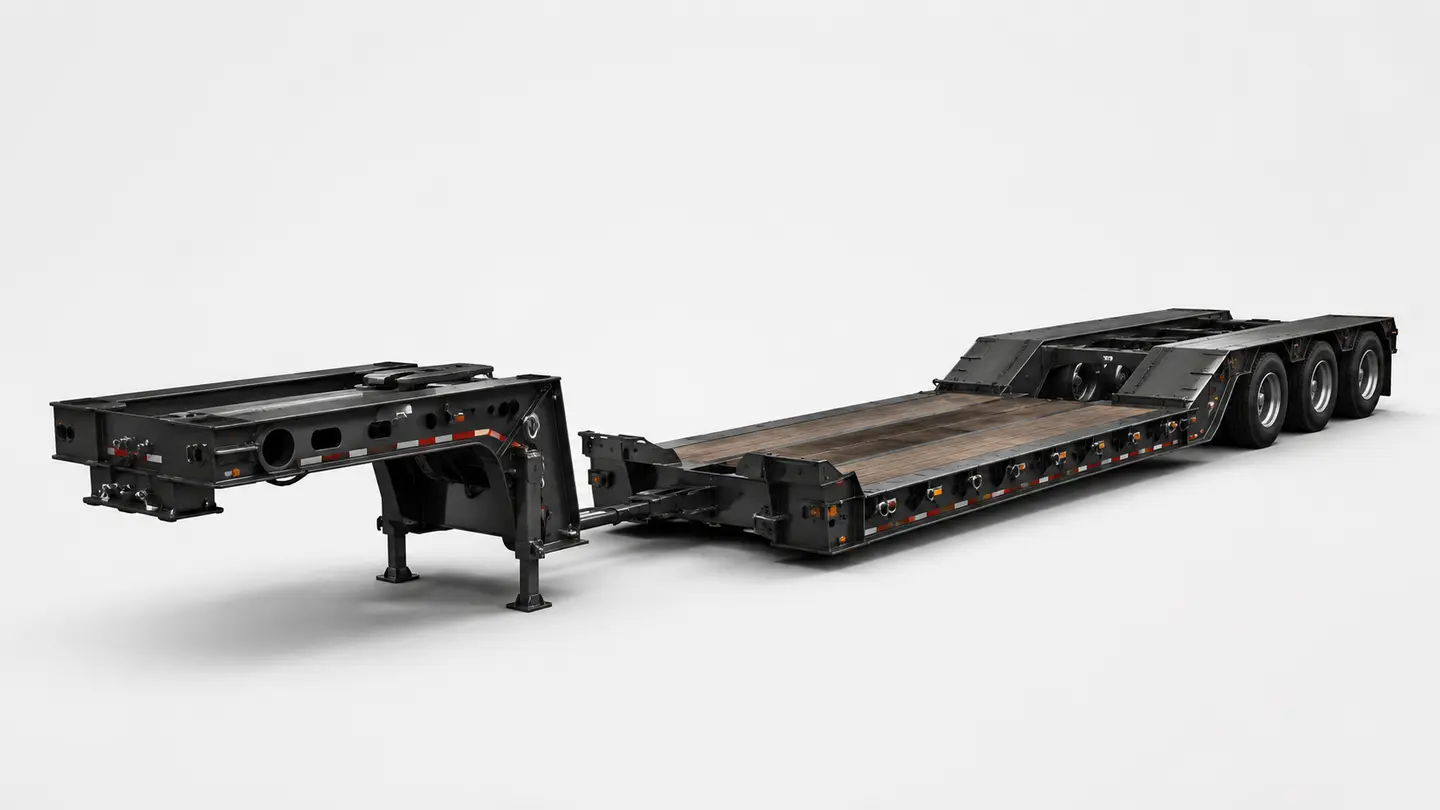
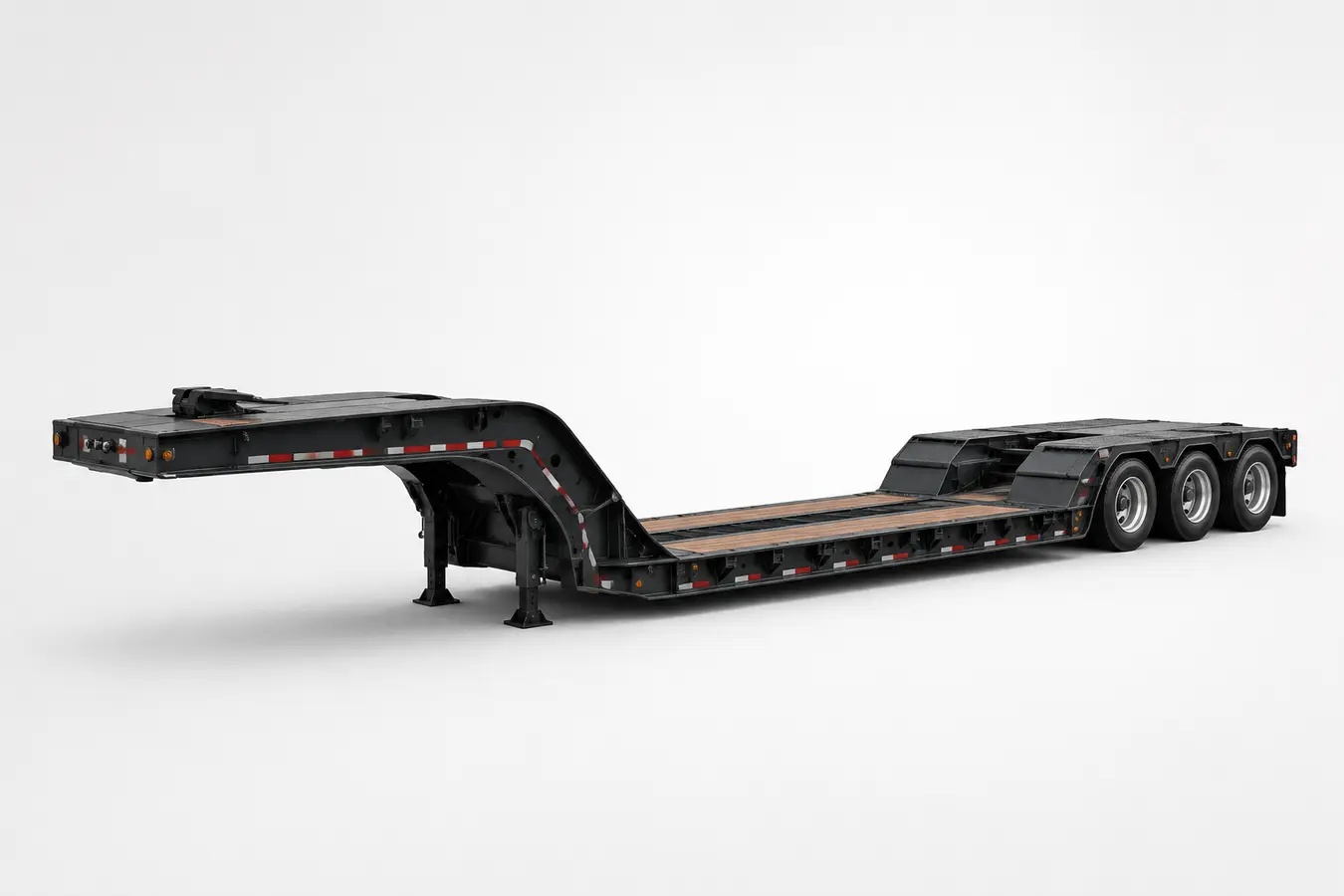
Low well with front loading
Check blade clearance at the neck and both track contact paths, including the first contact with the deck.
Treat the blade, rear ripper and guarding as parts of the transported assembly. A bare tractor weight can substantially understate the move.
A dozer’s blade, push arms, track shoes, ripper and guarding can control transport width and weight. Identify the installed equipment before requesting a trailer. If the blade is removed, its supports, lifting operation and separate transport position need to be planned rather than deducted informally from an operating specification.
Check blade clearance at the neck and both track contact paths, including the first contact with the deck.
Require a documented structural support system. Overall trailer width or loose timber alone does not establish support for wide tracks.
A device-local worksheet for measurements, sources and unresolved questions.
Check track traction, approach angle and blade clearance before climbing a lowbed. A blade that clears the main deck may still strike a front or rear transition.
Wide tracks need a documented support path. Outrigger boards are not a general-purpose extension of the trailer’s structural rating.
Removing an attachment requires a separate lifting and securement plan; do not simply subtract its assumed weight.
Build a measured configuration brief →Keep the model reference, actual attachment configuration, measured transport envelope and support drawing together. A change to the machine or its loading position requires the affected comparisons to be updated.
Equipment links support research. Highway Match uses the measurements you enter and does not silently import a related model’s values.